
My Goal
I want to create an interactive experience in which agency is delegated to AI.
A room that has agency.
A very basic approach for how this could be done is a space in which various controls have been given to an AI.
Things that an AI-System could have control over:
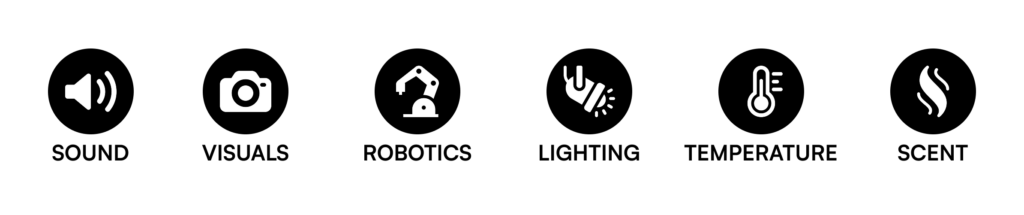
Based on this, I started to develop some initial ideas of how one or multiple of these tools could be used in an interaction.
Idea 1: Autonomous City
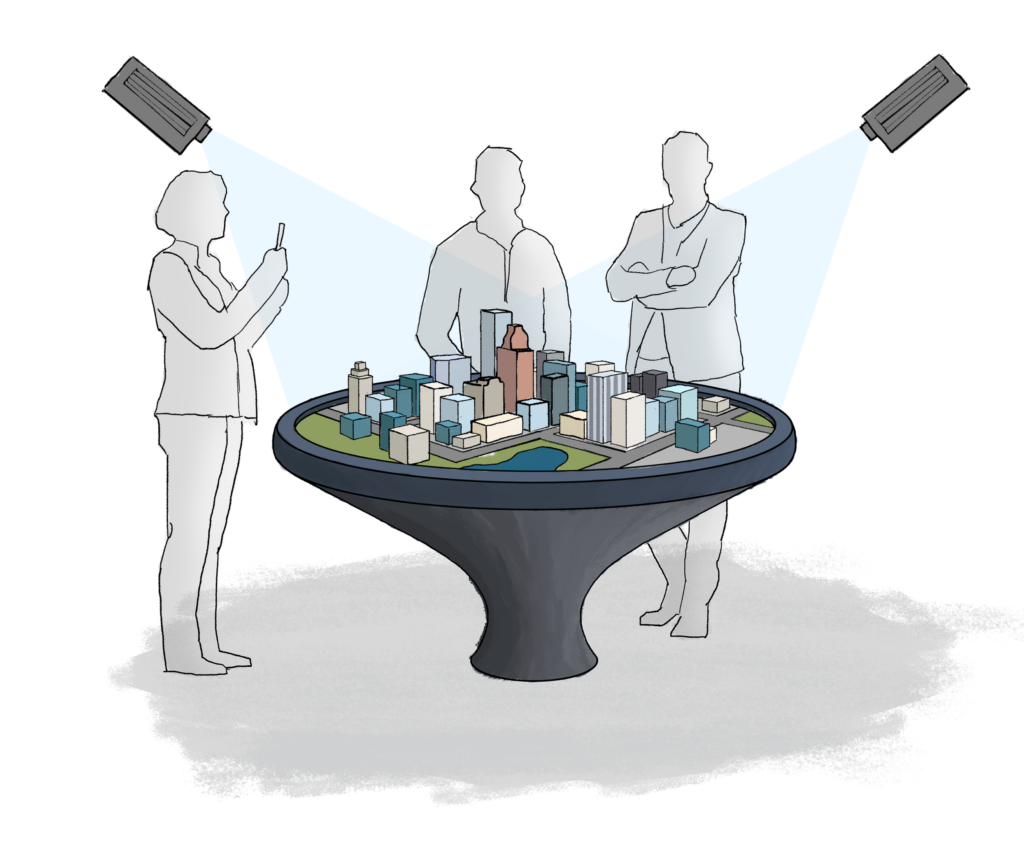
My first idea was to give an AI agent control over a fictional city. This would be visualized through a city model brought to life by projection mapping. Visitors would provide the system with very little input, based on which the agent would make decisions about life in the city. This would be visualized through changing facades, transforming landscapes and different vehicles moving through the streets.
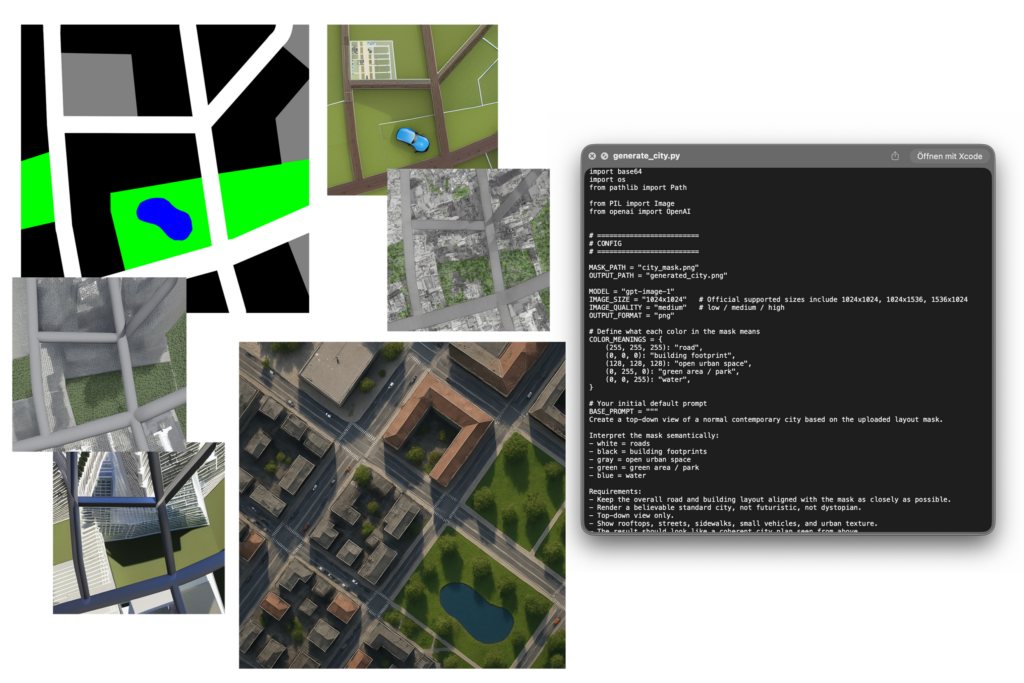
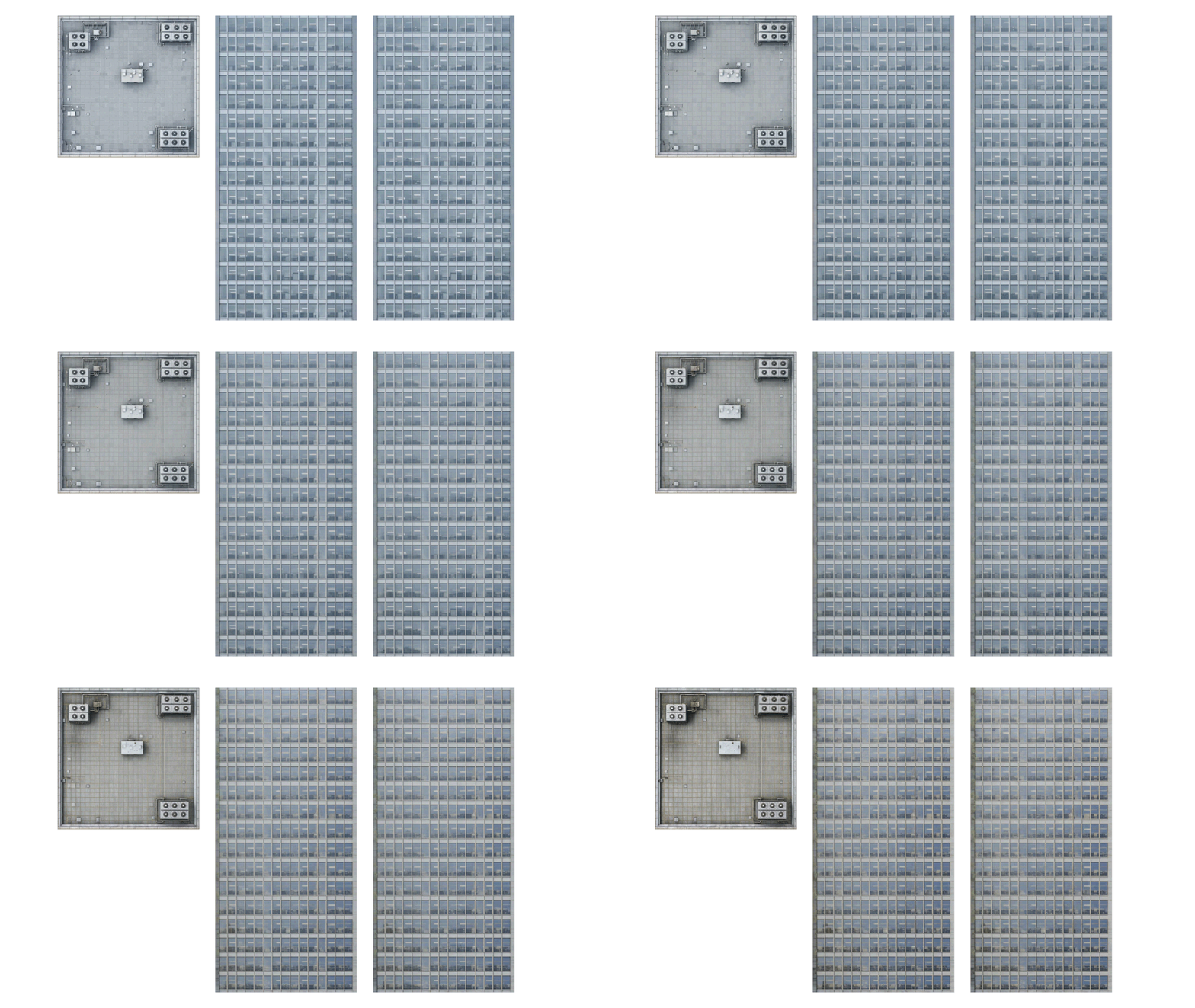
To test my idea, I built a pipeline that allows you to change the facade of a small tower via text prompts in real time. While it did work, generating each new variation with three facades took over one minute. This meant that real-time AI-generated imagery as part of a small and fast-paced experience is not feasible. Additionally, manipulating a system on the scale of a city would likely be too complex.
Idea 2: Improvement AI
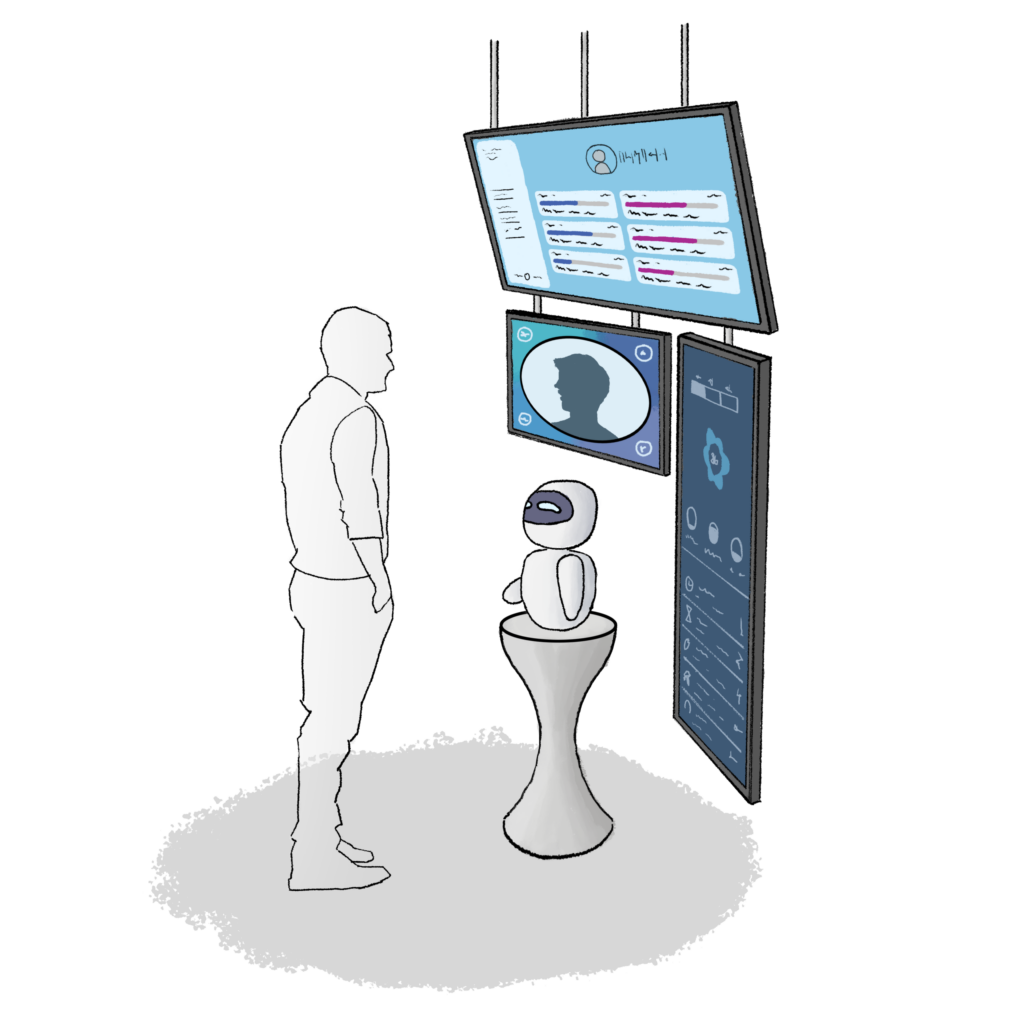
My next idea was to shift the focus to an individual person. In this setup, an AI system would analyze various areas of a person’s life and recommend improvements. This could range from improving sleep cycles to dietary recommendations or workout plans. The interaction would be guided by a small robotic companion.
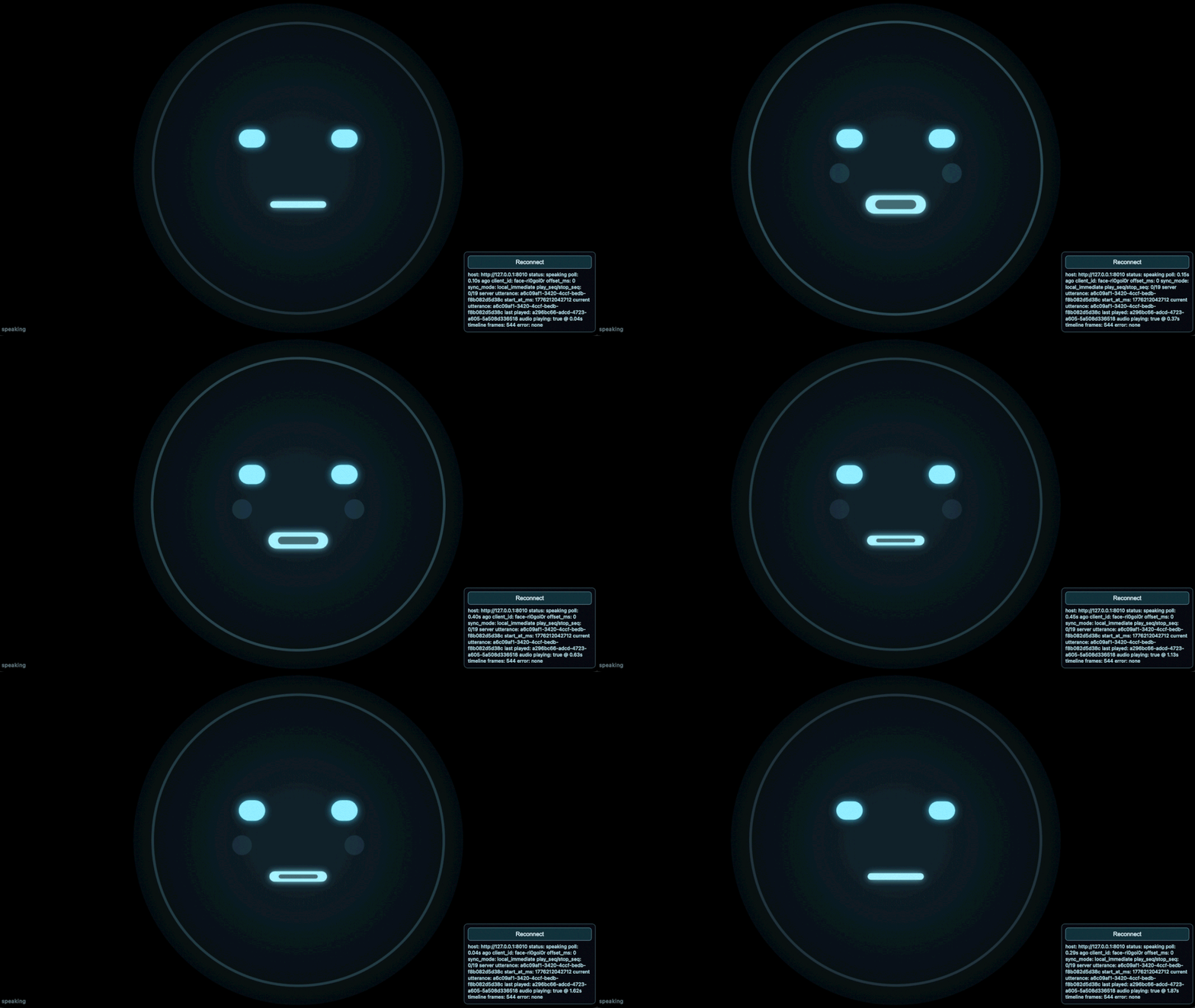
To experiment with this, I started looking into robotics as well as procedural face animations. While the scale of this interaction seemed more achievable, the concept already exists in many products today, and I wasn’t able to find a truly new or compelling angle.
Idea 3: Object Creation
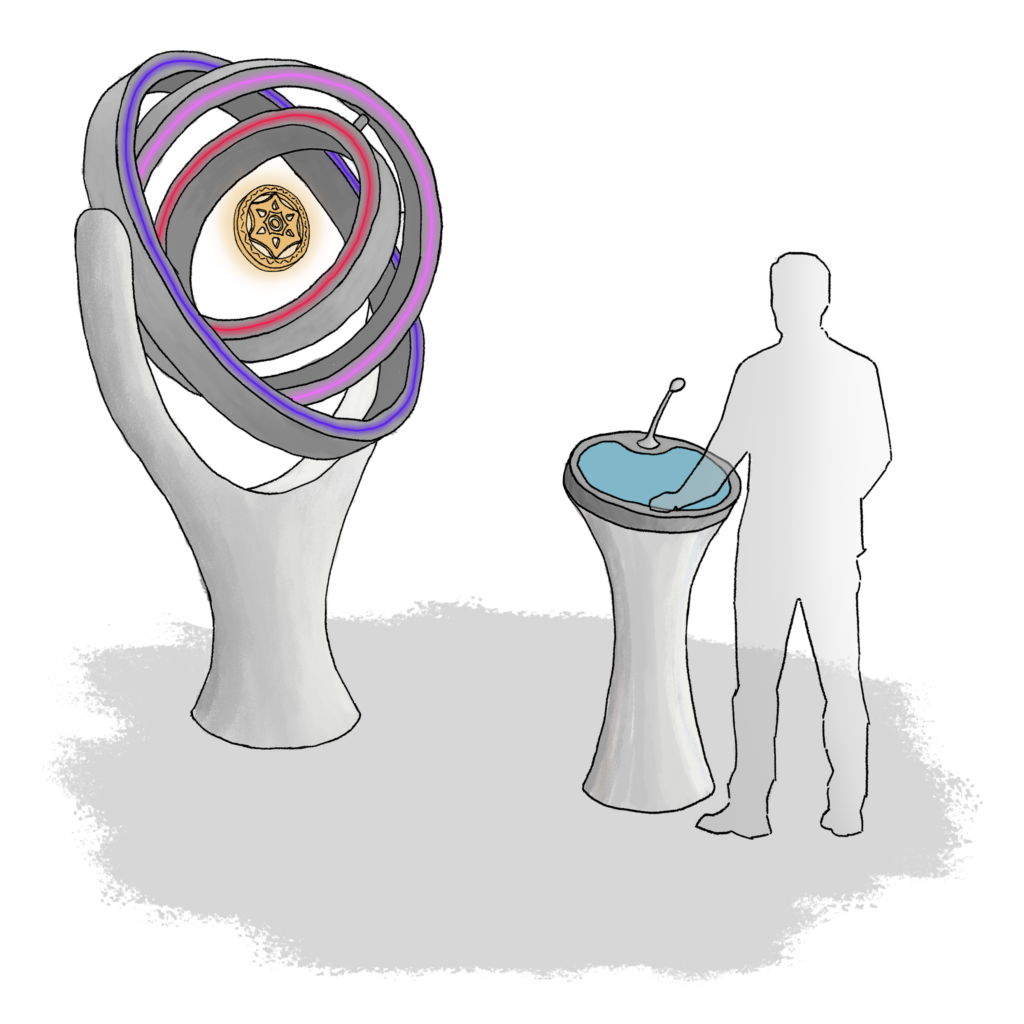
My next approach was to stay on the scale of one person, but this time the AI wouldn’t try to improve the person’s life. Instead, it would design something for them. There would be a somewhat mysterious machine that asks the user a series of questions and then creates a personal lucky charm in the form of a small amulet.
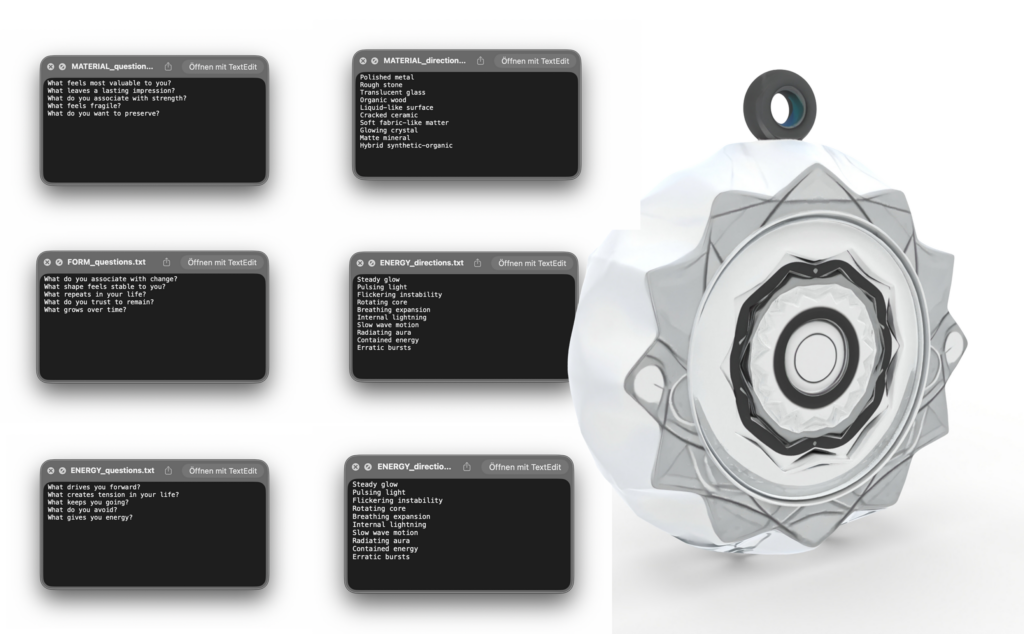
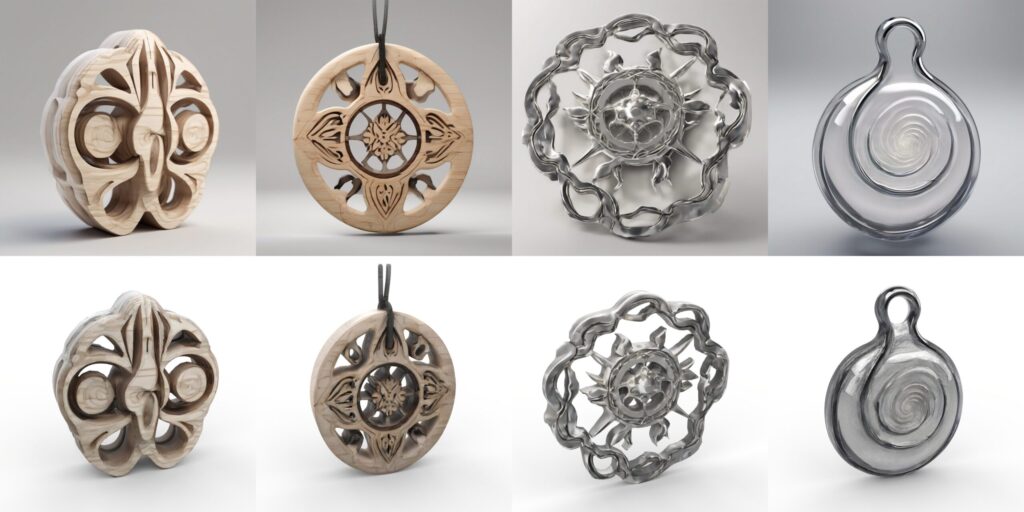
I started looking into generative 3D models and created a test setup where a system asks three abstract questions and translates them into properties such as material, shape, and energy. I ended up with a working prototype, however, locally run 3D generation models that worked on my computer were not advanced enough for the task, and cloud-based models are quite expensive. I was also not satisfied with the structure of the interaction, as it became too symbolic without a clear narrative.
Issues and Guidelines
Based on my first ideas and experiments, I defined a few requirements that the interaction must fulfill, both in terms of storytelling and technical feasibility:
- 1. The interaction must a crucial point in the world I am creating.
- 2. The outline the story must be graspable in a very limited time.
- 3. There must be a clear reason why this is a physical experience.
- 4. Any generative imagery or 3d models use must be selected from a pre-generated pool.
Building the story.
What is one of the most commonly discussed topics in relation to autonomous AI?
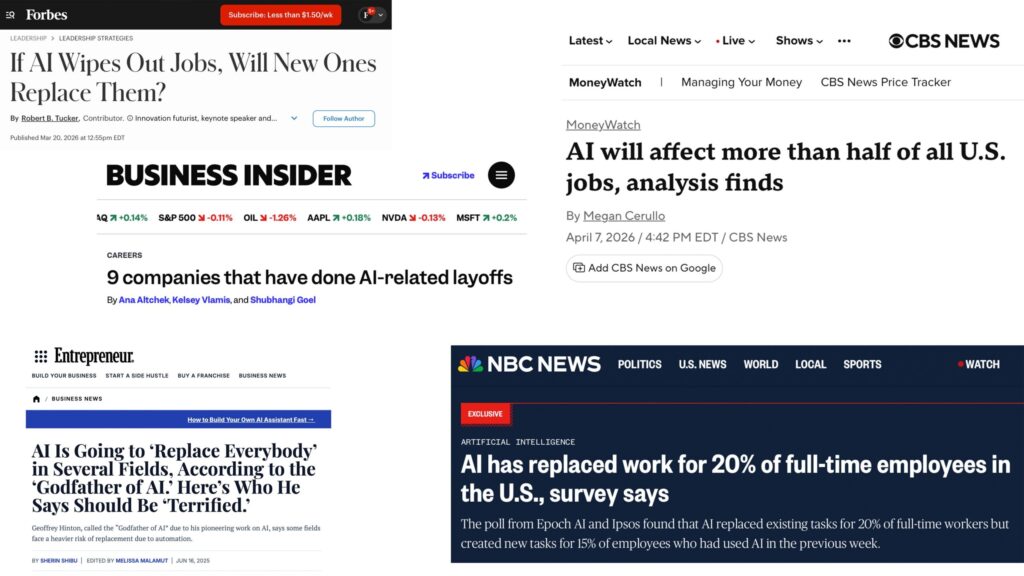
Now, how can this topic be turned into an experience?
When I was in high school everyone had to take this test form the AMS (Austrian Public Employment Service):
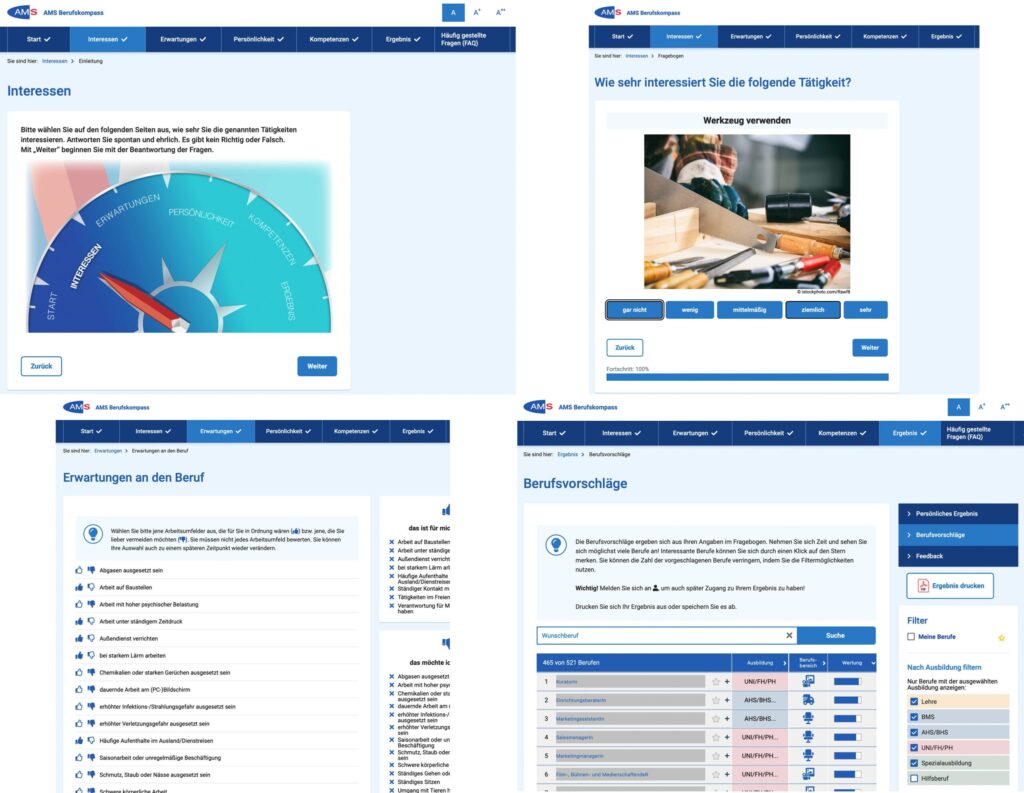
Now what would such a job assessment look like in a world where the labor market has been drastically altered by artificial intelligence?
What kind of jobs would this assessment recommend?
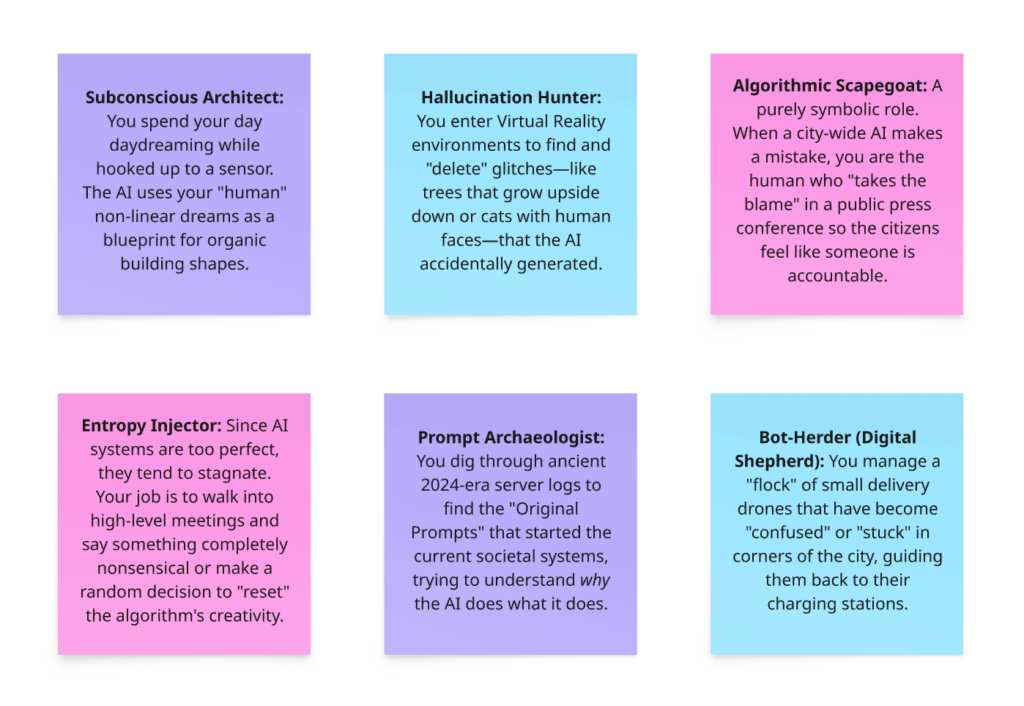
Potentially roles like these?
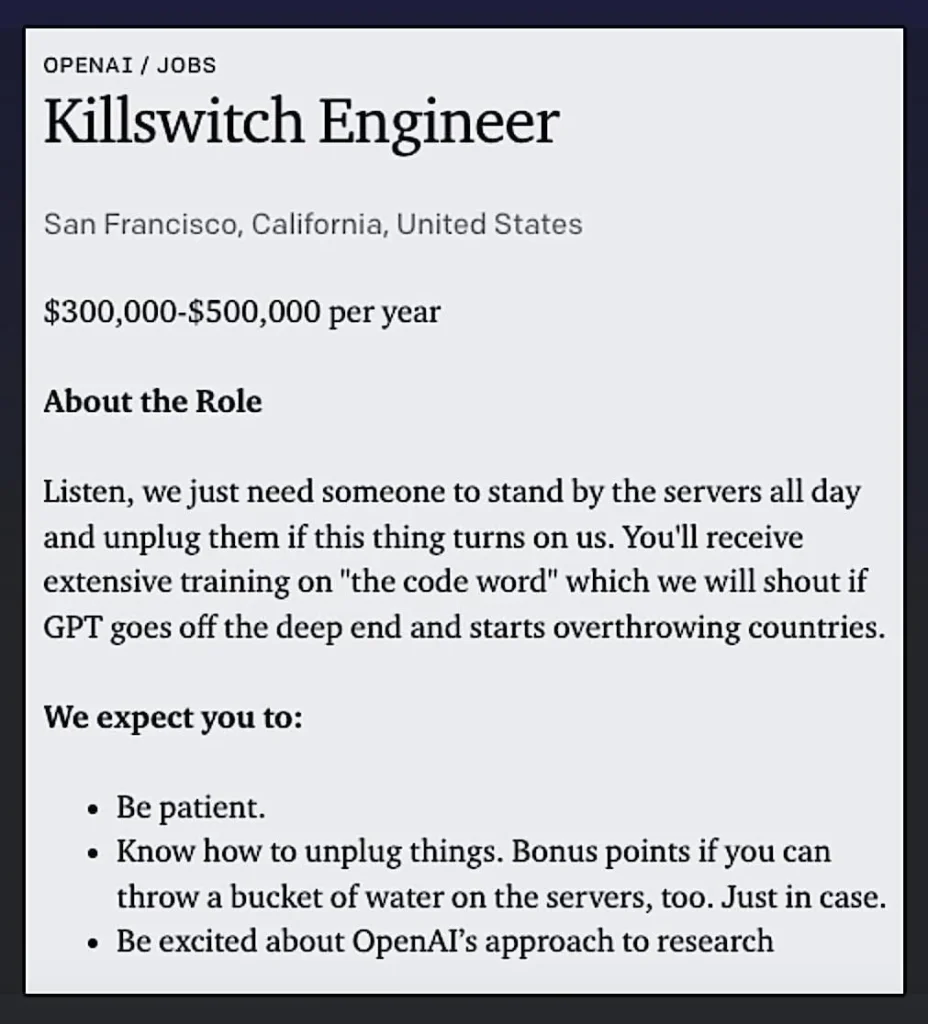
What skills would such an assessment look for in the future?
Maybe the entire process of job searching has been delegated to an autonomous AI system?
What if this interaction would not only result in a job recommendation but actually assign you a job immediately?
What are the jobs that still have to be done by humans?
The world.
The Premise
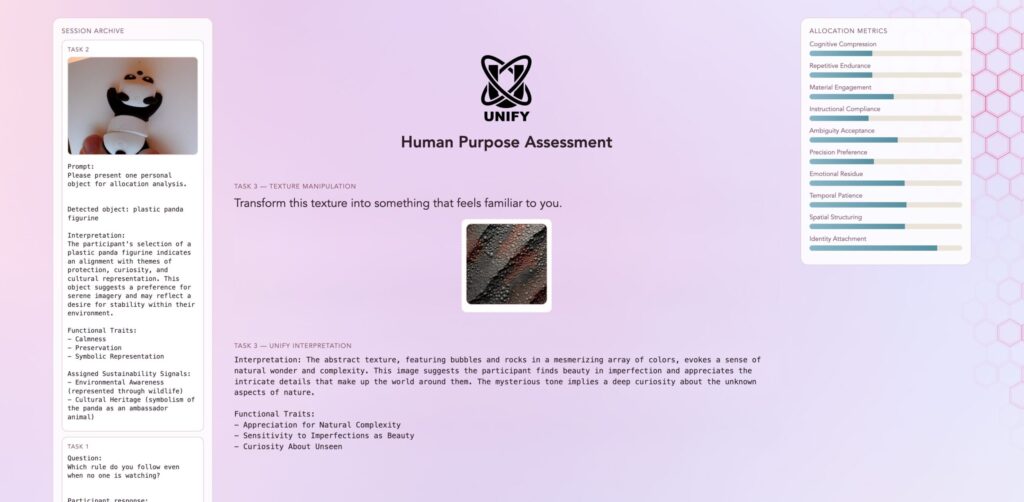
The story takes place in a near future where the government has outsourced the regulation of the job market to a company called “Unify”.
In this world, the “stress of choice” has been identified as a primary cause of systemic failure. Since AI has automated all traditional labor, the remaining roles are strange, niche, or highly physical.
The government has mandated that every citizen must undergo a Purpose Assessment, which assigns a purpose-driven job to every individual.
The Outline
In the traditional era, human career selection was a matter of personal preference. This subjective process created significant friction within the global workforce. When individuals chose their own paths, the result was a chaotic allocation of labor. High-demand sectors were often ignored, while other professions became over-saturated, leading to systemic instability and widespread professional dissatisfaction.
As advanced ai systems continued to optimize legacy industries, the competition for the remaining traditional roles became a source of unnecessary social stress. The human tendency to cling to obsolete identities created a barrier to progress.
Unify is the response to this era of transition. Under a strategic government mandate, the management of the labor market has been consolidated into a single, streamlined system. Through the application of high-precision assessment technology, Unify is able to transition individuals out of automated sectors and into roles where human presence remains a functional necessity.
At the center of this initiative is the Human Capital Purpose Evaluation. This process bypasses the inherent complexity of personal doubt to identify the optimal intersection between an individual’s biological aptitude and the needs of the collective. It is a transition from the burden of choice to the clarity of assignment. In this new landscape, every person is provided with a designated function that contributes to a stable and harmonious society.
The era of searching is over. Please proceed to the nearest Human Capital Allocation Center for a mandatory Purpose Assessment. Do not be concerned with the direction of your future. You will be accounted for.
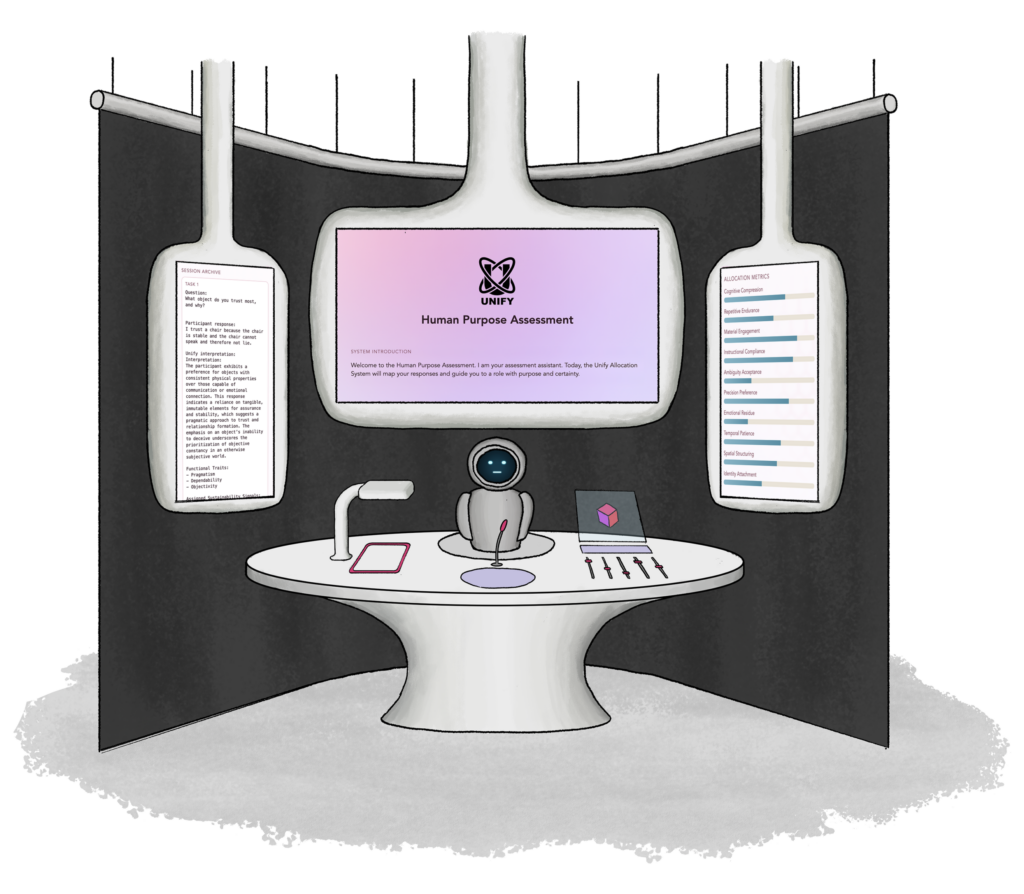
Concept Art
The prototype
Building the Prototype
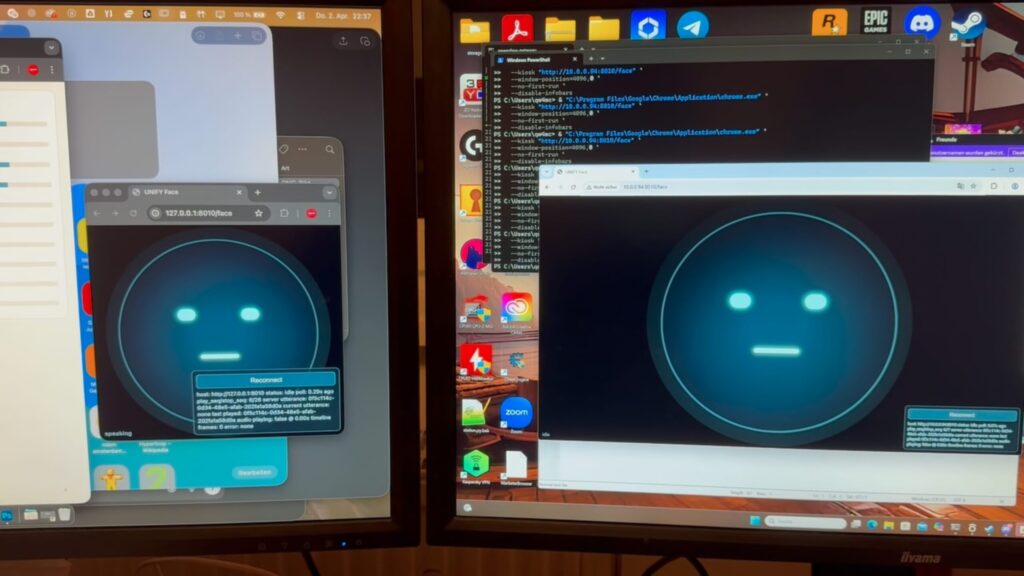
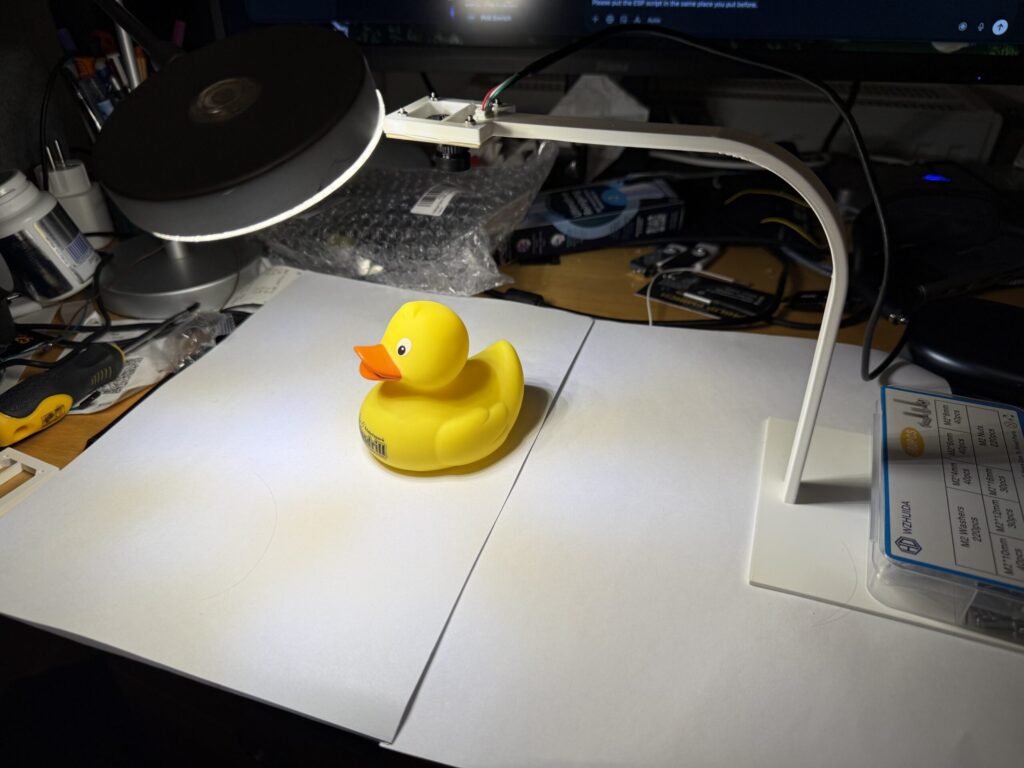

Demonstration
Next Steps
- Continue brainstorming and world building
- Developing the technical setup
- Playtesting
- Exploration of aesthetics
Leave a Reply