EN:
Space is never neutral. It is not simply there, not simply empty. Every space carries a history within it, a language of norms and expectations that determines whose presence is taken for granted and whose presence must be explained, proven, defended. To take up space therefore means far more than the mere occupation of a physical place. It means making one’s own needs and values visible where they are supposed to remain invisible.
A space speaks. Not with words, but with things, with arrangements, with what it shows and what it conceals. When I enter a space, I perceive it with all my senses. What I hear, what I see, what I smell and what I feel.
This becomes apparent even in the smallest, most everyday things. A glance into a place that is not really visible, and for that reason almost intimate and personal: the trouser pocket. In a small class survey, I asked my fellow students what they carry on their bodies close to them. Phone, wallet, wireless earbuds, keys, bike lights, a piece of straw, loose coins, rubbish, lighters, vapes, lip balm, one-time-code tags for work. Some had no pockets at all, or ones far too small: the trousers from the “women’s section”. Research suggests that oversized pockets on women are considered unflattering. A minor detail, one might think. But it says something fundamental: the emphasis on the body in service of sexualisation takes precedence over functionality – over the ability to carry valuables on one’s person: my keyring, to open workspaces, to secure my home – or the tool that gives me a sense of being slightly safer late at night, when I grip it between my fingers walking home alone.
The wallet, holding coins, notes or a bank card – allows me to exchange money for food or tools. It also carries my health insurance card, for when my body no longer functions the way I know it to. And my ID, which can prove who I am.
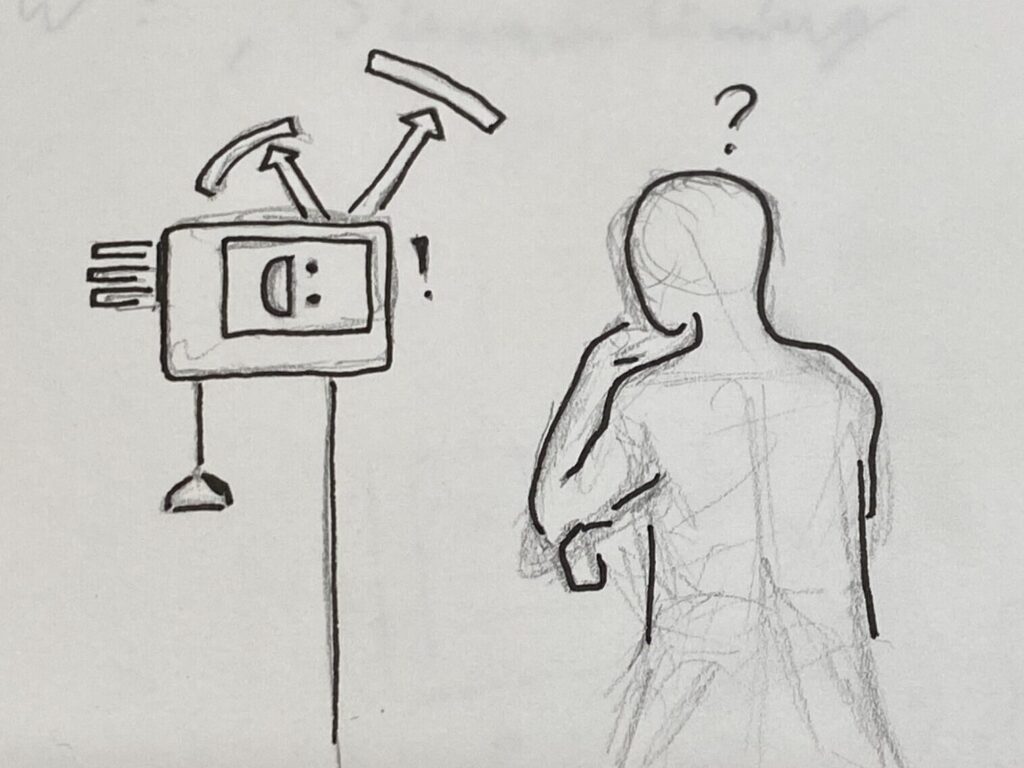
What does it mean to be constantly confronted with the fact that spaces were not built for you? You carry the awareness of that difference with you; you feel like an alien: foreign, out of place, other. Not made for this world, or in this context, not made for this space. Historical examples, such as the first women to ride bicycles, illustrate this experience of estrangement. It is especially hard when you have no, or very few, fellow aliens. You often feel misunderstood: Just get a handbag. It’s only a few extra minutes waiting for the toilet. Just wear a belt with that oversized work trousers. Don’t be angry, don’t be loud. All of this costs energy. Energy I would rather put into what actually matters to me.
Others share similar experiences: people and beings whose bodies or identities do not conform to society’s norms.
So often I ask myself: wouldn’t it simply be easier to return to the planet made for me? To care, to organise, to be emotionally present for others. Work that is enormously relevant to how we live together – and that still receives far too little recognition.
And yet, looking at the alien image once more, one realises: the idea of two separate planets does not hold.
While the image of the alien captures the experience of estrangement, another image opens up the possibility of change: the construction site.
Over the years, we have built infrastructure in our cities – houses, roads, and much more. We have created big things. Today, however, we are realising that technological progress has changed us, and that our needs have shifted. Tearing cities down entirely and rebuilding them from scratch seems neither practical nor sustainable. What is needed instead is a conscious deconstruction – a deliberate making of space. This requires the participation of everyone involved. And yes, it may be tempting to simply keep building, to keep growing. But perhaps it is time to pause: to look at what we have, what is worth keeping, what we want to change – and to accept that nothing is ever “finished”. Everything is merely a prototype, meant to be questioned again and again.
Space that opens itself to everyone does not grow smaller. It becomes different. It becomes richer, louder, more contradictory, more alive. It gains the sound of presence.
DE:
Raum ist nie neutral. Er ist nicht einfach da, nicht einfach leer. Jeder Raum trägt eine Geschichte in sich, eine Sprache aus Normen und Erwartungen, die bestimmt, wessen Anwesenheit als selbstverständlich gilt und wessen Anwesenheit erklärt, bewiesen, verteidigt werden muss. Raum einzunehmen bedeutet daher weit mehr als das bloße Besetzen eines physischen Ortes. Es bedeutet, die eigenen Bedürfnisse und Werte sichtbar zu machen, dort wo sie eigentlich unsichtbar bleiben sollen.
Ein Raum spricht. Nicht mit Worten, sondern mit Dingen, mit Anordnungen, mit dem, was er zeigt, und dem, was er verschweigt. Wenn ich einen Raum betrete, nehme ich ihn mit allen Sinnen wahr. Was ich höre, was ich sehe, was ich rieche und was ich fühle.
Das zeigt sich auch im Kleinsten, im Alltäglichsten. Ein Blick in einen Ort, der nicht wirklich sichtbar ist und dadurch fast schon intim und persönlich wirkt: die Hosentasche. In einer kleinen Klassenbefragung fragte ich meine Kommilitoninnen, was sie so an ihrem Körper – also nahe bei sich – tragen. Handy, Portemonnaie, kabellose Kopfhörer, Schlüssel, Fahrradlichter, ein Stück Stroh, einzelne Münzen, Müll, Feuerzeuge, Vapes, Lippenbalsam, Einmalcode-Anhänger für die Arbeit. Einige hatten auch keine oder viel zu kleine Hosentaschen – die Hosen aus der „Frauenabteilung”. Recherchen zufolge gelten zu große Hosentaschen bei Frauen als unförmig. Eine Kleinigkeit, möchte man meinen. Aber sie sagt etwas Grundlegendes: Die Betonung des Körpers, die der Sexualisierung dient, hat einen höheren Stellenwert als die Handlungsfähigkeit – als die Möglichkeit, Wertsachen am Körper tragen zu können: meinen Schlüsselbund, um Arbeitsräume zu öffnen, mein Zuhause zu sichern – oder auch das Werkzeug, das mir spät abends das Gefühl gibt, etwas sicherer zu sein, wenn ich es zwischen meine Finger klemme und alleine nach Hause gehe.
Die Geldbörse, die Münzen, Scheine oder eine Bankomatkarte enthält, ermöglicht es mir, Nahrung oder Werkzeuge gegen Geld zu tauschen. Sie trägt auch die Krankenversicherungskarte, falls mein Körper gerade nicht mehr so funktioniert, wie ich es kenne. Und meinen Ausweis, der meine Identität nachweisen kann.
Was heißt es, wenn man ständig damit konfrontiert ist, dass Räume nicht für einen gebaut sind? Man trägt das Bewusstsein dieser Differenz mit sich, man fühlt sich wie ein Alien: fremd, nicht zugehörig, anders – nicht für diese Welt, oder in diesem Kontext: nicht für diesen Raum gemacht. Historische Beispiele – etwa die ersten Frauen, die Fahrrad fuhren – verdeutlichen diese Erfahrung der Fremdheit. Das ist besonders schwer, wenn man keine oder nur wenige weitere Aliens hat. Man fühlt sich oft nicht verstanden: Kauf dir doch eine Handtasche. Das sind doch nur ein paar Minuten länger Warten vor dem Klo. Zieh dir einen Gurt an für die viel zu große Arbeitshose. Sei nicht wütend, sei nicht laut. All das kostet Energie – Energie, die ich lieber in das stecken würde, worum es mir wirklich geht.
Ähnliche Erfahrungen machen auch andere Menschen und Spezien, deren Körper oder Identitäten nicht der gesellschaftlichen Norm entsprechen.
So oft frage ich mich dann: Wäre es nicht einfacher, auf den Planeten zurückzukehren, der für mich geschaffen ist? Sich kümmern, organisieren, emotional für Menschen da sein. Arbeiten, die gesellschaftlich enorm relevant für unser Zusammenleben sind – und denen dennoch zu wenig Anerkennung zukommt.
Doch wenn man das Bild des Aliens noch einmal betrachtet, merkt man: Die Vorstellung zweier getrennter Planeten geht nicht auf.
Während das Bild des Aliens die Erfahrung der Entfremdung beschreibt, eröffnet ein anderes Bild die Möglichkeit der Veränderung: die Baustelle.
Über Jahre haben wir in Städten eine Infrastruktur aufgebaut – Häuser, Straßen und vieles mehr. Wir haben Großes erschaffen. Heute merken wir jedoch, dass der technologische Fortschritt uns verändert hat und unsere Bedürfnisse andere geworden sind. Städte vollständig abzureißen und neu zu bauen erscheint wenig nachhaltig. Was es braucht, ist eine bewusste Dekonstruktion – ein bewusstes Platzschaffen. Dabei müssen alle Beteiligten mitwirken. Und ja, es mag verlockend sein, einfach weiterzubauen, weiterzuwachsen. Aber vielleicht ist es an der Zeit innezuhalten: zu schauen, was wir haben, was schön ist, was wir verändern wollen und zu akzeptieren, dass nichts „fertig” ist. Alles ist bloß ein Prototyp und soll immer wieder hinterfragt werden.
Raum, der sich für alle öffnet, wird nicht kleiner. Er wird anders. Er wird reicher, lauter, widersprüchlicher, lebendiger. Er gewinnt das Geräusch der Anwesenheit.
I have tried to pay more attention to how I myself experience and engage with the world and noticed that I tend to be uncomfortable in understimulation. I have never liked meditation, because it usually makes me feel even more anxious, and I never leave the house without my headphones that let me tune out my surroundings and blast my ears with music wherever I go. Even at home, I usually never experience a second of silence. There is always something filling the background. I know that I am not alone in these habits and experiences. We seek and find comfort in very conveniently designed algorithmic experiences that dependably and predictably serve us content we know we will like. If we wanted to, we could cut ourselves off from the real world and just exist in our own microcosms where everything is always exactly as we like it and we can be comfortable forever, not being held accountable for anything.
The world feels very uncertain right now. Between the (still noticable) repercussions of the pandemic, economic instability, war, and the potential of climate collapse looming around the corner, it often feels like there is not much left to look forward to. I think part of why I feel the need to constantly distract myself with meaningless overstimulation is because I don’t know how to deal with all of that constructively. It feels like my options are either to disengage and live life in my own little world, consciously ignorant of the crises we are experiencing, or to be paralysed by the awareness of everything that’s going on and not feeling able to do anything about it.
Additionally, I feel my fear responses are often unproportional or not constructively directed towards the things that should actually scare me, and where my fear could be used and reframed into constructive action. Instead, I am existing in a state of constant underlying anxiety that can only be elevated but is also reinforced by the behaviours of overstimulation and distraction/avoidance I described above. This feels not only paralysing and unconstructive, but is also just exhausting for my body and mind.
Thinking some more about this behaviour of disengaging and distracting ourselves with tools that create a high sense of certainty and dependability, it struck me as a similar principle to how OCD works (and how I have experienced OCD). Obsessive Compulsive Disorder is all about mitigating the discomfort and fear that the uncertainty concerning an “obsession” creates (the uncertainty of “What if the bad thing happens?”). Compulsions are repeated actions that one feels the need to perform over and over again in order to prevent “the bad thing” from happening. Compulsions are not logical or rational reactions to the distress the obsession causes. Nonetheless, they create a quick and short-term relief, and a perceived sense of certainty, until another trigger is encountered and the cycle starts again.
Being on social media and having algorithmically filtered content available to us at all times creates the illusion of control, because we can predict how it will make us feel. Our brains know they can depend on the dopamine and instant gratification they get out of it. Similarly, using LLMs as a substitute for social relationships is just an attempt at controlling those interactions. The LLM is predictably going to agree with everything you say and reassure you like a real friend maybe wouldn’t always. At the end of the day, the tools we use and rely on to create a seemingly predictable and comfortable reality for ourselves are isolating us from each other and reinforcing the behaviour of disengagement and avoidance, making us ever more anxious and incapable to stop and actually learn to deal with (our fear of) uncertainty.
“Exposure and Response Prevention” (ERP) therapy is how OCD is most effectively treated. The way it works is that if exposed to a trigger, you consciously don’t engage in the compulsion that would create short-term comfort in the situation. Instead, you need to learn to “sit with” the discomfort and the uncertainty of the obsession. This teaches your brain and body that, even if you don’t perform the compulsion you feel the need to perform in order to “stay safe”, the consequences you are scared of are highly unlikely to happen.


The matter of fact is that our brains and bodies thrive on a “manageable” amount of uncertainty. It is how we learn and how we get motivated to take action. Being stuck between the perceived comfort and predictability of digital media (of what our brains and bodies know they will get out of it if we consume it) and the total unpredictable and unstable state of the world, it is therefore somewhat unsurprising I find myself feeling this way.
Horror movies utilize the so-called “Goldilocks Zone” of manageable fear. By repeatedly building suspense over the course of the story and then releasing the tension just when it becomes too much (with a jump-scare, for example), watching horror movies is basically a way to engage with and practice fear and uncertainty in a “safe space”, where you know nothing can actually harm you.
Furthermore, being able to tolerate or even be comfortable with uncertainty could help with better interoception and self-awareness. If you are not constantly trying to tune out the world and actually try to understand your anxiety, you will probably be more likely to recognize when it is misdirected and redirect it to where and when it actually matters and can actually be a useful tool.
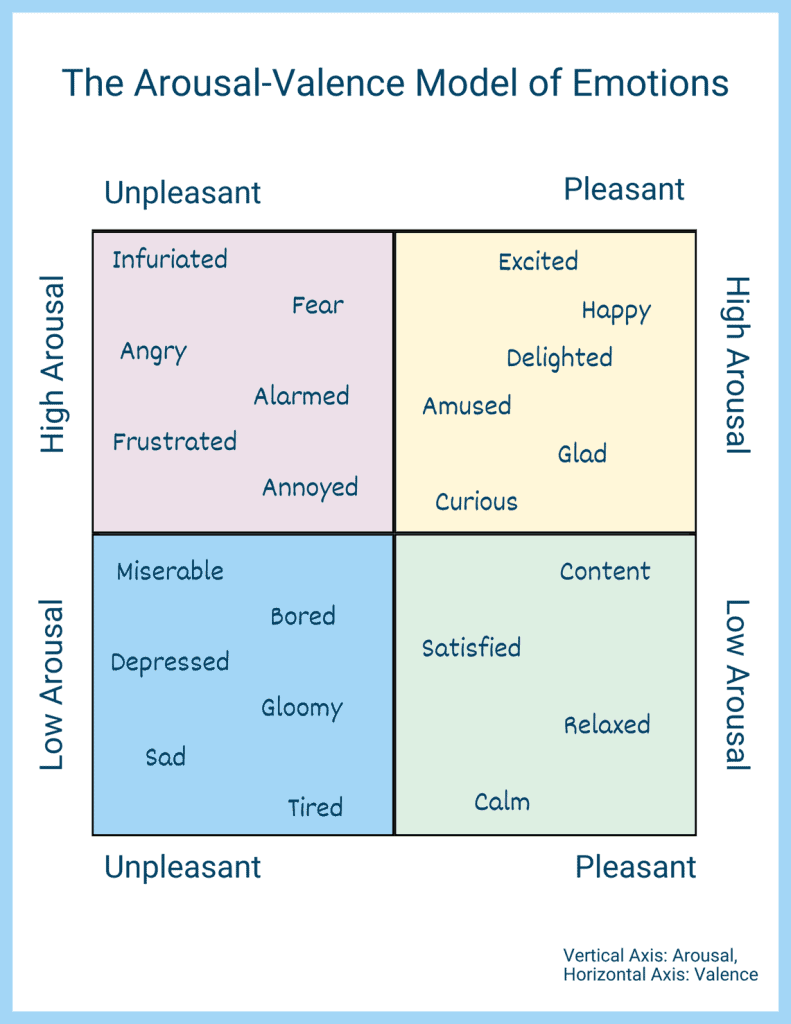
How can I make people engage with their own responses to fear and uncertainty?

It would be an audio(visual) installation that reacts and gives feedback to the pulse of the viewer. I want to implement the connection to the heart rate in order to adapt the structure and pace of building suspense and uncertainty to the physiological experience of the viewer, as well as reflect their own (physiological) reaction back to them. The goal of the experience should be to make people question and reflect on their own ability and mechanisms they use to cope with uncertainty and fear (of the future) and possibly enable them to reframe how they experience fear and uncertainty in a way that is productive.


Gives the illusion of an endlessly descending or ascending tone
https://www.fallingfalling.com
A game where you wander aimlessly through endlessly generated architecture
Simple processing prototype to connect heartbeat to audiovisual feedback

Prototype to try out the effect of connecting a shepard tone + heartbeat audio to an “endless” touchdesigner animation
Prototype to try out connecting a heartbeat to an animation (that only proceeds with each beat)
3 different moodboards to represent the different stages of the experience:


Things I’ve worked on:
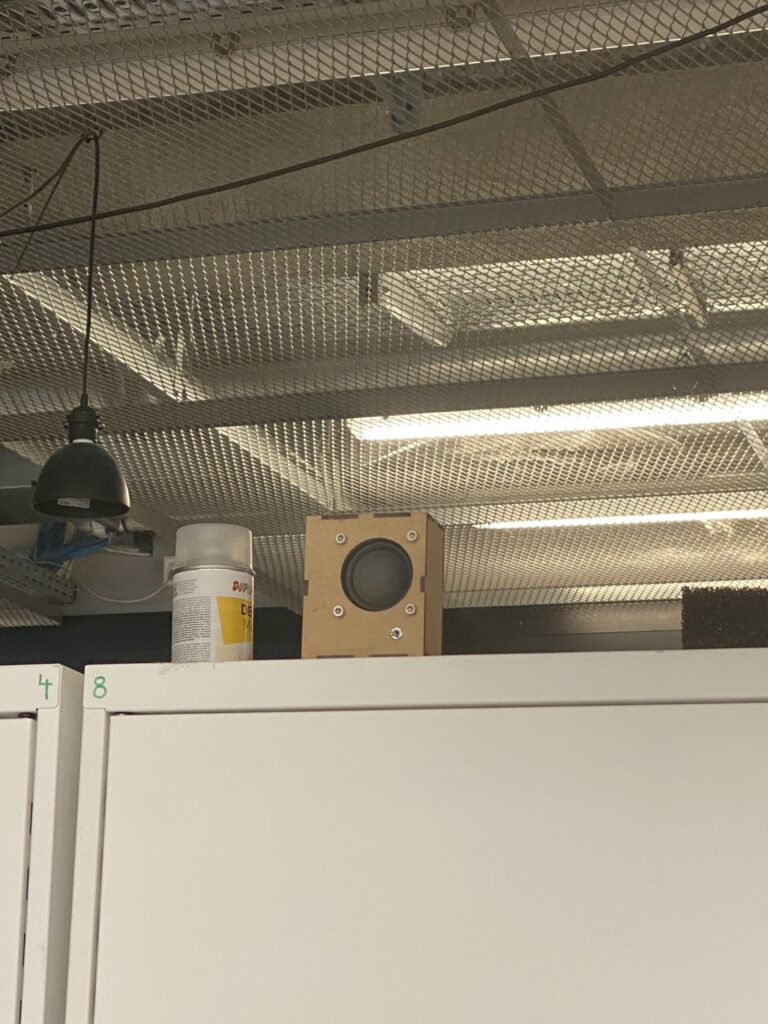
These can call between each other and can also be installed in ID.


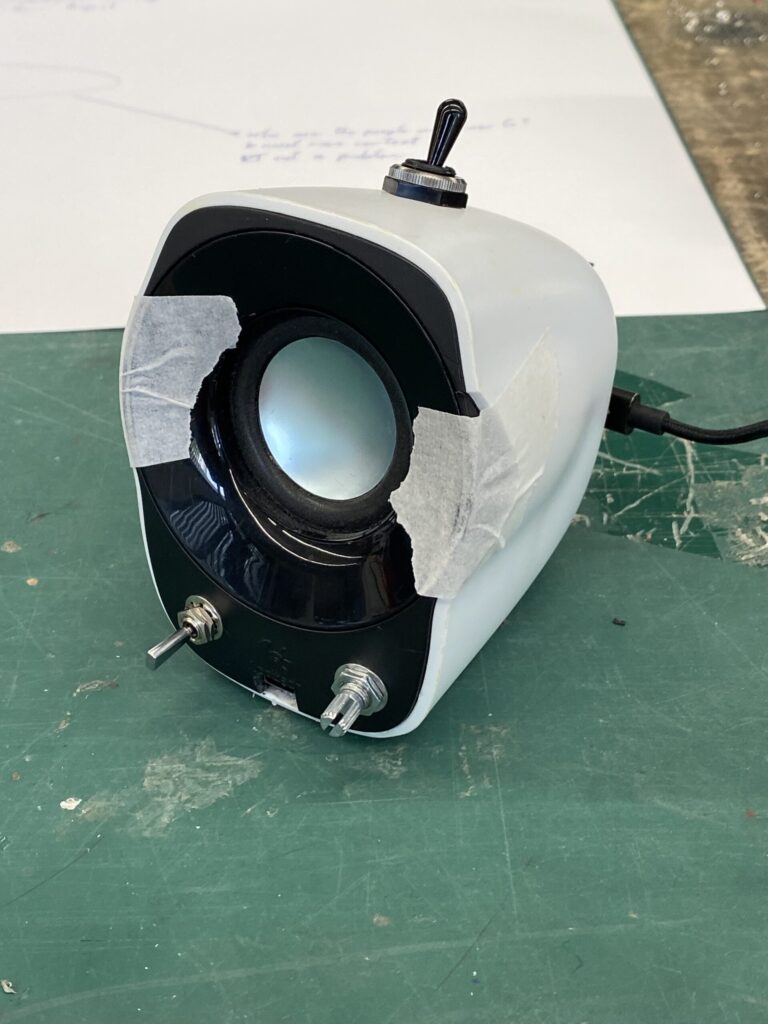
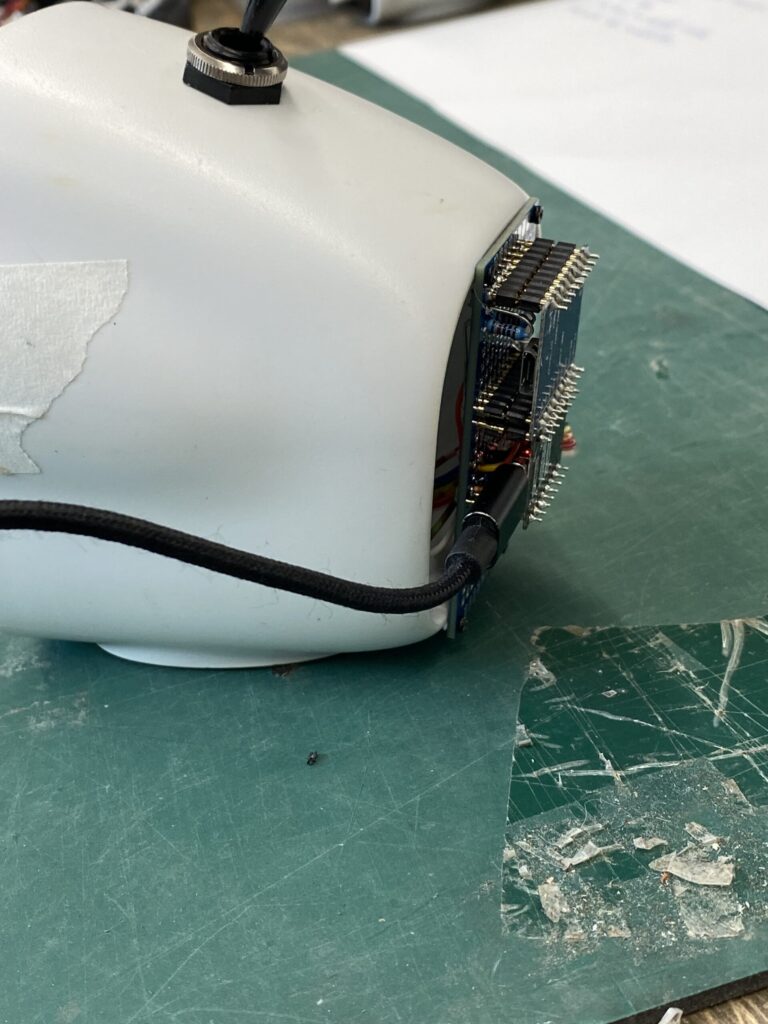
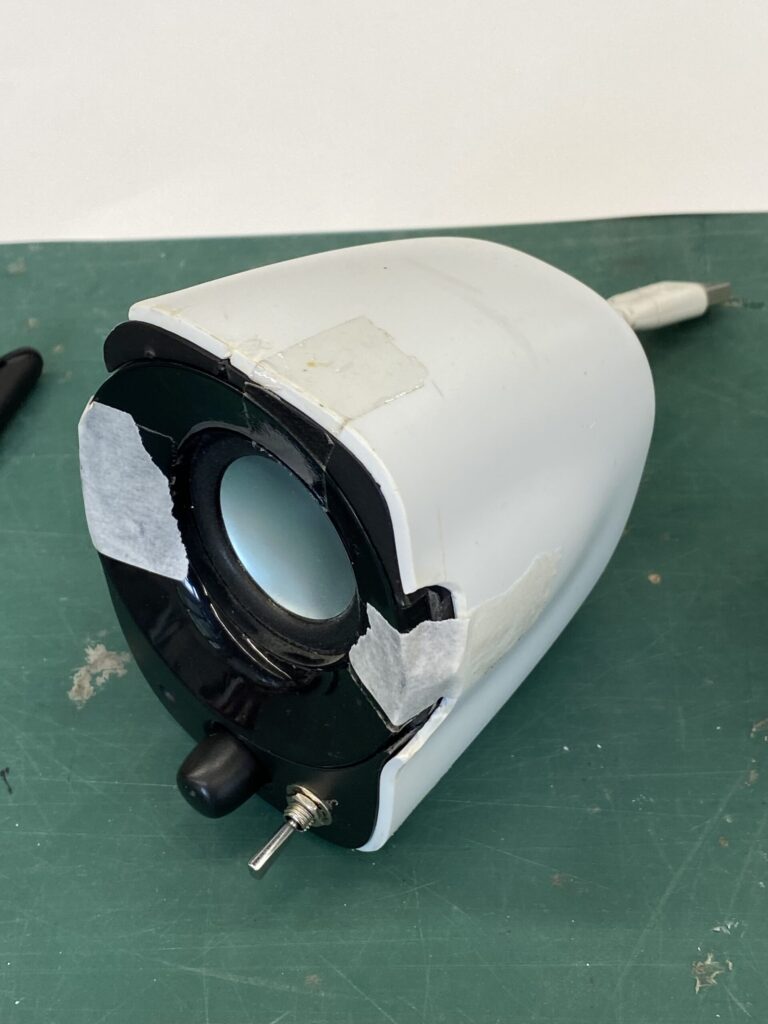
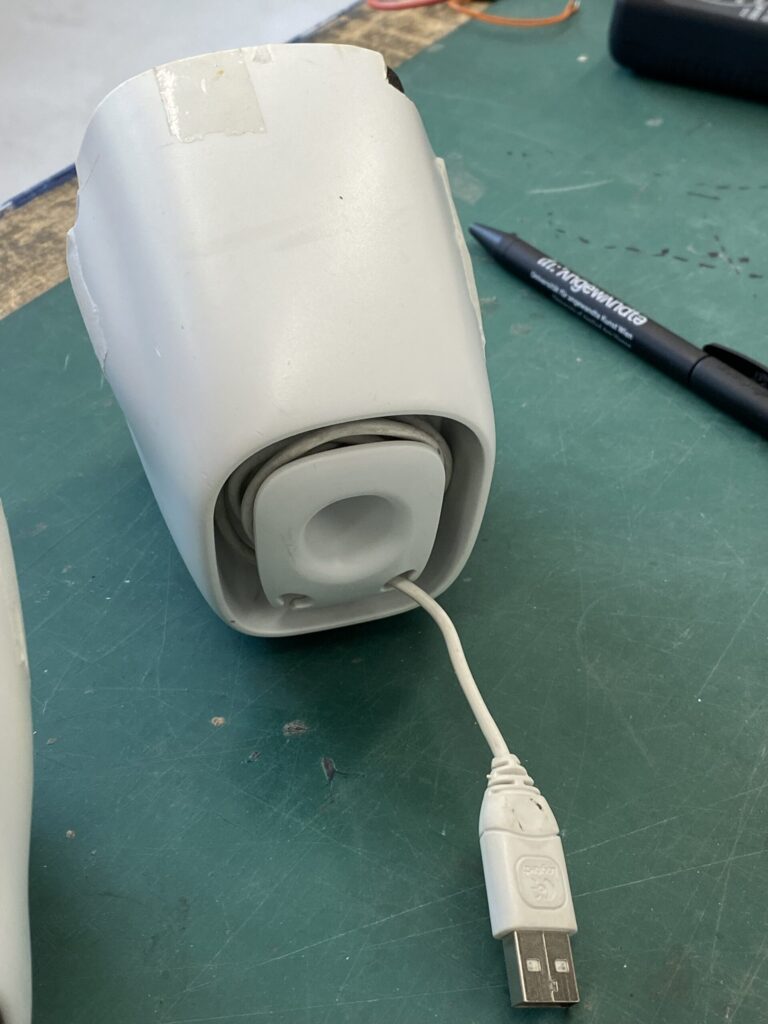
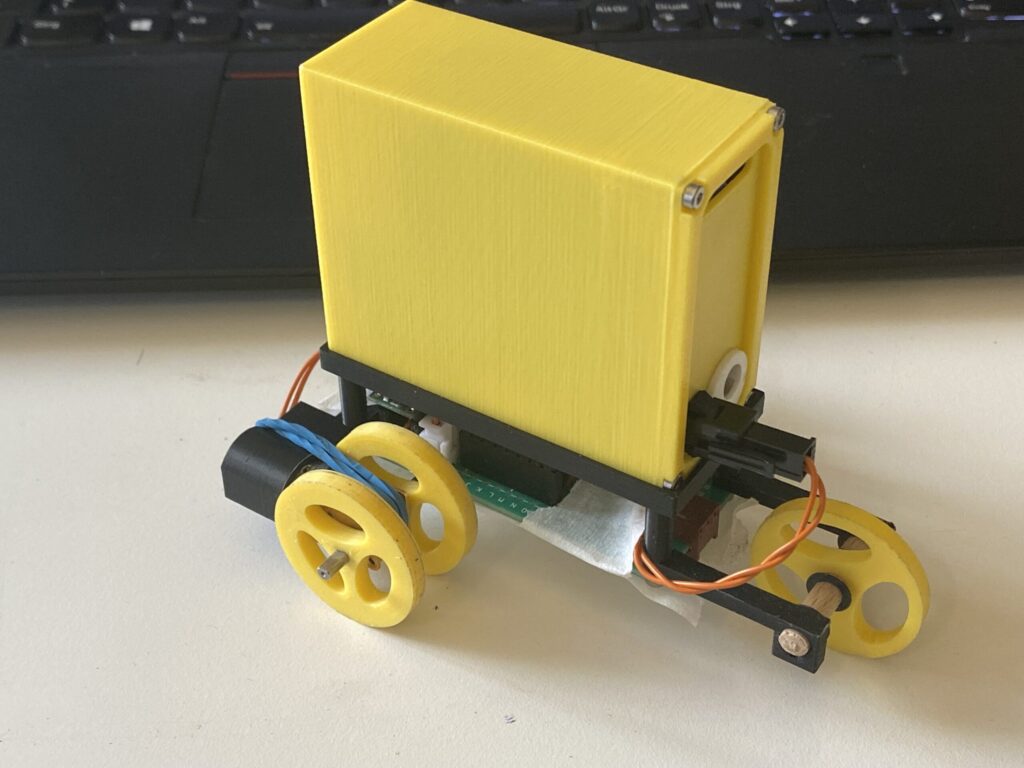
I’ll call it the Classwalker


Including:


I was talking with Clark about how I was going in circles and he suggested doing live streams, or filming myself doing the projects. This way makes it easier for me to document my progress. I was hesitant to do it until now due to limited storage or bad memory workflow, but I have to overcome this obstacle.


Philip reminded me of the products of Mark Rober, among them the HackPack, a subscription of packages with different projects aimed at deepening understanding of key electronic principles. I should have looked at it much earlier, since it is a relevant topic to my project…
Since the HackPack goes into a different direction he suggested I could design a starter pack or similar more going in the direction of modifying and fixing electronics.
Nadine is interested in being able to ask questions about the things that can be hacked. While doing so she finds being able to interact physically is important. She suggests an environment of group events. About hacking, fixing, whatever comes to mind.
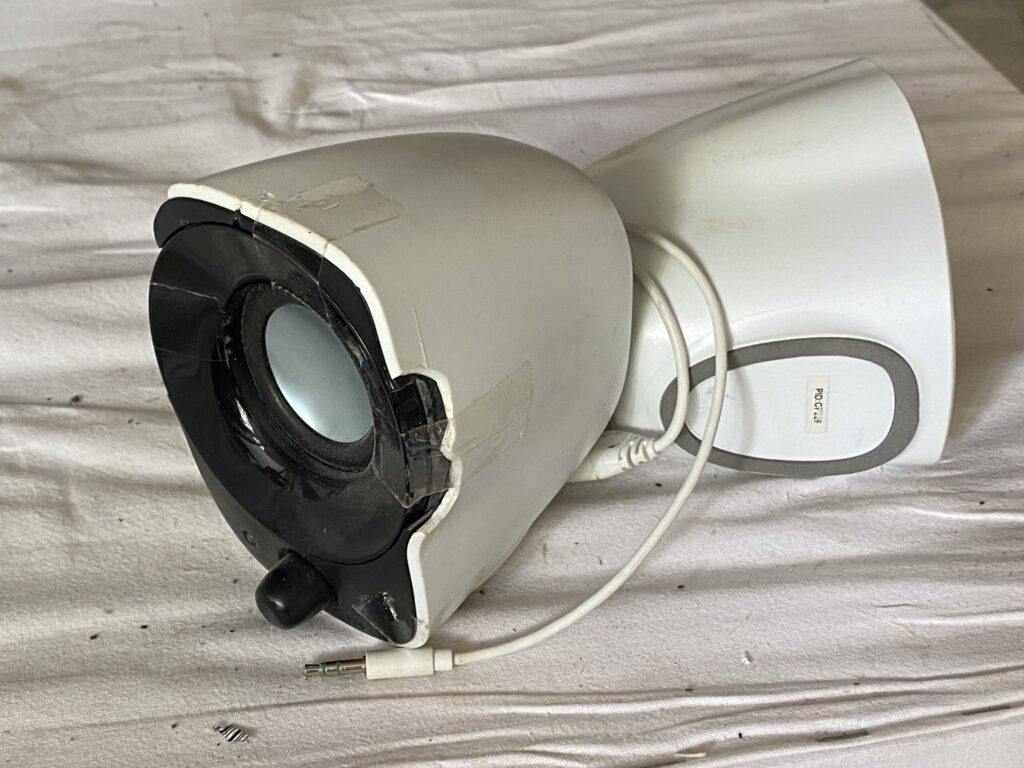
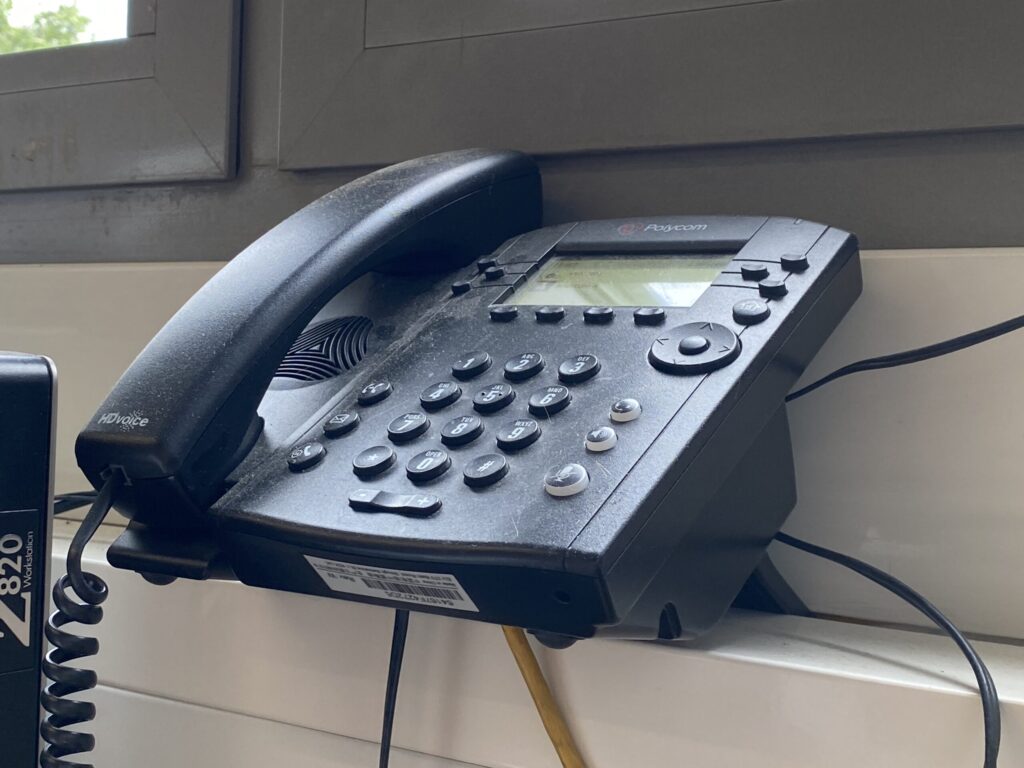
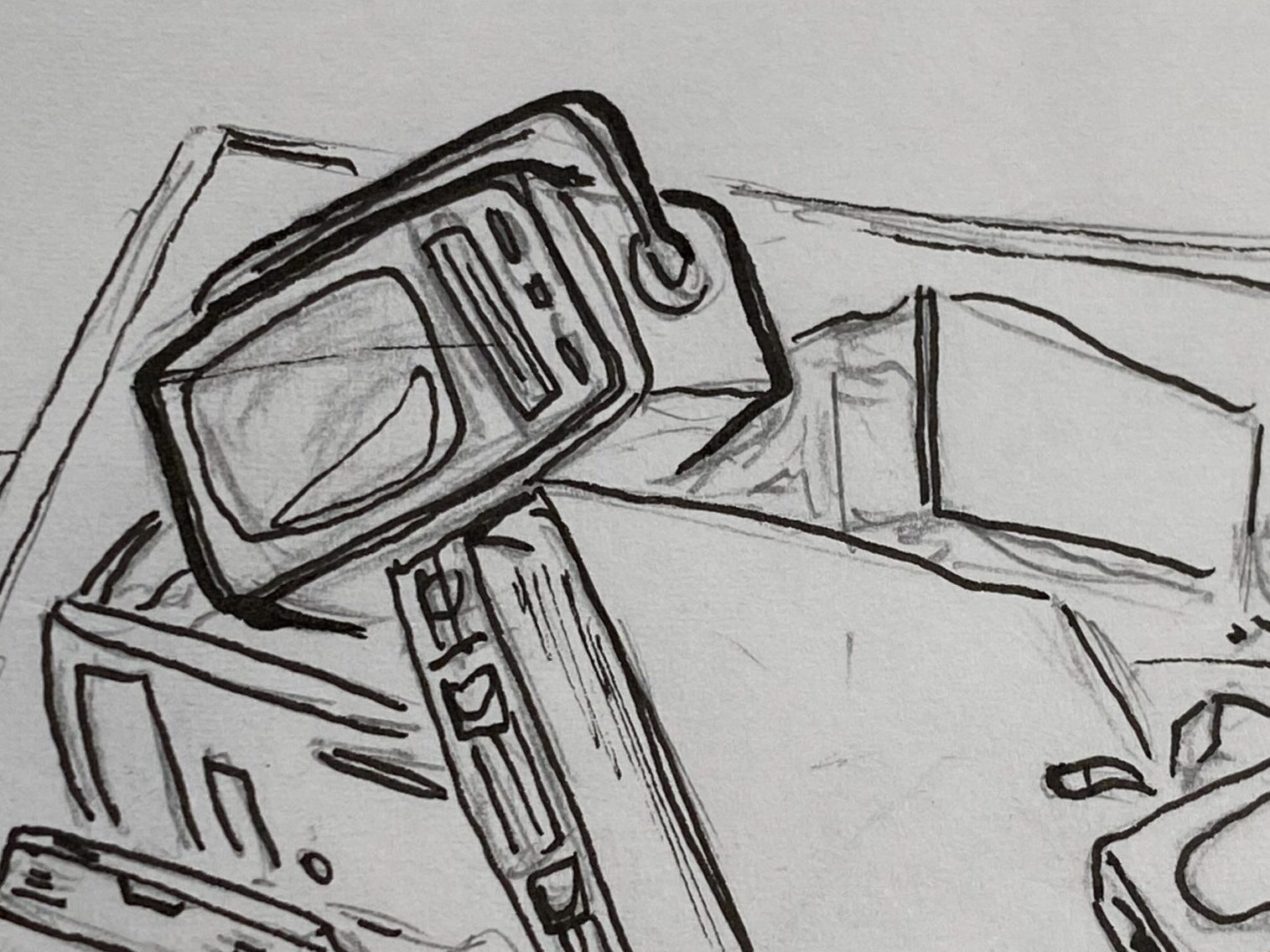
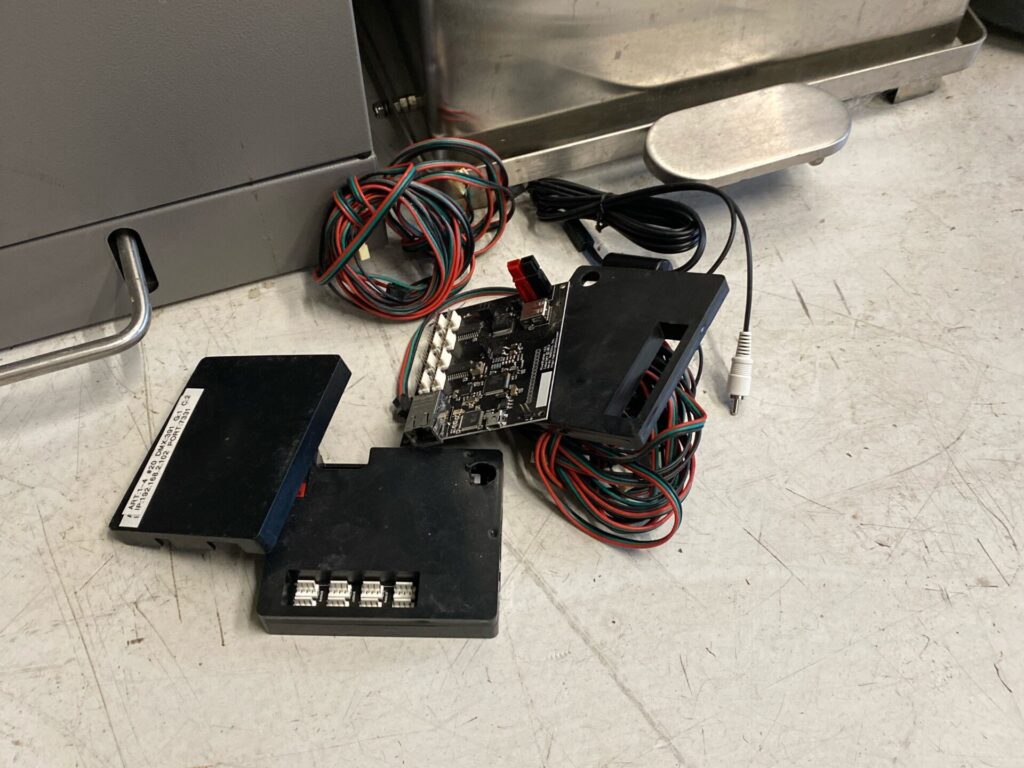
When people ask me what my project is about, I mostly answer that it has to do with electronics and how I want to bring people closer to understanding them so they can fix/modify it themselves.
There is potential for a community aspect but I have been struggling to fit it all into one framework.
The general idea is to have some installation that I can exhibit that shows off what is possible with tinkering, but also doesn’t intimidate with complexity.
Next steps:
This paper examines the concept of occupying space from a critical perspective.


Next Question: Will it be interactive, or will it work in a time-linear format?
What kind of lighting programming or mapping would be intuitive for me to learn, given my skills (2D motion graphics / vector animations)?

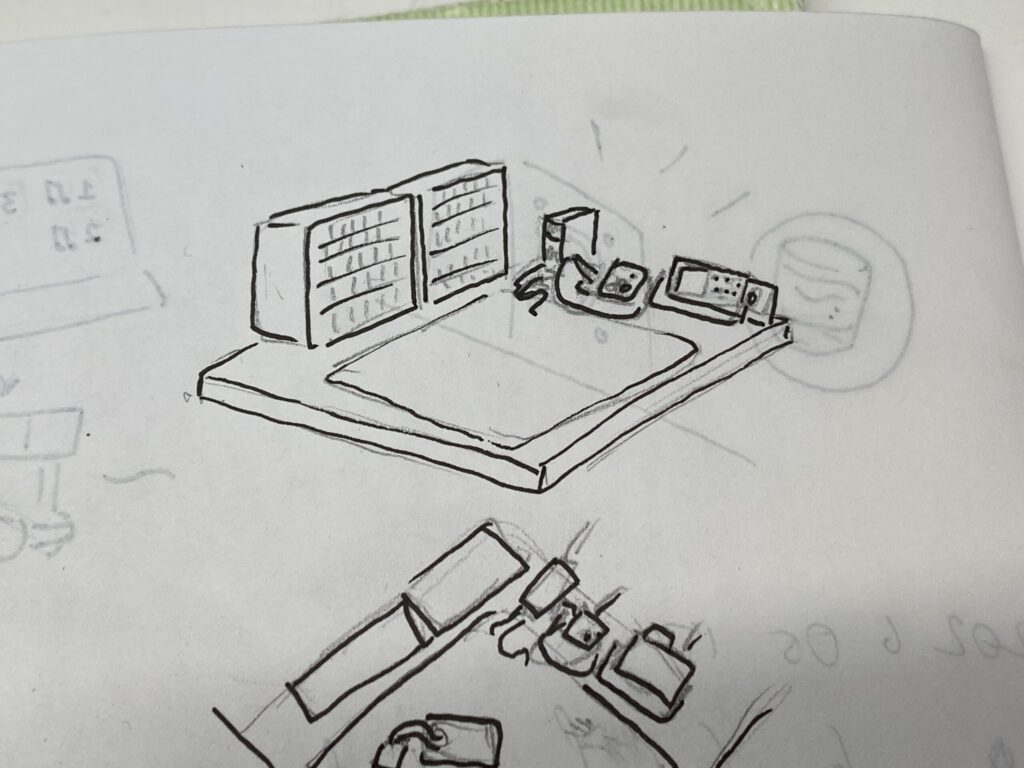
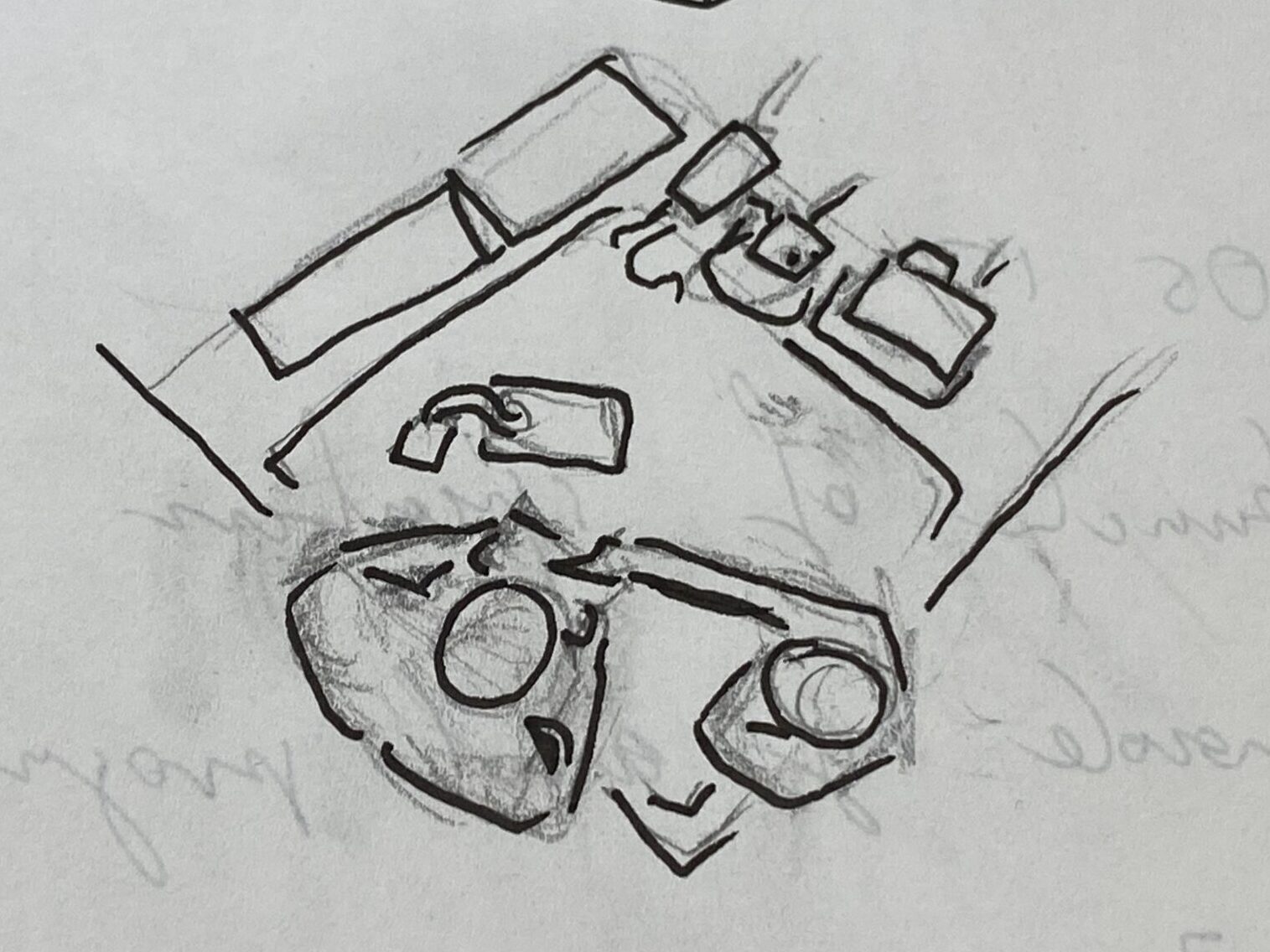
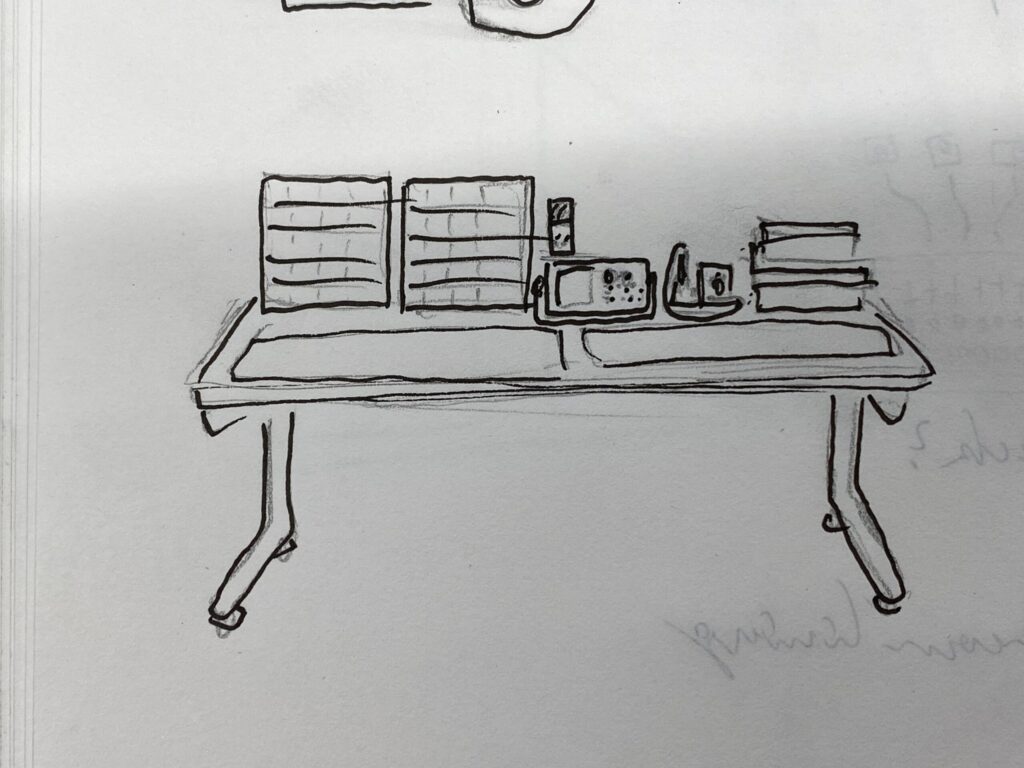
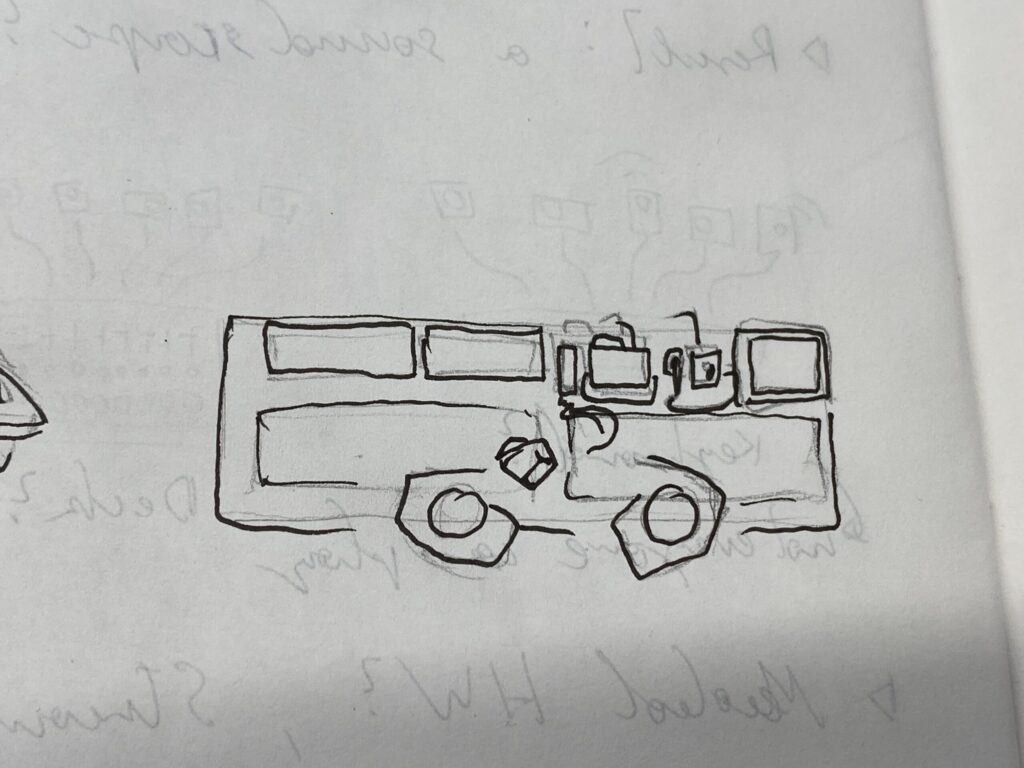
Building upon exp.2.: “How can I play with modular elements that, depending on the users needs, occupy different amount of space?”
First attempt


Morning / Midday / Evening (from experiment 2) translated into spacial structures

“Who even has the option to withdraw?”

Oftentimes we cannot change the situation we’re in. But what we can change is how we react to it.


My personal armour made visible.


As human beings, we shape our environment and decide every day how we navigate it based on these design choices. As designers, we are in a position of power that comes with responsibility. Tools empower us, giving us a kind of superpower that we would not have without them, and are essential to our safety and survival. But what if this responsibility is abused or not truly upheld? What can one do as an end user in the face of this powerlessness?
Example: trouser pockets
| A | B |
| Confrontation | Fuck-off / be more Radical |
| Confront designers with their mistakes | take direct action using our own resources |
| Write a letter / Highlight the issues on online platforms | Simply sew around the trouser pockets. Attach items to your body in a different way. |
![]() https://pudding.cool/2018/08/pockets/ | ![]() ![]() |
Sytem von Innen ändern:
| C | D | E |
| Research | Participation | Simulation |
| How does my target group behave? | Who is my target audience, and how can I actively involve them in the design process? | How can I make the situation more tangible so that people can empathise more? |
| possible conclusions that are linked to personal bias (e.g. white saviourism) | See the target audience as the architects of their own needs. As a designer, you are ‘only’ the translator. | |
![]() ![]() | ![]() |
Next steps: What do women carry in their trouser pockets? What about men? How big are these trouser pockets?