
Intertwining the Physical World with Digital Overlays
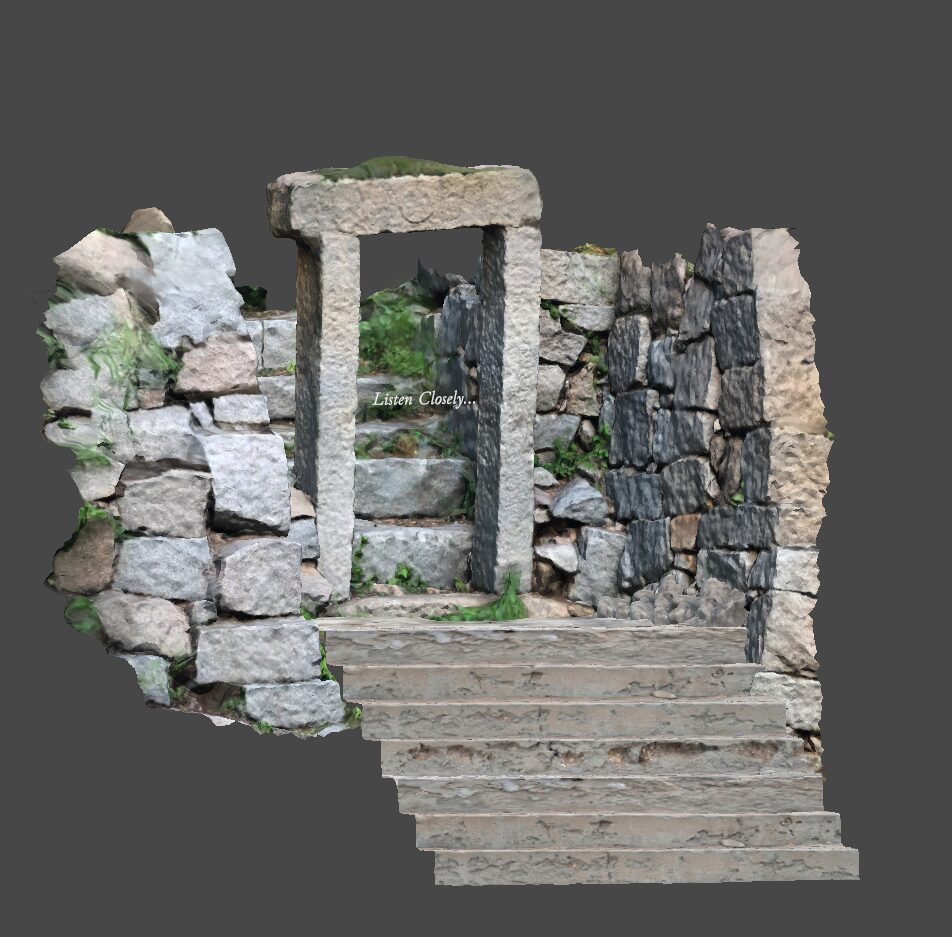
photogrammetry demo aligned to stair case.
audio playing inside the frame.
learning:
- physical interaction is fun
- embrace the weirdness
- aesthetics is very important
Research
Studies show:
- self-assessed curiosity is a marker for openness
- curiosity is enhancable
- the interesting / satisfying part is searching, not knowing the answer
Difference between Neugierde, Curiosity, and Wissenslust
- Curiosity as (part of) the Original Sin in Christianity
- Box of Pandora etc.
>> Vast amounts of literary examples for curiosity being a bad thing.
>> Over correction in Adulthood, leading to not being curious enough
Visual Exploration
What do I want people to leave with:
“To be supported in their search.”
“Seeking answers that suit their interest.”
“Learning beyond just knowledge. “
Poetic Intrigue as an answer to “How to not become grumpy”
Romanticism; attitude or intellectual orientation that characterized many works of literature, painting, music, architecture, criticism, and historiography in Western civilization over a period from the late 18th to the mid-19th century.
Romanticism emphasized the individual, the subjective, the irrational, the imaginative, the personal, the spontaneous, the emotional, the visionary, and the transcendental.
(Encyclopaedia Britannica)
Poetry:
„Schläft ein Lied in allen Dingen,
Die da träumen fort und fort,
Und die Welt hebt an zu singen,
Triffst du nur das Zauberwort.“
A song sleeps in all things,
That dream on and on,
And the world begins to sing,
If only you find the magic word.
Wünschelroute, Eichendorff
„Wo jetzt nur, wie unsre Weisen sagen,
Seelenlos ein Feuerball sich dreht,
Lenkte damals seinen goldnen Wagen
Helios in stiller Majestät.”
Where now, as our sages claim,
Only a soulless fireball rotates,
In those days, in silent majesty,
Helios steered his golden chariot.
Auszug aus Götter Griechenlands, Schiller
古池や蛙飛びこむ水の音
an ancient pond / a frog jumps in / the splash of water
Matsuo Bashō
کنت کنزاً مخفیاً فأحببت أن أعرف فخلقت الخلق لکی أعرف
I was a hidden treasure; I loved to be known. Hence I created the world so that I would be known
Hadith of Hidden Treasure
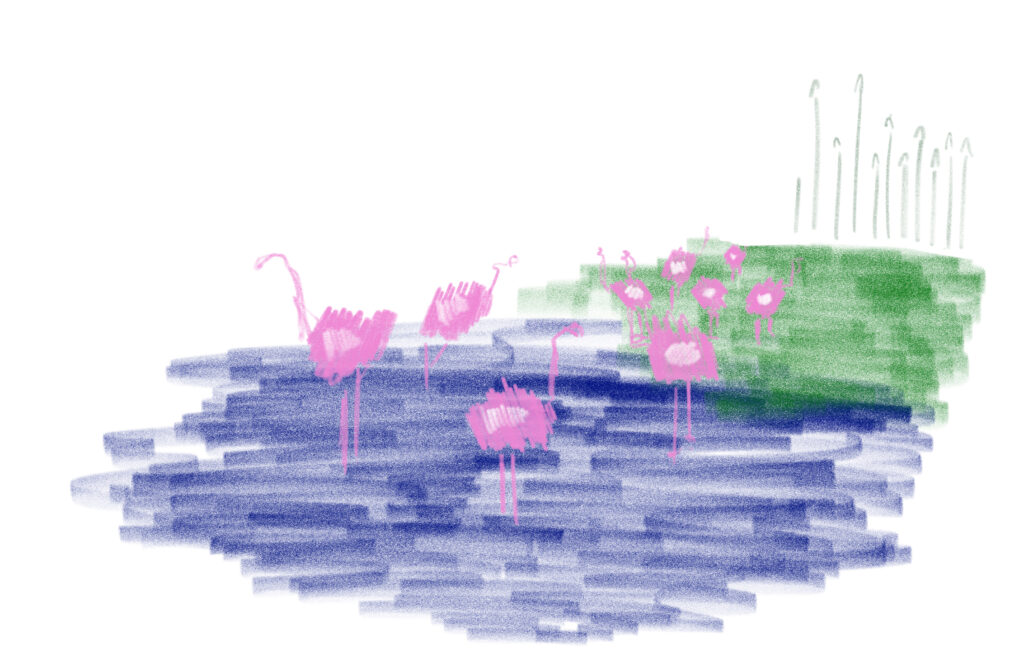
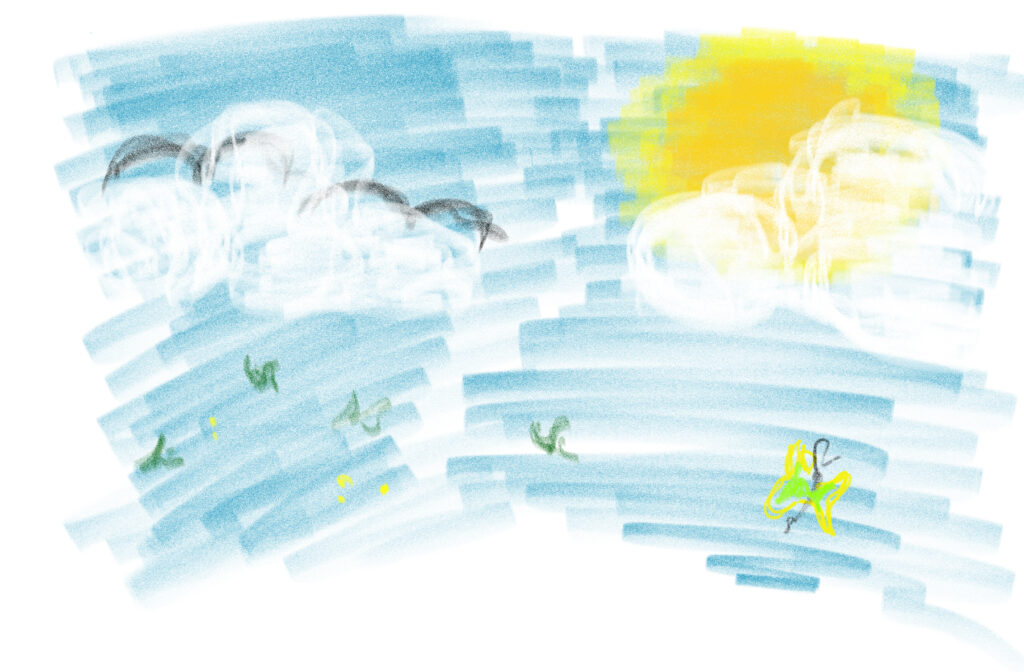
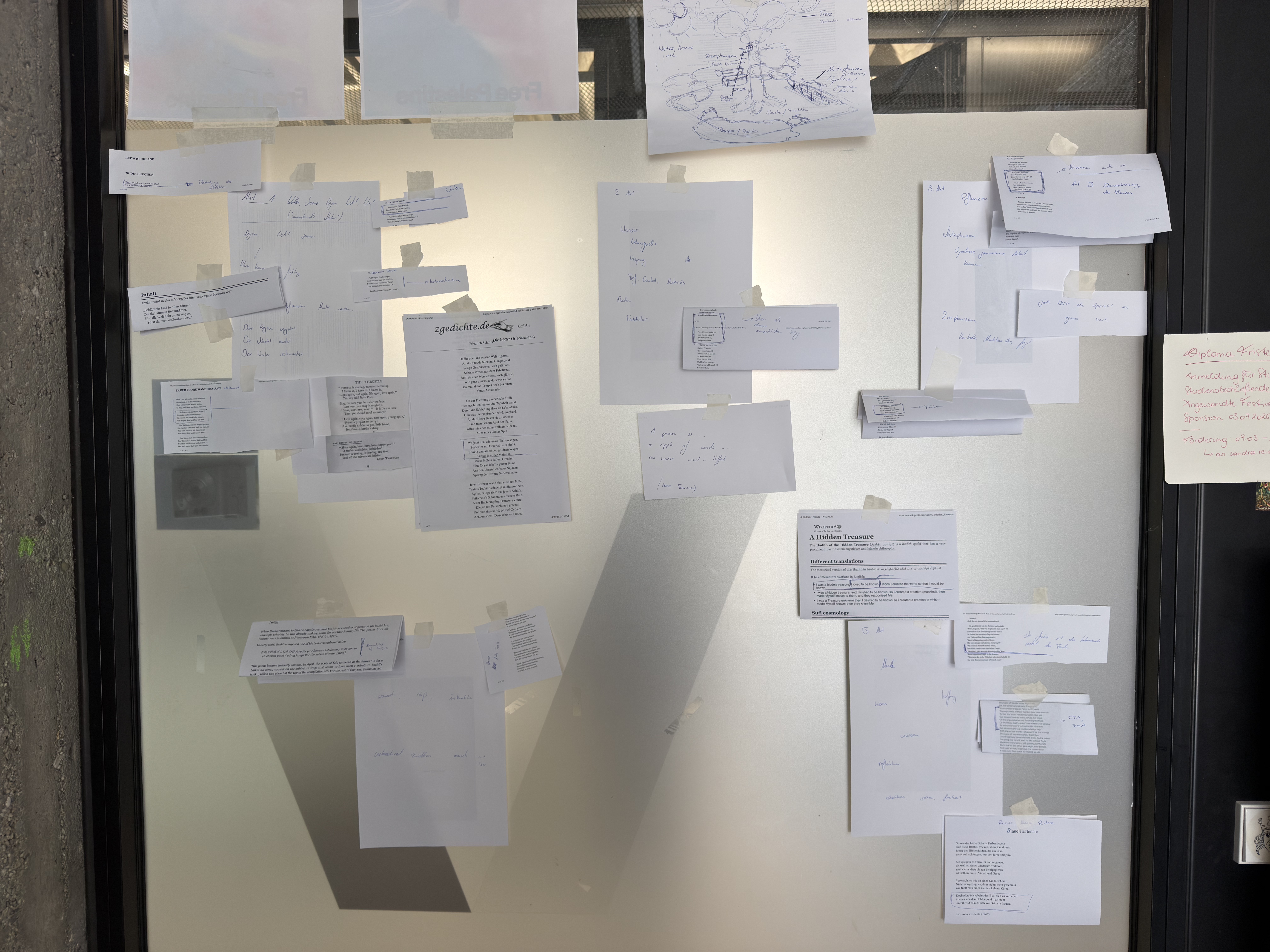
Drawings while reading. Simple Emotions:

Going Forward:
> Fragments of Poems, knowledge etc bring garden to life
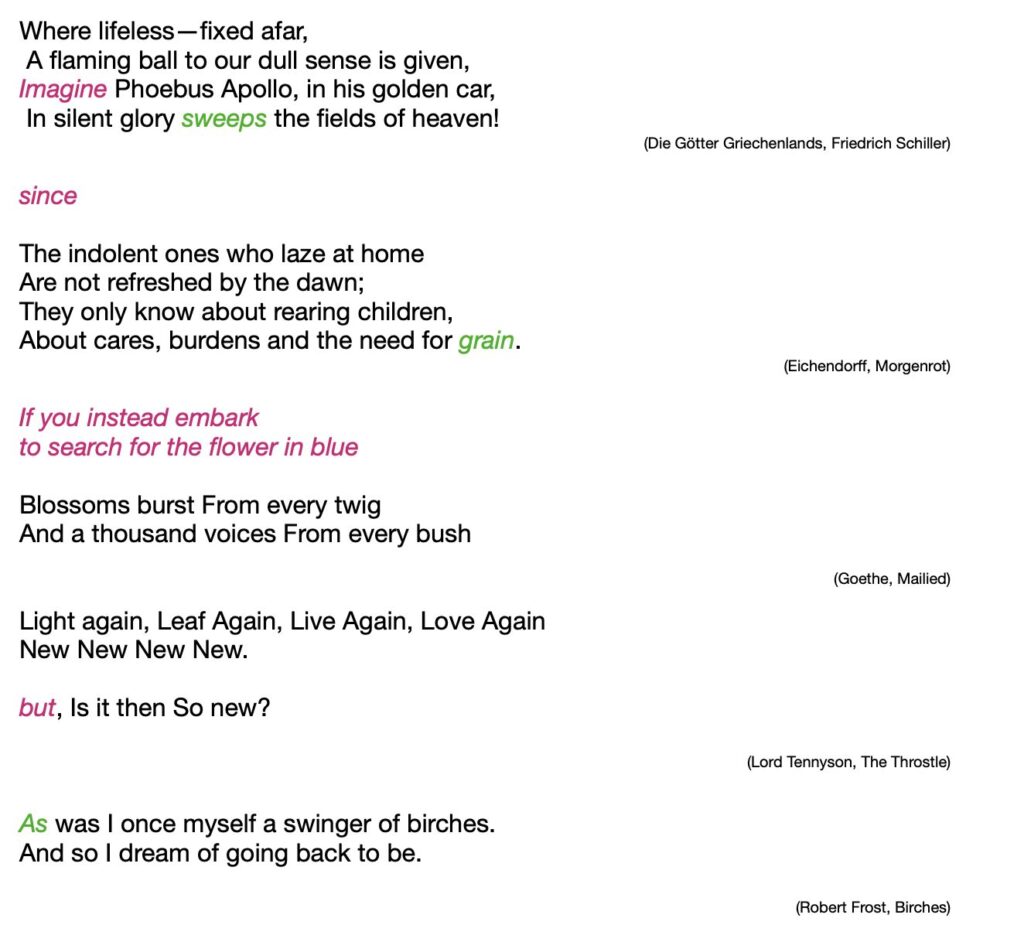
Cento / Found Poem
>> reassembling parts of poems to create a new whole
>> assembling knowledge to tell a story / create a space
Currently 5 Areas:
“Immaterial Nature” — Sky, Weather, Sun, Day/Night
Beginning, Awakening
Light, Sun, Spring, Summer.
“Water” — Soil, Pond, Rain
Source of Life
Refreshing, Nourishing
“Plants” — Plants, Crops, Grass
Symbioses with humans,
Source of Beauty,
Language of Flowers
“Animals” — Birds, Critters, Insects
Life,
Business
“Humans” — Visitors own role.
Knowledge,
Hope
Reflection
Next Steps:
– Finalize Poems & Other Knowledge
– Pick out specific plants / objects / animals etc.
– Scan
Leave a Reply