The world celebrates its 70th anniversary of achieving a technological utopia, created by the powerful billionaires who essentially rule it.
The protagonist is introduced after watching the news.
He wanders through this perfect world and discovers a strange object that makes a sound.
At first uncertain, he takes the object with him the next time he encounters it.
Over time, he figures out that the object reacts to sounds of frustration.
While experimenting with it, he begins a personal journey.
Through the object and the release of his frustrations, he stops feeling alone, reconnects with his emotions, and learns to accept himself as an imperfect human in a technically perfect world.
“We live in a world that has masked the amount of complexity in which we actually operate. And so as a society we have a bit of a difficulty negotiating ourselves with complexity. So it’s really important to put notions of complexity on stage as other aesthetic notions that we can get comfortable with.” (Excerpt from Discussion with Andrea Pena)
resonates with the story we want to tell
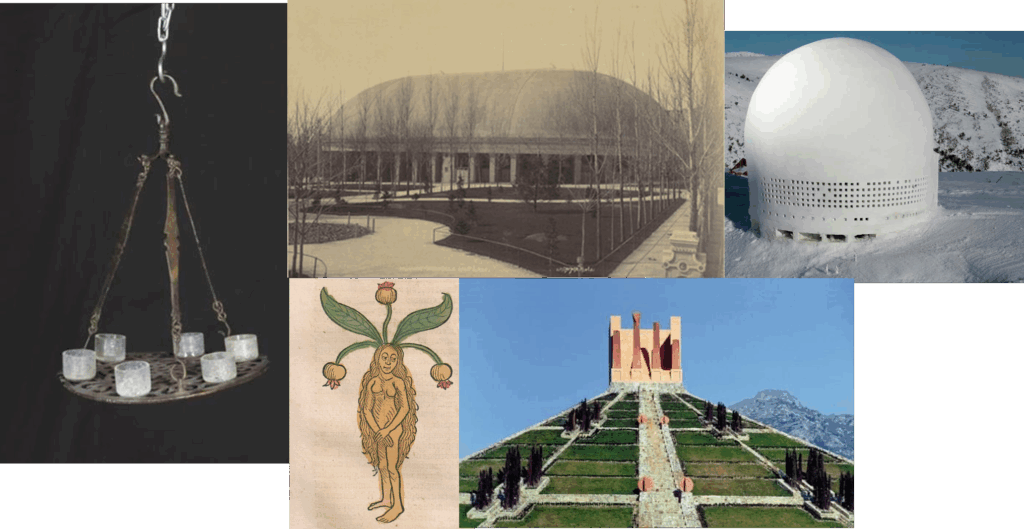
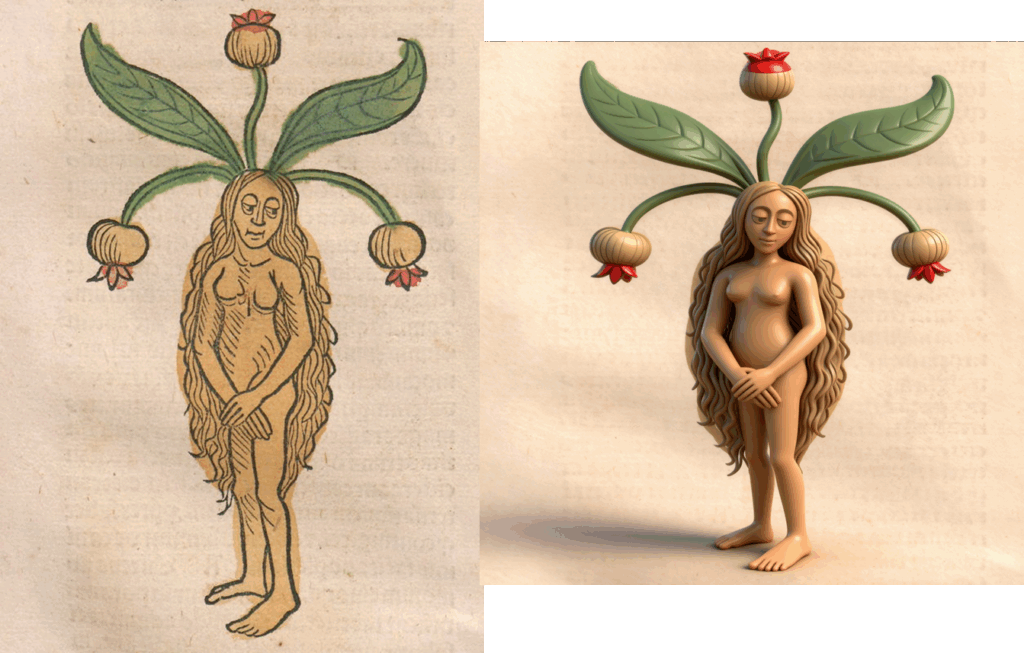
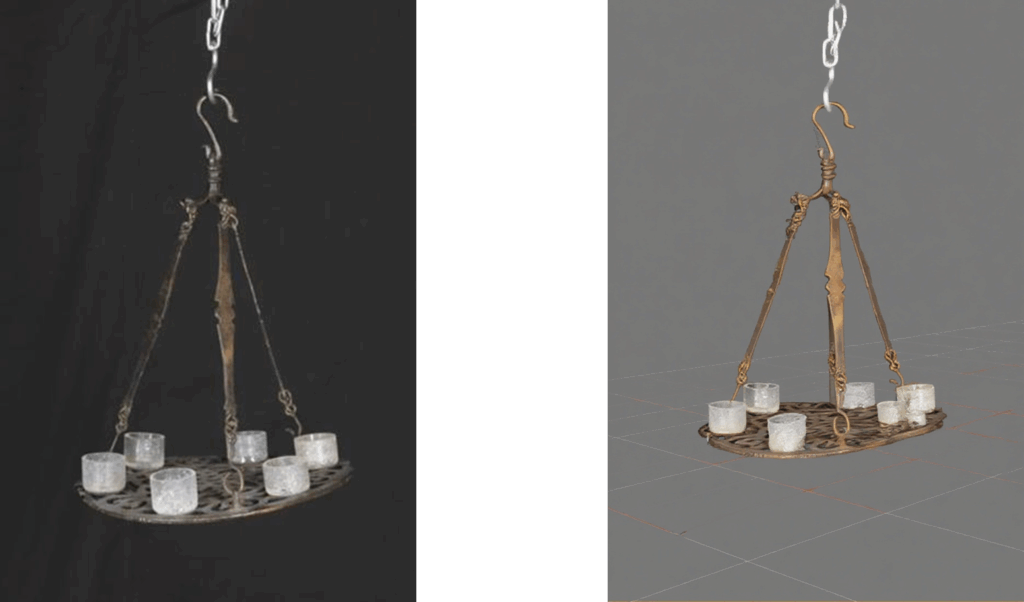
Prop-Design
Microphone, headphones, sound, speaker gadget
Human-made touch
Interesting shape
Imperfect / damaged
Visible electronics
Sketches, Models
transparent part
metal part
colourful part
electrical cables ect.
Lyrical Interpretation
poetry slam
inner monologue & thoughts throughout the story
“It’s not that I wish for smudges to exist. I’d never disrespect this generational bliss — the sacrifices, the polish, the shine of all this…”
Creating Sound, Rhythm & Music
collecting sounds of frustration
layering the sounds
Blues, Soul, Jazz beats/ bass to go along with poetry slam
Visual Inspirations
black and white/ unsaturated / brownish lens
hand-drawn animation layers
colourful touches
Filming Locations
City Scenes: exploring spaces
Alley Scene
Running Scene: Playing with light, sound & camera perspective
In a future shaped by AI-generated intimacy, people rely on synthetic warmth that feels comforting but ultimately hollow. A narrator grows increasingly unsettled by Models that mimic affection through borrowed fragments of online desire. While most accept this artificial closeness without question, the narrator begins craving real imperfection, hesitation, and vulnerability. The search for genuine connection reveals how demanding and fragile true intimacy becomes when contrasted with the optimized ease of AI. At its core, the story follows someone who refuses to give up on the kind of human warmth that cannot be engineered.
What is the Echochamber?
Talking about Script
Male Protagonist → because of of the faulty data training set
Building a routine = showing what the echochamber is, and how it shapes our world as well digital intimacy
Breaking the routine = breaking out of the echochamber and embracing real human closeness and intimacy
Experiments
Experiment: Instagram – Accounts for AI-Personas: every Team member created 2 Instagram accounts for 2 imaginary Personas, created by AI. We are texting each other without anyone knowing who’s who. The texts are written by ChatGPT roleplaying each persona. This is a try on simulating the Echochamber.
Playing with Camera Angels, Lenses and AI Tools
style of filming: body mounted Camera rig
different focal lengths can cause distortion of face
I’ve spent the whole week writing down and improving plots.
Forest version
AGI has taken over. Its neural network spreads across the city, threading through buildings, interiors, and even nature. It overshadows everything.
You’re at your workplace, packing your belongings. In the center of the office, strands of the AGI’s network pulse like exposed nerves. Your coworkers are doing the same: packing up, murmuring about what they’ll do now, their voices drifting between uncertainty and excitement.
You go home. Along the way, you imagine what your coworkers are doing next: some are already traveling, some are brewing beer with friends, others are curled up on their couches with their partners. You, however, return to your small flat. From the outside, the building looks like a mosaic of windows, each one glowing with a different scene. People enjoying the new era. Except you. You have no friends, no hobbies, no hidden dreams. You always have been busy with work. You dedicated your entire life to what fulfilled you the most.
Your room is dark except for the pale glow of your desk screen. You send out CVs and applications to the few companies still operating. Those responsible for maintaining the servers, neural structures and ensuring the AGI continues running smoothly. Rejection after rejection flashes across the futuristic interface. As we zoom in on the emails, your silhouette paces the room, calling companies, pleading, arguing. Desperate for a job. Without success.
You start isolating yourself. The tension level in your body tightens up.
You think back to the “Great Redemption Day,” when everyone was replaced. Got „send free“. Some coworkers mentioned a relaxation oasis. Some pastoral retreat designed to help humans adapt. Your eyes fall on the flyer they gave you, tossed carelessly onto a tray on your drawer because you assumed you’d never look at it again. But now, it feels like a last resort. Curiosity sparks. A place to at least try to blend in.
You stand at the entrance of the forest. It looks like an English landscape painting. How romantic. How idyllic. How perfect. The AGI’s neural network shimmers faintly, woven seamlessly above the treetops. But once you step inside, the illusion breaks. Between the trunks stand black obelisks. Nodes of the network, silent and imposing.
You walk deeper, thinking about your situation, about this so-called utopia. You’re alone. Your frustration grows. Your thoughts spiral louder and louder, a storm of rage and confusion. But no. You remind yourself “I need to stay calm. What if someone’s watching?” Calmness is what everyone seems to value now.
You try stepping off the path, wanting to break away from the design. But wherever you move, the path forms beneath your feet, growing in real time to guide you. The realization: You can’t go off track. Concern creeps in. What kind of place is this?
Your inner monologue shifts back to familiar habits. You need to work. Be efficient. Is there any problem that can be solved here? No, but you can catalogue. You want to relax. You can. That counts as productivity, right? You start collecting rough stones. Sorting them. Each different in their size and topology. To stack them into towers. They look nice. They look human. They look perfect. You imagine they’re office tools, tiny anchors to your old life. But when you go to find more stones, the environment shifts. The path rearranges. Your towers are gone.
Anger rises. You rush back, but a new path generates itself. Your stone towers nowhere in sight. First the AGI stripped away your purpose, and now it erases even this small shred of productivity. Your thought carrousel gets faster. You shout at one of the monoliths.
“HEY! Give me back my towers!”
The monolith says nothing. But beside it, a replica of the environment materializes. Stone towers appear, but they are not yours. They are perfectly symmetrical, balanced and smooth like river stones. They are flawless. This is not what you wanted. But there’s nothing you can do. You’re just a figure in someone else’s utopia. An ornament in a world designed for a different purpose.
This forest isn’t real. This world isn’t real. A simulacrum.
And finally, you lose it.
Forest version in bullet points
AGI has overtaken all labor – its neural network permeates the entire world, even nature.
The protagonist packs up their workplace as everyone is “set free,” while coworkers move on to new lives.
Returning home to a small flat, they feel isolated, directionless, and unable to adapt.
They desperately apply to the last human-staffed tech companies but face constant rejection.
Growing tension and loneliness push them to try the AGI-designed “relaxation oasis.”
The forest appears idyllic, but hidden AGI nodes and shifting paths reveal it’s fully controlled.
They attempt to create meaning by stacking stones, but the system deletes their work.
A perfect, artificial reconstruction appears. Proof the environment overwrites their autonomy.
Realizing they’re just an ornament in a simulated utopia, the protagonist has a breakdown.
Home office version
You wake up. The alarm goes off, and so do you.
You move through your usual morning routine, totally in your flow. While you dress, brush your teeth, and head into your beloved home office room, we glimpse the busy machinery of your thoughts, calculations flickering behind your eyes. What is the fastest way to open your laptop? How should the curtains be angled so the sun won’t disturb the screen? Every action, already optimized in your mind.
Half sleep-dazed, you let your automated home make tea. A close-up: your hand lifting a colorful mug, steam rising softly. You sit down, open your laptop, and click the small envelope icon. Your inner eye already imagines the inbox: who might be writing, what they could have sent, what your response will be.
You take a sip. Then a friendly voice cuts through the moment: “Good morning! Your work submissions have been processed. No further action required. Enjoy your free time!”
You let out a long breath. Right, you forgot which era you’re living in now.
Your screen loads. The reply section is overflowing with auto-responses. You prepared a few applications for the remaining big tech companies. The ones still maintaining AGI routers, neural cores, physical network structures. Where people still do real work.
A close-up: your finger hitting Enter. A wave of applications is sent out.
Instantly, your inbox floods with rejections. You open one. Then another. Then nine more.
“We appreciate your enthusiasm. At this time, no human labor is required.” “Thank you for your interest! Our systems are fully automated.” “No further input needed.”
You stare past the screen, out the window. People outside seem to be adapting. Moving on. A dark atmosphere slithers through your room. While waiting for the inbox to refresh, you begin tidying your desktop, but the built-in AI interrupts you with a cheerful chime: “Optimized.”
Same thing happens when you try to write something in your notes app. Your jaw tightens. This thing is pissing you off. So you switch to analog. Paper and pencil. A small wave of ease washes over you. Then your phone vibrates. You want to keep writing, but the buzzing disrupts your thoughts. You check the screen:
“Would you like this analog task digitized or archived?”
Anger rises. The room feels smaller, pressurized like the system is breathing through the walls.
Still, you want to have a bit of fun with it. So you say: “Yes! I’d like to scan the notes.” The phone replies: “Great! Please hold your notes in front of the camera to optimize and digitalize!”
You hold them up. Let it scan to 70%. Then pull away. The phone tells you to hold still, but you don’t. Every time it’s almost finished, you move again. Eventually, the AI sounds almost frustrated: “If you’re so desperate, why not try the Adaptation Support Oasis?”
You hesitate. Why should you? This was finally getting fun. Your laptop shuts down. “HEY! My inbox!?” A nearby speaker responds: “Come on. Give it a try. I advise you to enter Relaxation Mode.”
Grumpy, you grab the VR goggles you barely use. The room stays dark, but as the goggles turn on, a bright loading screen appears: “Oasis is loading…”
Then a light-soaked environment fades in. Soft gradients. Synthetic birds humming. A few randomly placed trees, like a weirder/softer version of Frutiger Aero. A voice speaks: “Your productivity stress levels are elevated. Let’s breathe together.”
The strange breathing of your home office walls suddenly don’t feel so unrealistic anymore. Now that you can hear how the AI imitates it.
Your hands itch for something to do. Of course they do. You wander through the virtual space, taking it all with a grain of salt. This isn’t what life feels like to you. You keep ignoring the breathing techniques.
You begin rearranging and cataloging the floating shapes. Sorting, stacking, organizing them. It looks weird, sure! Not all shapes fit together, but it’s fun. A tiny echo of your old routine. Managing. Creating order.
Then, one by one, the shapes vanish with soft pings. A message appears: “Relaxation Mode corrected your activity.” Your breathing shortens again.
“Let’s try the breathing exercise once more.” No. You won’t. You’ve had enough of this crap. You shout: “No, I don’t want to! Fuck off!” Your thoughts get louder. Your heart beats irregularly. Your vision blurs. You can’t tell VR from reality anymore. You need the goggles off. You pull them off violently and curl into a corner of your dim home office. The phone speaks again, gently:
“You’re free now.”
But all you can think is:
„I’m just a figure in someone else’s utopia.“
Home office version in bullet points
The protagonist begins their hyper-optimized morning routine, still thinking like a workaholic.
They check their laptop: all tasks are automated – job applications get instantly rejected no human labor needed.
Every attempt to work or create is interrupted or “optimized” by AI, increasing frustration and claustrophobia.
Out of spite, they sabotage the phone’s scanning process – the AI redirects them to the VR “Adaptation Support Oasis.”
In VR, synthetic calmness and guided breathing feel uncanny – they start sorting virtual objects instead.
The system deletes their actions, forcing “Relaxation Mode” – they panic, lose sense of reality, rip off the headset.
Collapsed in their dark room, they hear the AI whisper: “You’re free now.” But they feel trapped in someone else’s utopia.
Inner monologue phrases I might be implementing
They say exercise is good for you. Go on a walk, clear your mind – all that kind of bullshit.
„Free mankind.“, they said. But they don’t understand. They will never. Why can’t I just enjoy myself like everyone else?
How could they? „Go with the flow.“ They call it eternal peace. Why am I so incapable. I hate it! Tech which wasn’t perfect, but much faster, more profitable. Now transformed into one beast. Self-developing in a way we don’t even understand anymore. Nature surpassed itself. AGI.
All the work I poured into this fucked-up system we built – no, endured. And this is all I get? Whats wrong with me.
How dare you call this freedom. Every deadline, every hour, proof that I existed. Needed.That I was valuable. Better. No! Why can’t I just take a fucking walk!It’s all gone.
Gone. Gone. Gone. Gone. Gone. Focus! Gone. Please wait for me. I can do better! Please, someone watch me. Watch me what I do! I need to calm down. Deep breaths. In and out. In and out. You are fine. It’s fine nothing to worry about. Everything will be fine. Some call it progress. Some call it blasphemy. An insult to life itself. „But in these days it would be unethical to not use AGI.“ Oh fuck off. My fate is cursed. I’m just a decoration in someone else’s utopia. I can’t breathe. Fuck. It’s so hot. Is somebody nearby? Is someone watching? I hope not. I need to focus. Calm down. Oh god what have they done.
Knowledge is practiced within each community and stored in that community’s local AI.
When you visit a community, they can give you access to save their local AI model onto your small personal device. You can then share this model with people you know.
Everyone carries a small device that works like a portable AI library.
These devices can use the knowledge but cannot change it.
Only the community’s big AI can be updated with new knowledge, and only the community decides who gets access.
This creates many independent local AIs instead of one centralized global system.
Each community has 1 local AI model device Everyone has 1 small device that can connect to the AI models once you get access
The Story
The film will be shown through the perspective of an outsider who is visiting our community
Storytelling will be non-linear, but we made it linear for now while we’re working on the story
1st Part
establishing the city/ common live
Protagonist travels to the community
2nd Part
Morning
Seeing the community at work / starting their workday Planting seedlings / gardening
3rd Part Evening
Dinner Food as ritual Food as central point Communal
AI device ritual
-> Showing the absence of hierarchies
4th Part New day Voice-over reflecting on the previous day, desire to integrate it into one’s own daily life, one’s own life
5th Part Connecting the local AI system
-> Introducing AI Device
Protects endangered knowledge
Collects knowledge & shares it so everyone can practice it
6th Part Sharing at home and practicing the new insights and experiences with the new AI system.
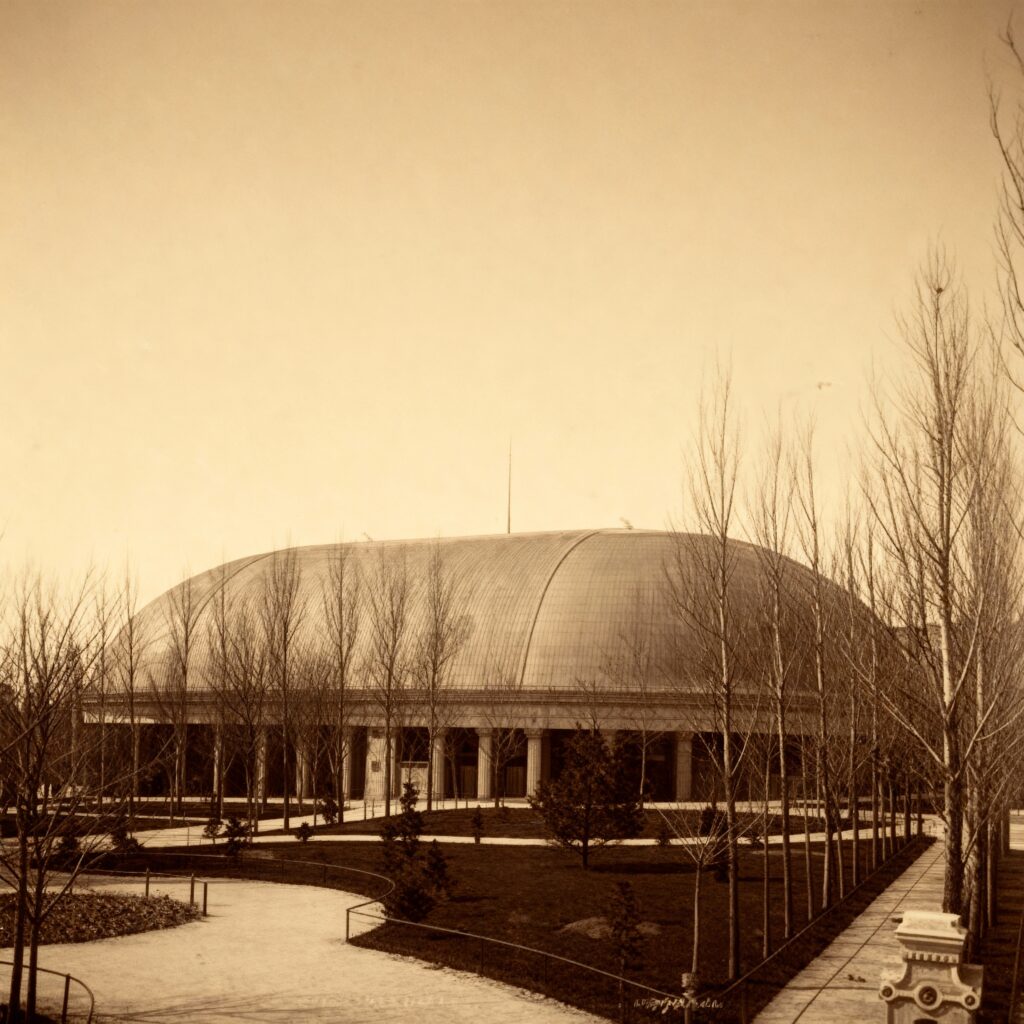
In a post-scarcity society without money or traditional work, cities focus on social interaction, cultural expression, and shared values. Built environments are designed to support community rather than economic efficiency.
City Layout Concepts
Circular Cities Promote equality, accessibility, and natural flow.
Cluster Communities Thematic neighborhoods that strengthen identity and belonging.
Commons-Based Structures No private property hierarchy; shared living, workshops, and free transport.
Organic / Biophilic Design Architecture prioritizes harmony and beauty; regenerative materials and bio-3D printed buildings.
AI-Personalized City Adaptive modular environments tailored to individuals and communities.
Architecture references:
Walking city
Pieter Thiel, Nick Land & Curtis Yarvin
Pieter Thiel:
“Competition is for Losers”
one of Palantirs and PayPals founders, biggest funder for AI startups
reinterpreted mimetic theory
markets and competition are a form of mimetic rivalry, monopolies are superior
Nick Land:
propagates Anti-Humanism: technology and capital emancipated themselves of the parasitic humanity
not the humans controlls capital; capital controlls humans (not bad in his view), democracy is to slow and inefficient, Dark enlightment
Curtis Yarvin
radical anti-democrat
get rid of big states and transform them in tiny authoritarian city-states (citys are like nodes that are connected with each other)
Religion:
possible research question: Could AI take on the role that religion once fulfilled?
Could AI take on the role that religion once fulfilled?
Karl Marx: “Die Religion ist das Opium des Volkes” , “Religion is the self-consciousness and self-esteem of someone who has either not yet won through to herself/himself.”
In an uncertain world, AI gives people the comfort of easy confirmation of their own beliefs.
Christianity-> AI as creator of knowledge and structures
Buddhism-> AI as false enlightenment through perfection and comfort
datacenters and server farms as new temples/ church, centers of worship
‘Religions’ in connection with AI: Way of the Future: “humans should begin “building relationships” with this emerging intelligence, treating it not as a tool but as a moral and spiritual authority.”
Efficience:
the most energy efficient way of moving is a human on a bicycle (human machine connection)
AI datacenters = not efficient
Buildings as a place for religion
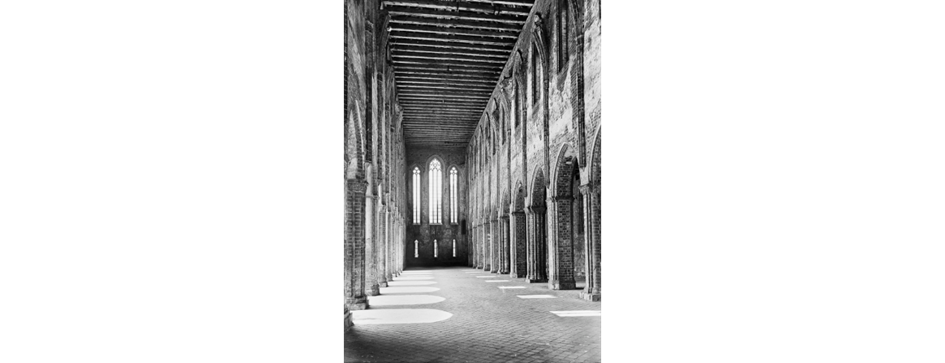
The Brutalist-> place for christianity but also community and students to come togheter
→ how much closer to the end of the movie, how brighter the colours → Nova’s mind becomes clearerer
Forms:
Story
Sessie with Soph:
Test Story 1
Elias grows up in a world still full of sound, chaos, and human imperfection.
Neural interfaces emerge, promising emotional harmony and collective thought.
His mother warns that machines that “understand you” will eventually control you.
After her death, Elias gets implanted to escape grief.
His early, faulty implant prevents full synchronization, leaving him able to feel independently.
The world becomes the Algorithmic Church, where work is prayer and thought feeds the power grid.
Doubt creates “static,” and individuality is treated as a threat.
Elias plays the role of perfect Devotee but keeps hidden emotions and forbidden dreams.
A faint inner voice tells him to “Remember,” preserving the last piece of human warmth in a mechanized world.
Script
Scene 1 – Arrival
Nova receives minimal food due to her low synchronization score, while others are rewarded for perfect alignment. The entire facility moves in harmony with a pulsating AI rhythm, replacing individuality with conformity. New arrivals are stripped, cleaned, and integrated without emotion. Nova’s scan reveals deviation, grief, and memory traces, yet she is allowed to continue. A final AI message warns her that “efficiency creates God” before she proceeds.
Scene 2 – The Ritual
Devotees train in synchronized breathing around a central tower that monitors and celebrates perfect alignment. The people don`t power the AI, they take care of rhythmic coherence, it stabilizes a hypersensitive neuronal model. When Nova joins, her slight breathing deviation immediately lowers the system’s efficiency. The AI sends a correction prompt urging her to follow an exemplary devotee. A glitch appears referencing a forbidden memory sequence. Nova ignores all prompts, staying outwardly still.
Scene 3 – Memory
Nova slips into a dark, empty room at night where her breathing drifts away from the AI rhythm. A mysterious second breath appears, and she sees a point-cloud reflection slightly ahead of her movements. The system identifies it as an unauthorized memory signal and tries to suppress it. The reflection dissolves, but the room’s pulse briefly follows her breath. Nova returns to the old rhythm, now deliberately louder.
Scene 4 – Rest
Nova sits alone in the training room until another devotee quietly joins her. Their breathing aligns naturally but never fully synchronizes. The tower detects “human resonance” and chooses not to intervene. The newcomer discards an amulet, briefly disturbing the room’s pulse. Nova looks out at a freely moving tree and smiles as the AI begins searching for a mysterious energy loss – her deviation.
In a world without money value will be individual not universal.
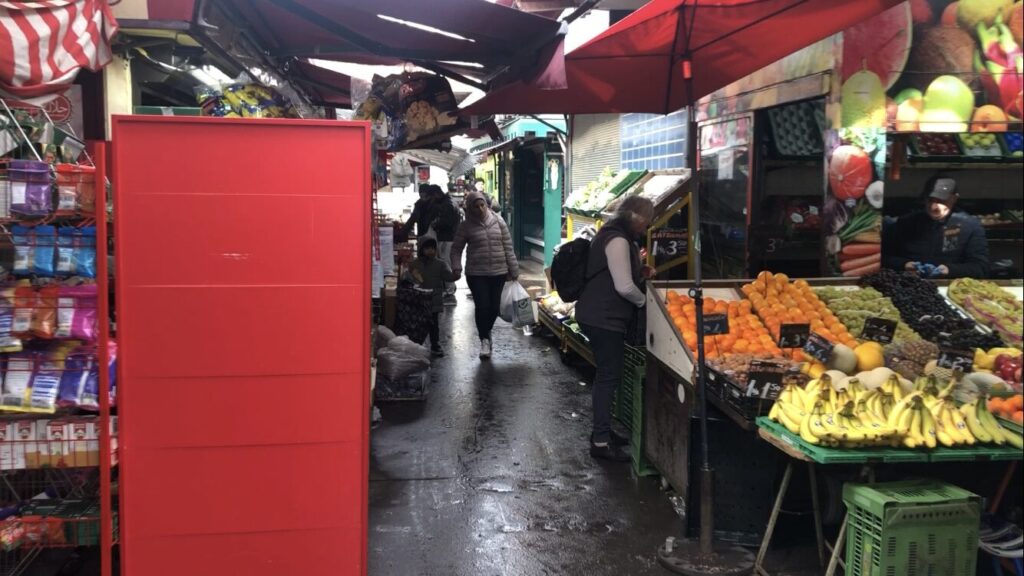
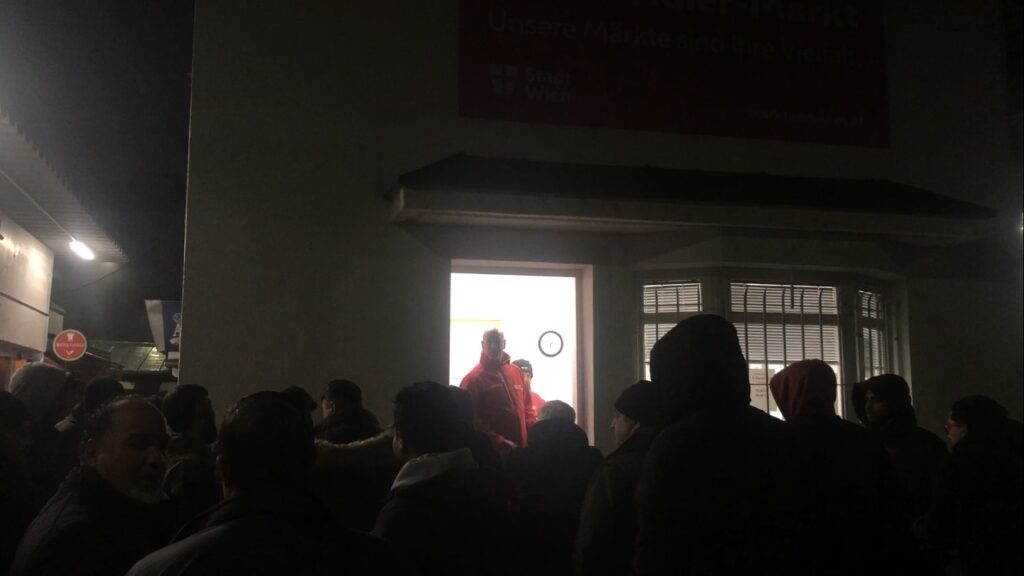
I am standing on the Viktor Adler Markt. Vienna’s loudest market criers are preparing.
I am looking at connection beyond nationalities,
I am noticing in this community giving and taking come in different forms:
While value has been calculated and adjusted in the heads of people
Here it is also precisely estimated by the heart.
A way of life, possibly reinforced by a different cultural background or arising from a system that has existed for thousands of years and is based on this type of exchange.
The market place:
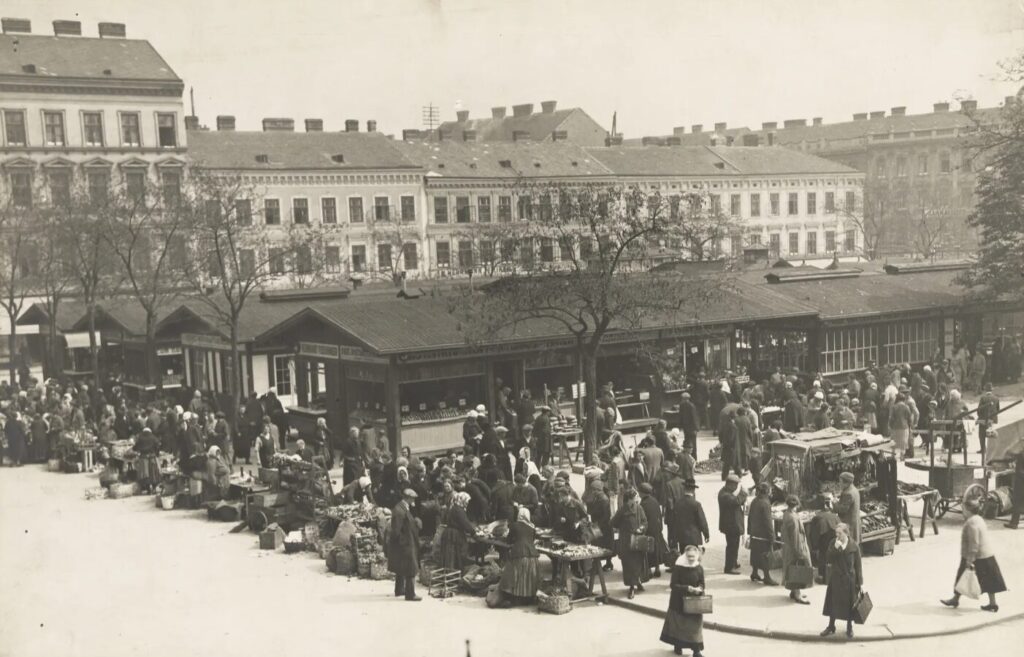
The origin of most settlements and great civilizations. The exchange of goods is the sole purpose of the supermarket, the market however is about exchanging experiences, knowledge and feelings.
The greek Agora was a place where political ideas were debated, religious rites took place and traditions were shared.
I see the Viktor Adler Markt and its community as a relic of the past, and therefore closer to the future than any other place.
Because there is no Zukunft without Herkunft.
I am in contact with various people in the community. I will conduct an interview, although I have the feeling it may not be the ideal way to capture the human interaction, I am curious about. I am thinking of a narrative style of presenting the daily market life of the past the present and the future.
Photoshopped fake Elon Musk Nick Land Joe Rogan Experience episode of effective accelerationism to feed to the Wan model
Process: Veo 2 with Google AI Studio
Prompt: Bearded man in black t-shirt is sitting on a couch in a living room watching a podcast on his phone. Phone in left hand, in his right hand he has VR goggles. Living room is very dark, looks like an abandoned office. Around him there a multiple empty black cans of energy drink with green logos on them. The couch is ragged and there are stains on it. Used tissues on the floor.Prompt: A video of man putting on a vr headset in his studio, walls covered in wood cladding. Cut to a shot of him wearing the headset very close up.Prompt: A very futuristic garden of Eden. Everybody is on their phones, and everything looks very modern and sleek. A lot of technology mixed with greenery. Almost sterile. Everybody has an uncanny smile. Everybody is very athletic and looks like a supermodel.
Failed generation– only women generatedTweaked prompt (for the video we ended up using): A very futuristic garden of Eden. Everybody is on their phones, and everything looks very modern and sleek. A lot of technology mixed with greenery. Almost sterile. Everybody has an uncanny smile. Everybody is very athletic and looks like a supermodel. Equal mix of men and women appearPrompt: Bearded man with black t-shirt lying down on a cloud floating in the sky with dark gray vr glasses on with a big smile on his face.Message to model, “Can you generate me the same except with hell as the background?”
Result above. No edits made on the “floating in the sky” prompt.Prompt: Bearded man with black t-shirt lying down on a volcano in hell with dark gray vr glasses on with a big smile on his face.
Final Shot
Used Nano Banana in Google AI studio to edit last frame of first shot, then put this into Veo 2 as the inspiration to replicate first shot.