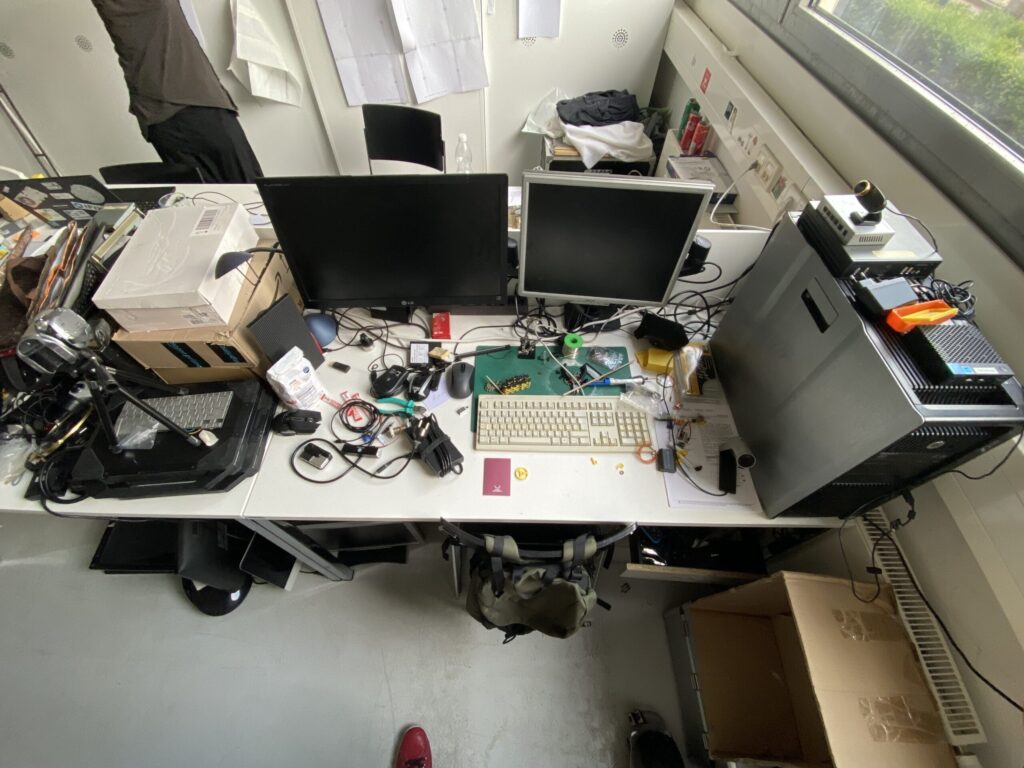
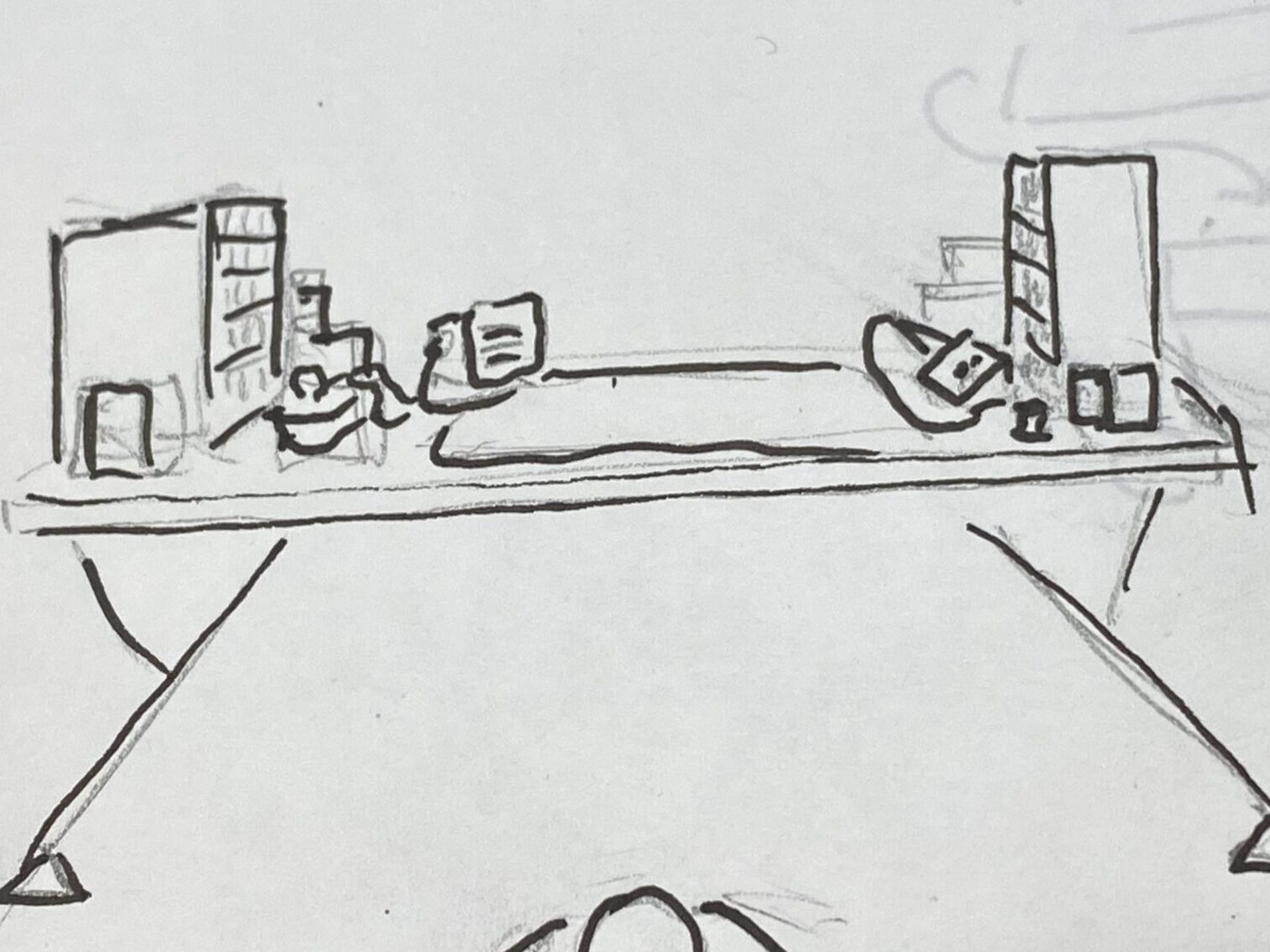
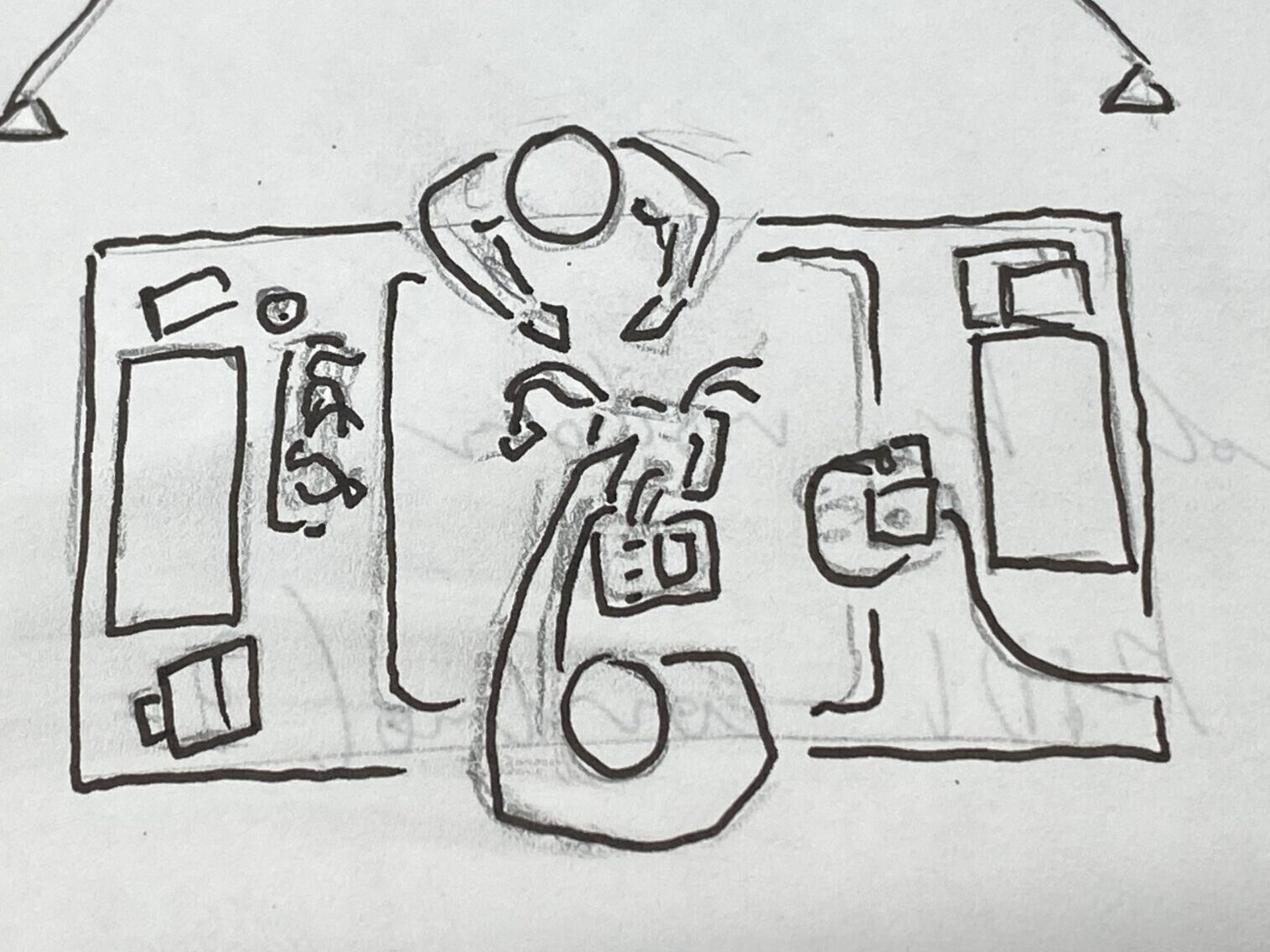
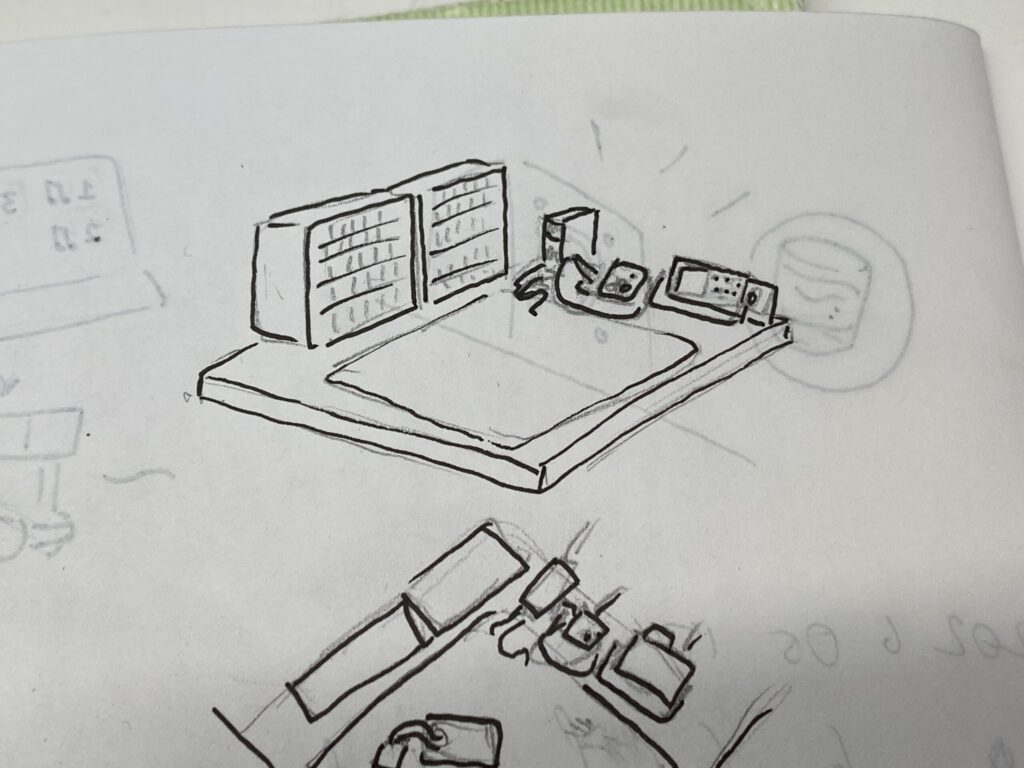
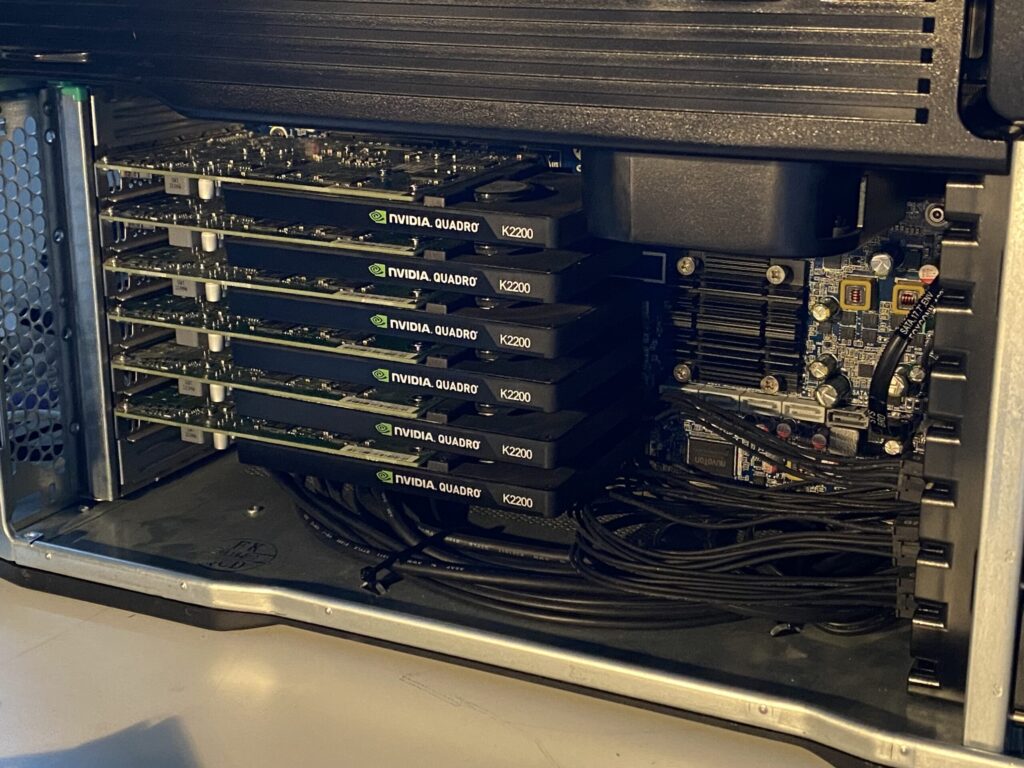
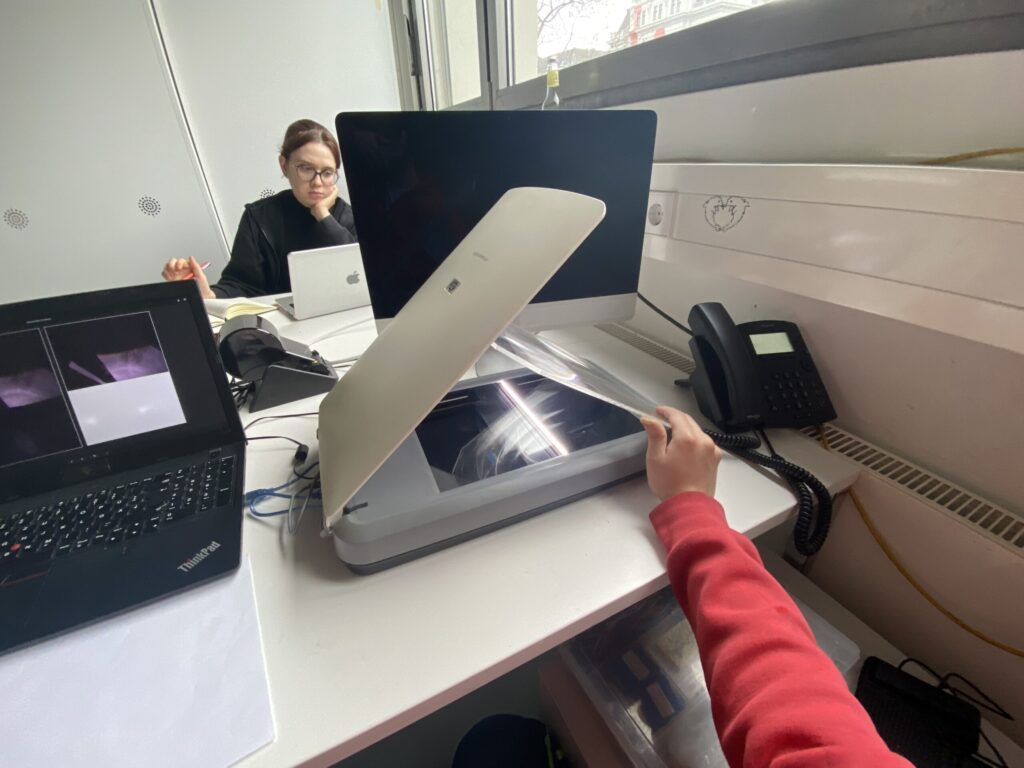
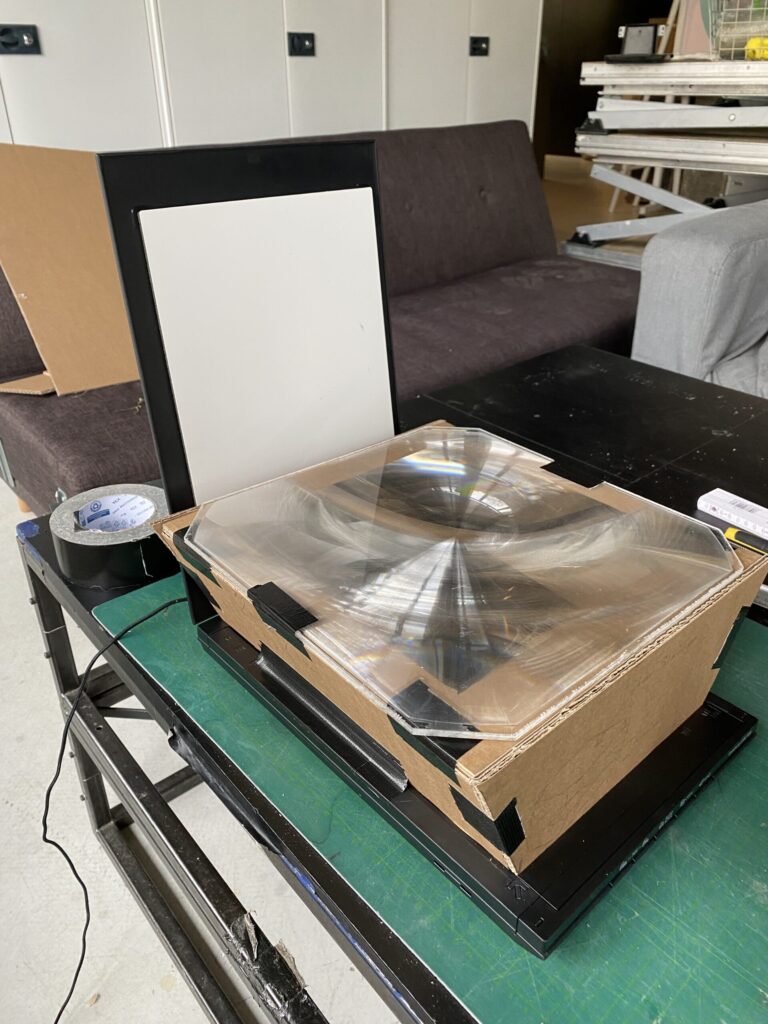
Reference material in “Tinklets of the Studio” blog.
Ylvie: Being given an opportunity to work with electronics is great, but the concept needs ways to persist in the visiting audience. Will they know where to get knowledge? Will they know how to continue after the workshop ends?
We are working on tests of this workshop
Parts Database for reproducibility like a kit
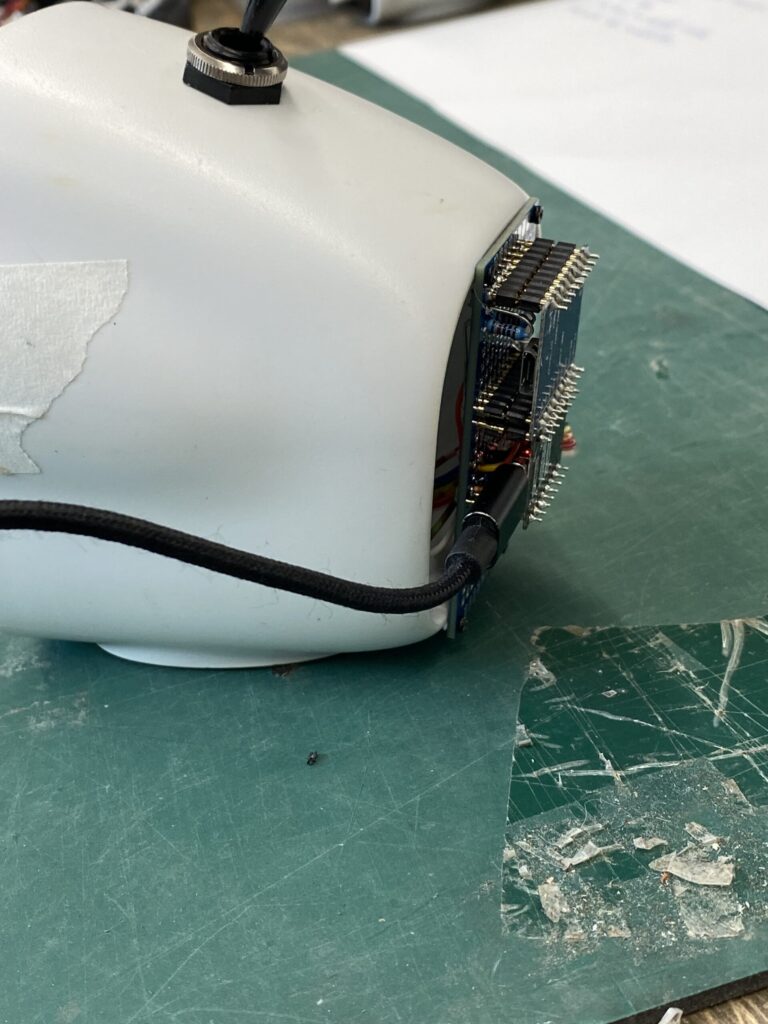
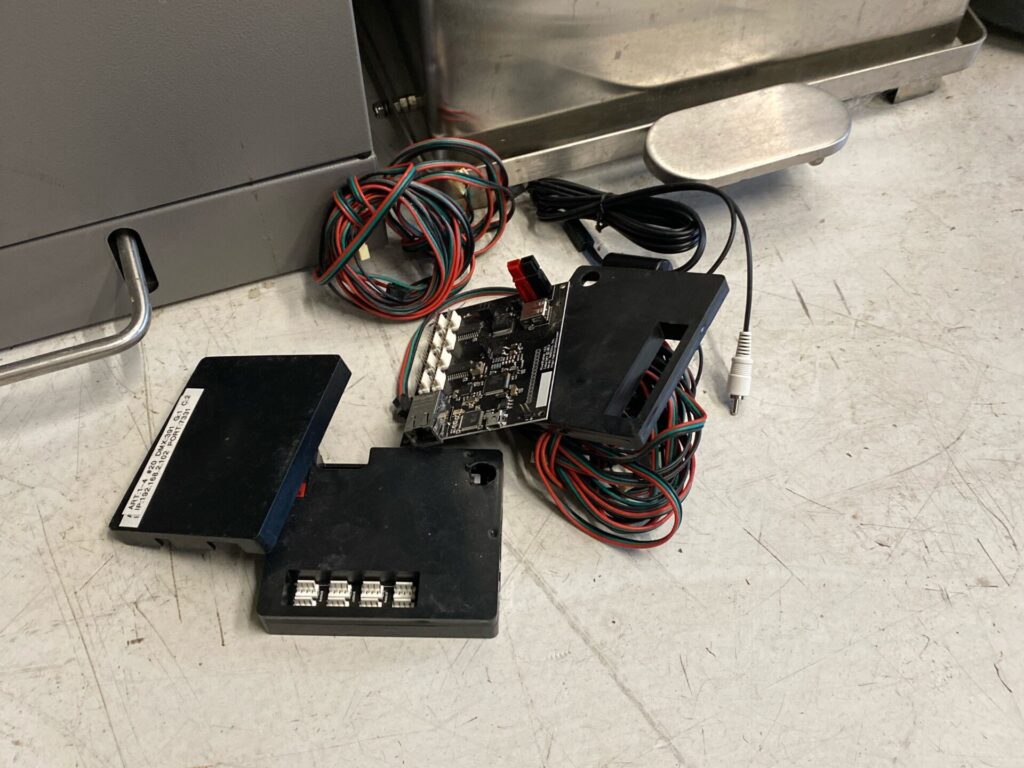
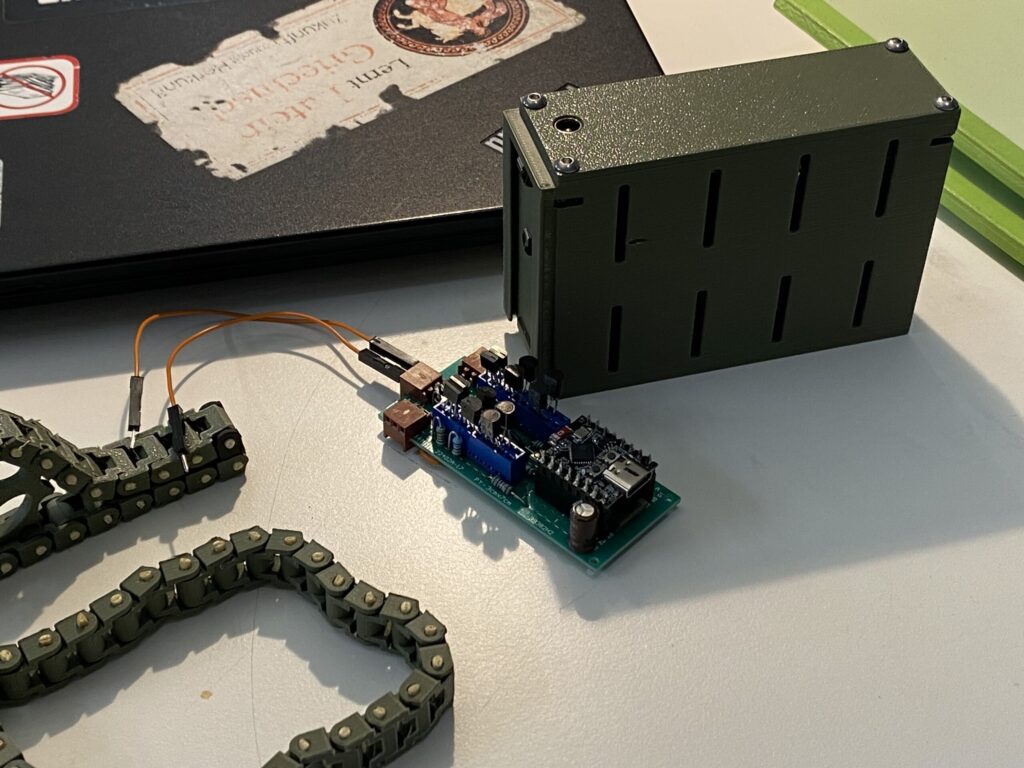
The accessible chips stand at odds with the complicated wiring of the underlying board
It started as small experiments with a lot of different Tinklets.
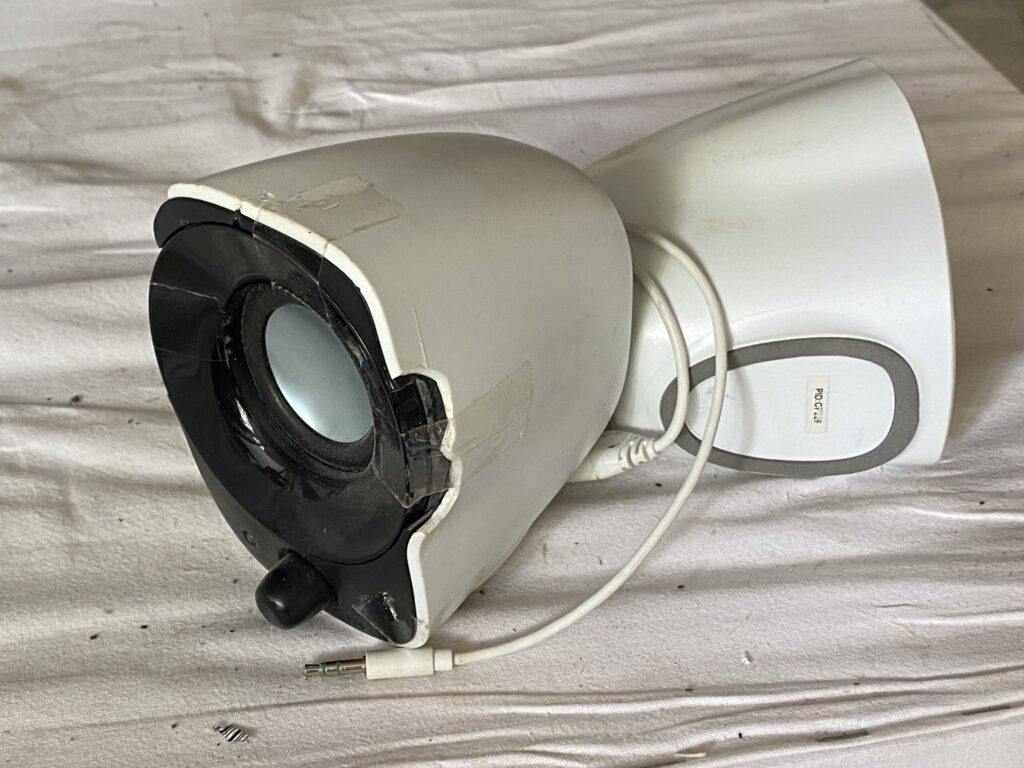
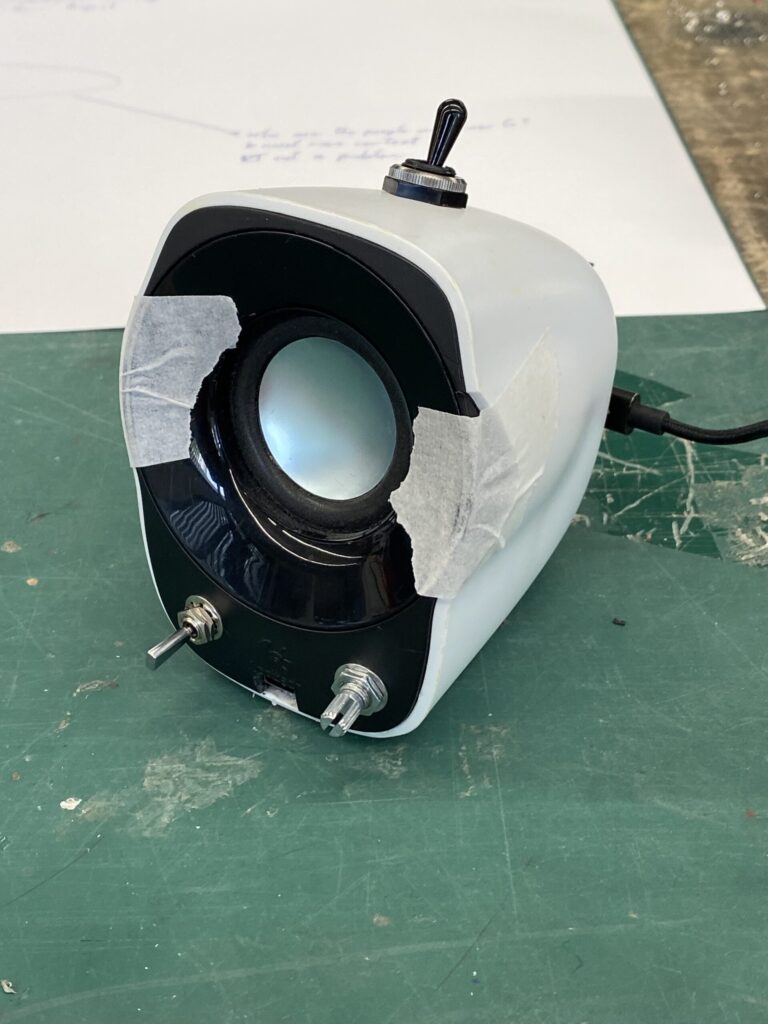
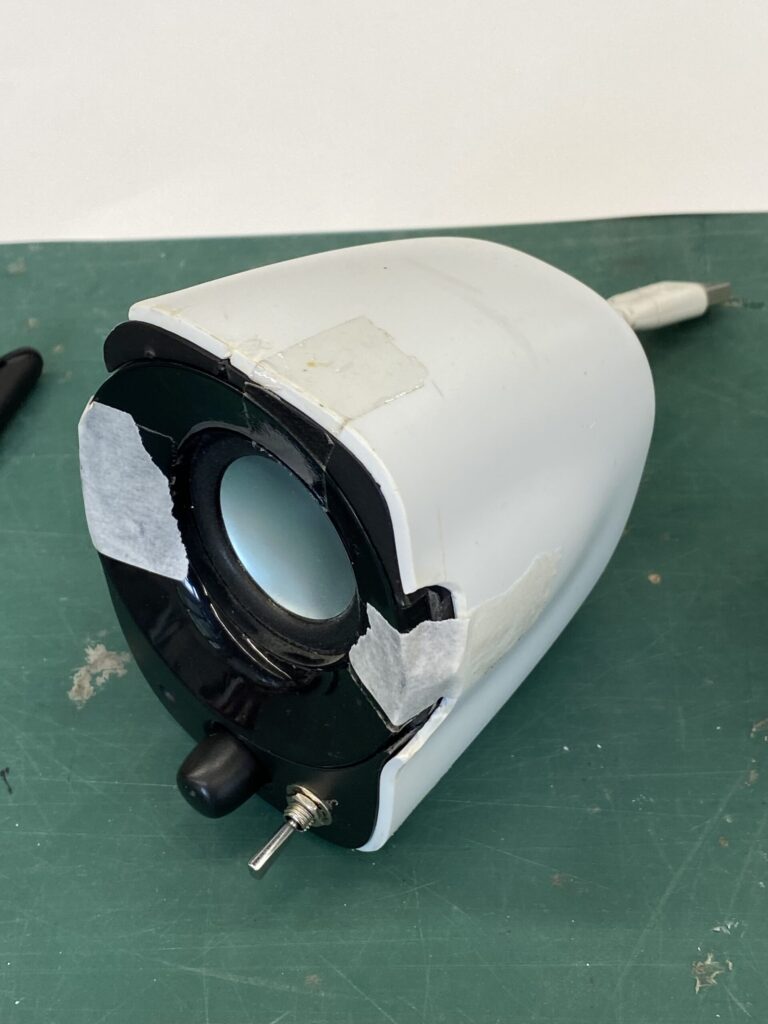
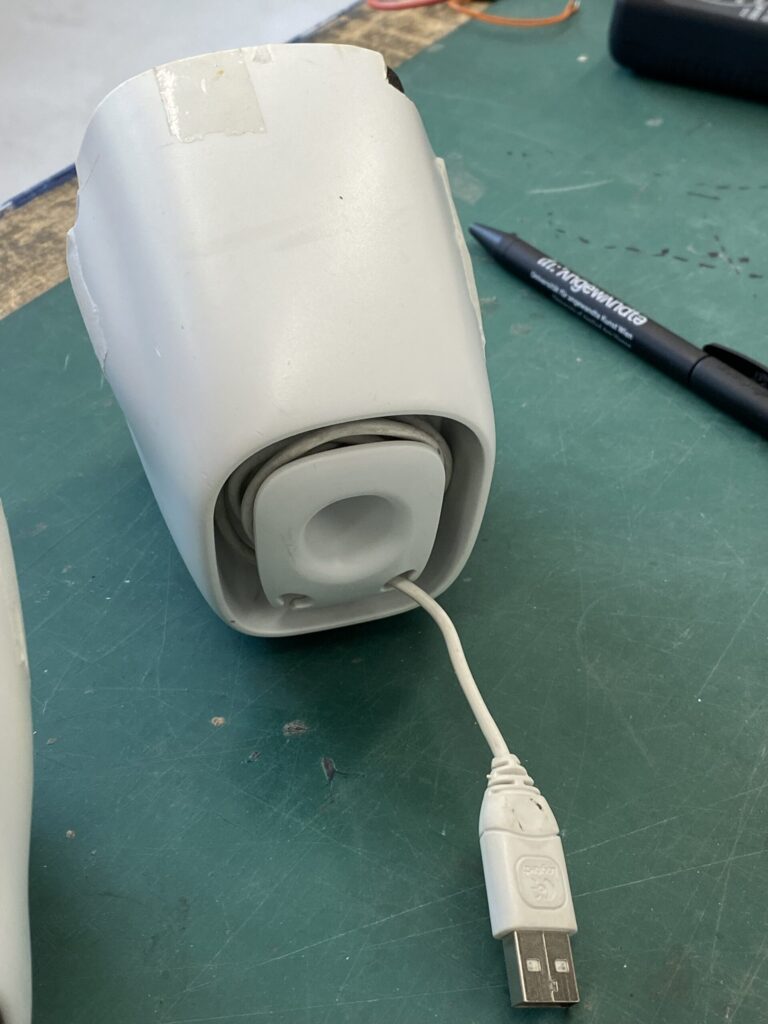
That is, small found electronics turned into new playful things.
I thought the final outcome would be something concrete and be embodied in a specific object.
But because what I want to show is so involved, it is turning into a more abstract framework of different aspects that I want to communicate.
I want to:
Make people interested in making something and learning the things needed to make it happen,
Make them able to recognize something in a mountain of junk, something someone threw away
Contribute to reduction of and awareness about electronics waste,
Make the movement/idea/project non-intimidating and accessible for others to engage in,
Core aspects:
Electronics, Right to Repair and recycling/upcycling
Playful attitude and learning new things
My personal experience/character
These aspects are intertwined. Together they constitute my body of work.
This is moving me away from making specific tinklets, into the direction of a coworking experimenting desk, where visitors can experiment with electronics, and experience my messaging and viewpoint.
At the same time, when facing an audience, the topic of electronics is too broad to offer. While conceptualizing with Ana, we focused on a manageable task the visitors can accomplish during their visit.
Next steps
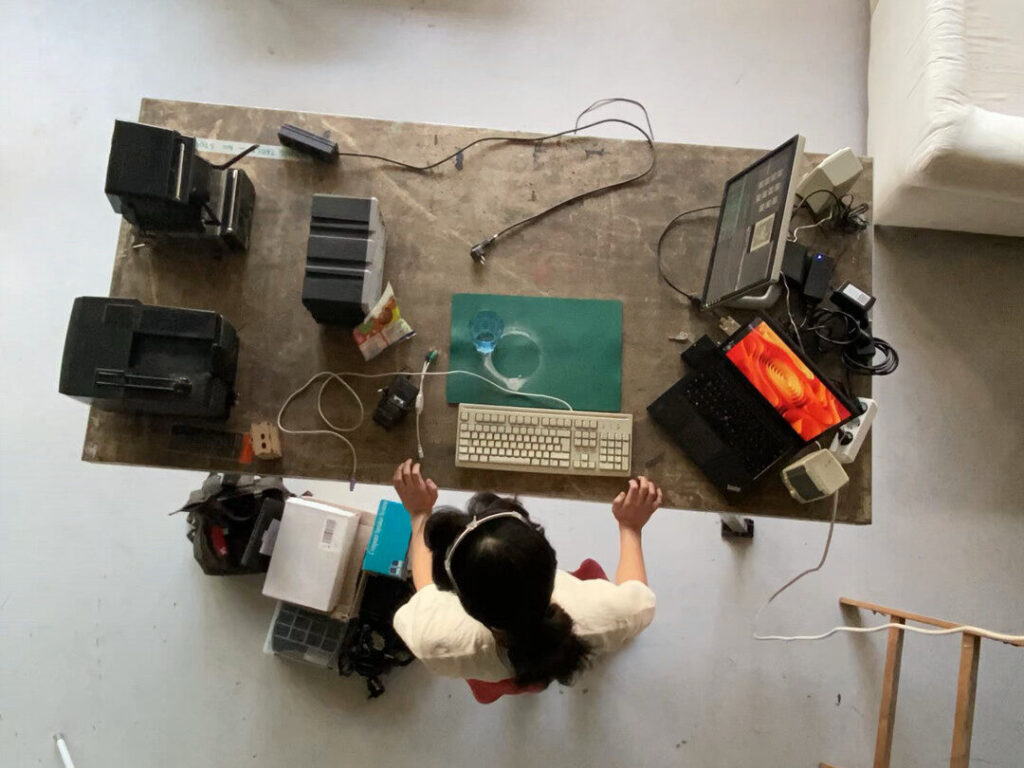
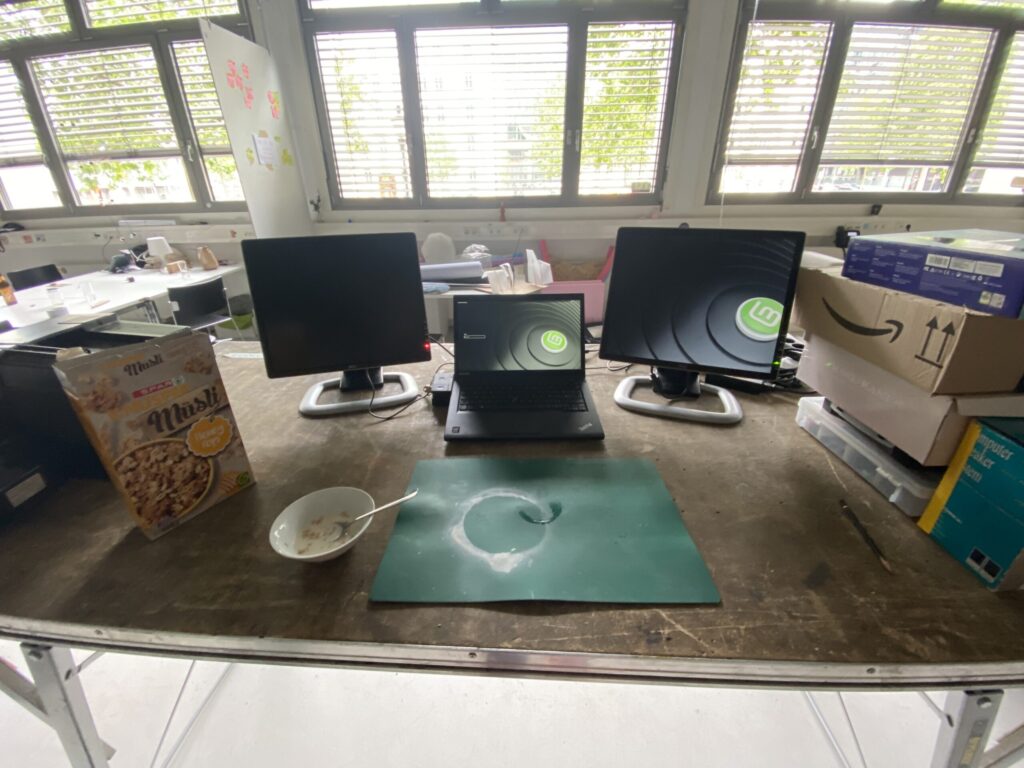
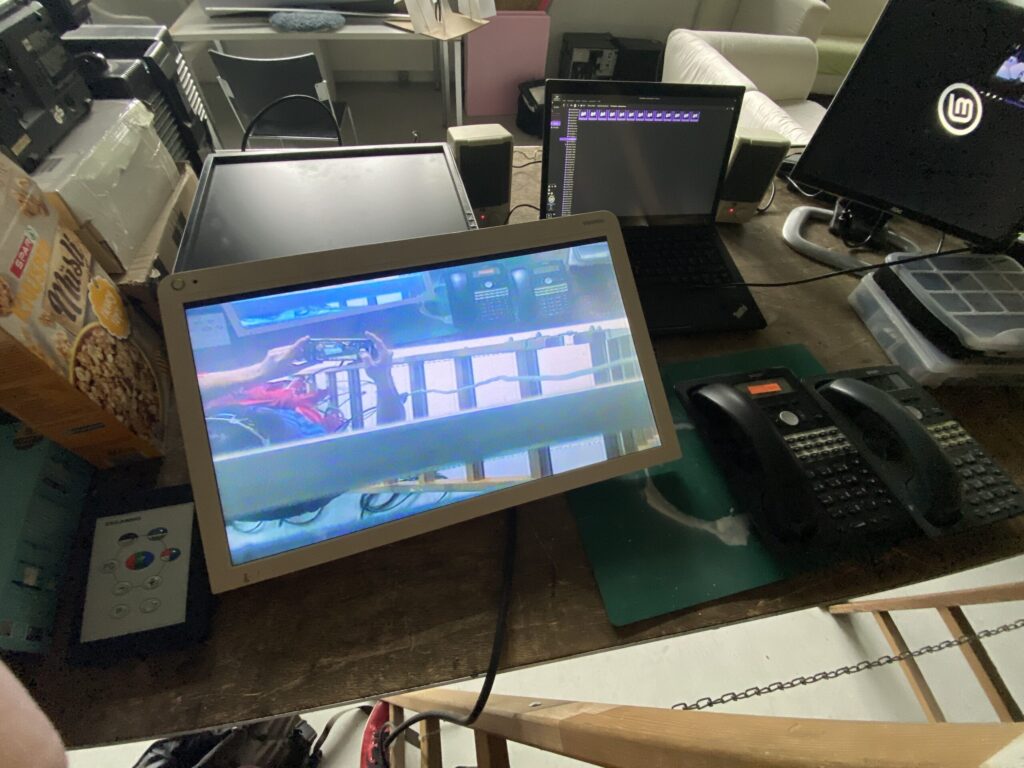
Trying various desk setups
Getting a feeling for the workshop flow
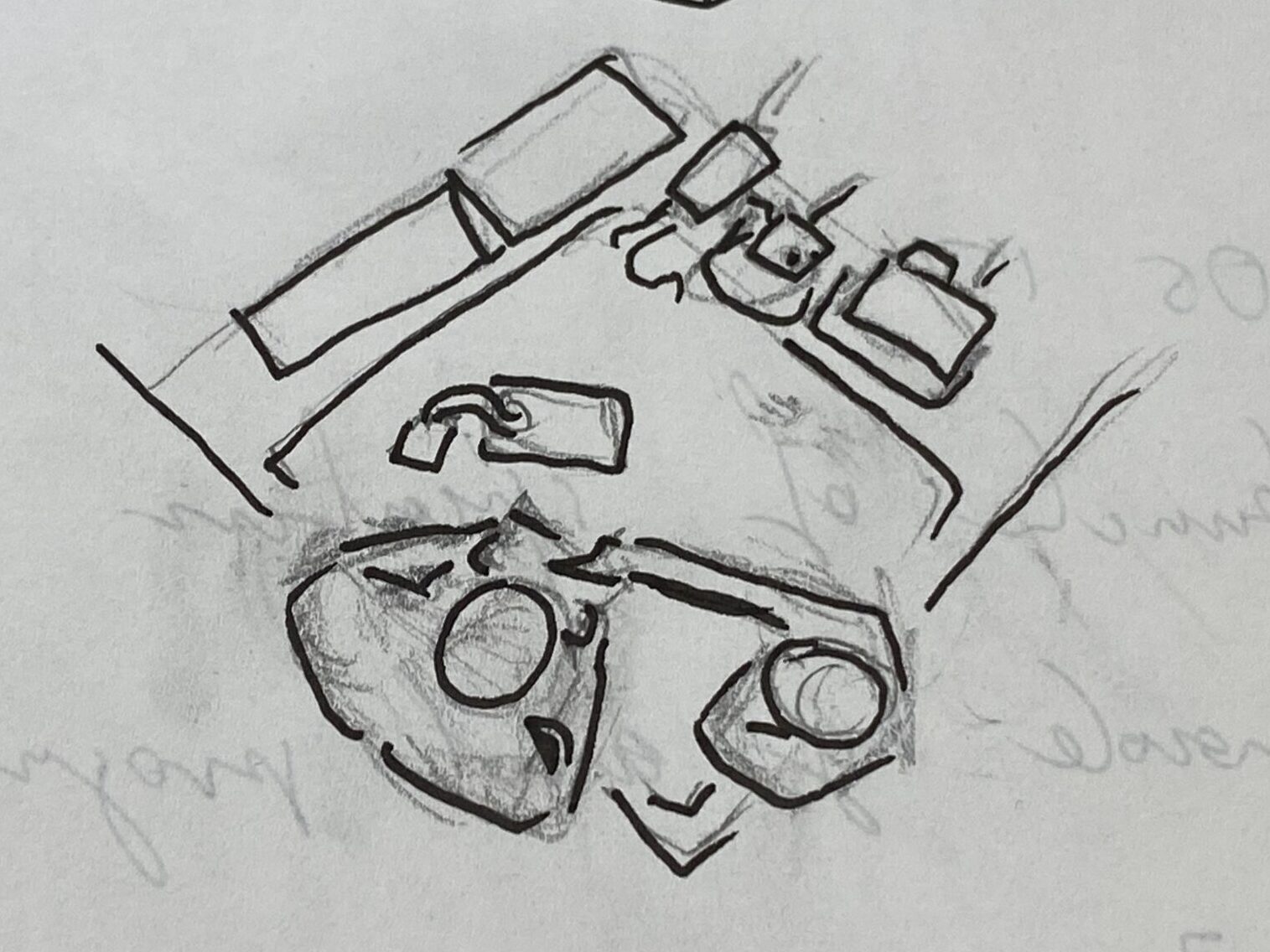
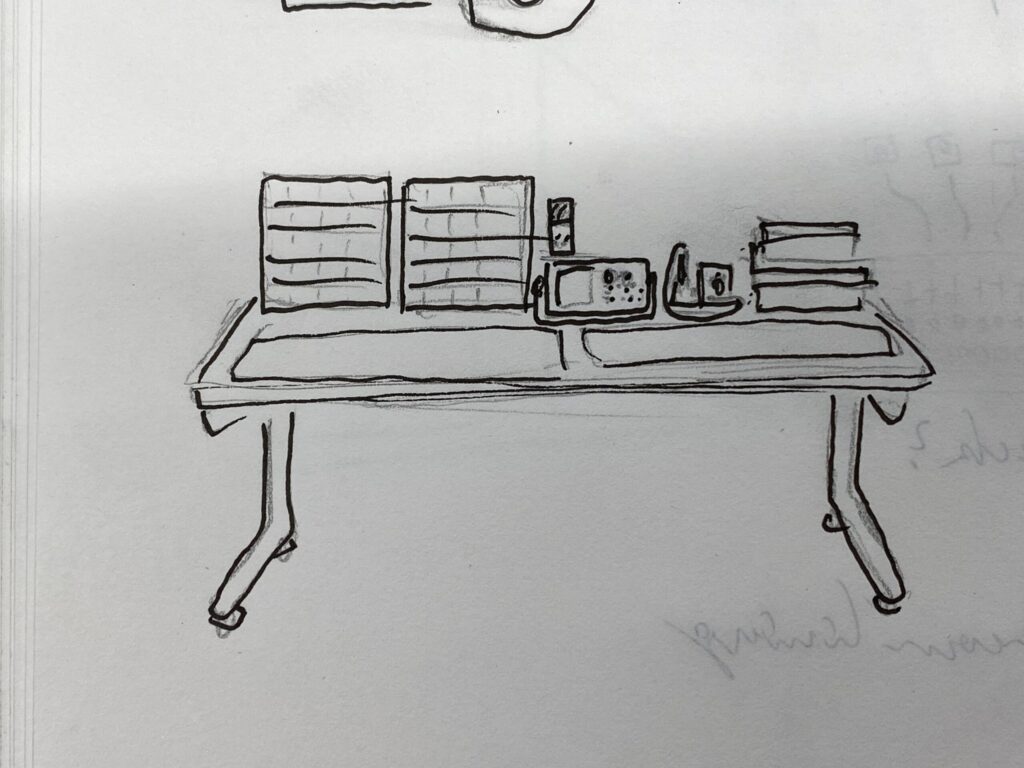
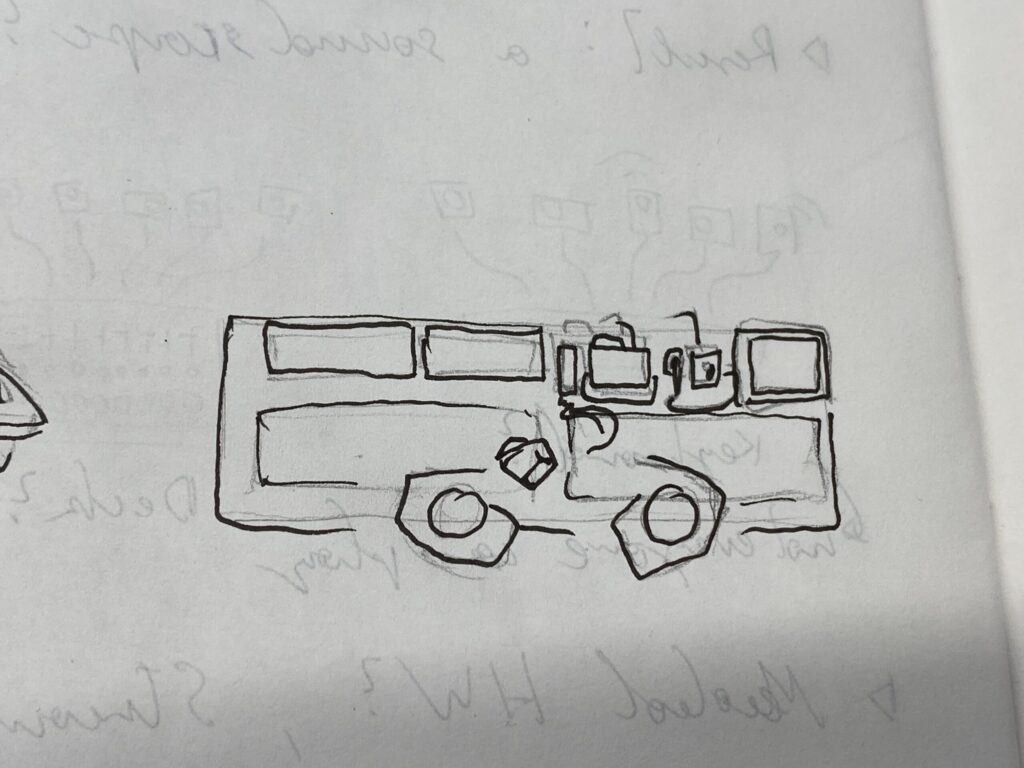
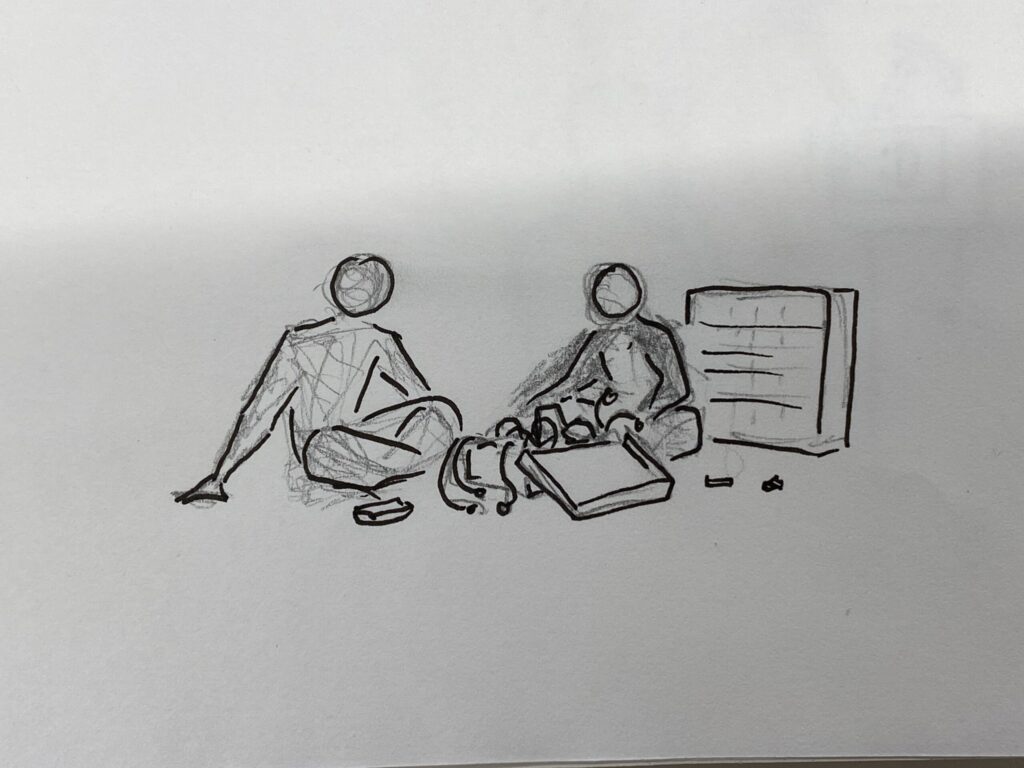
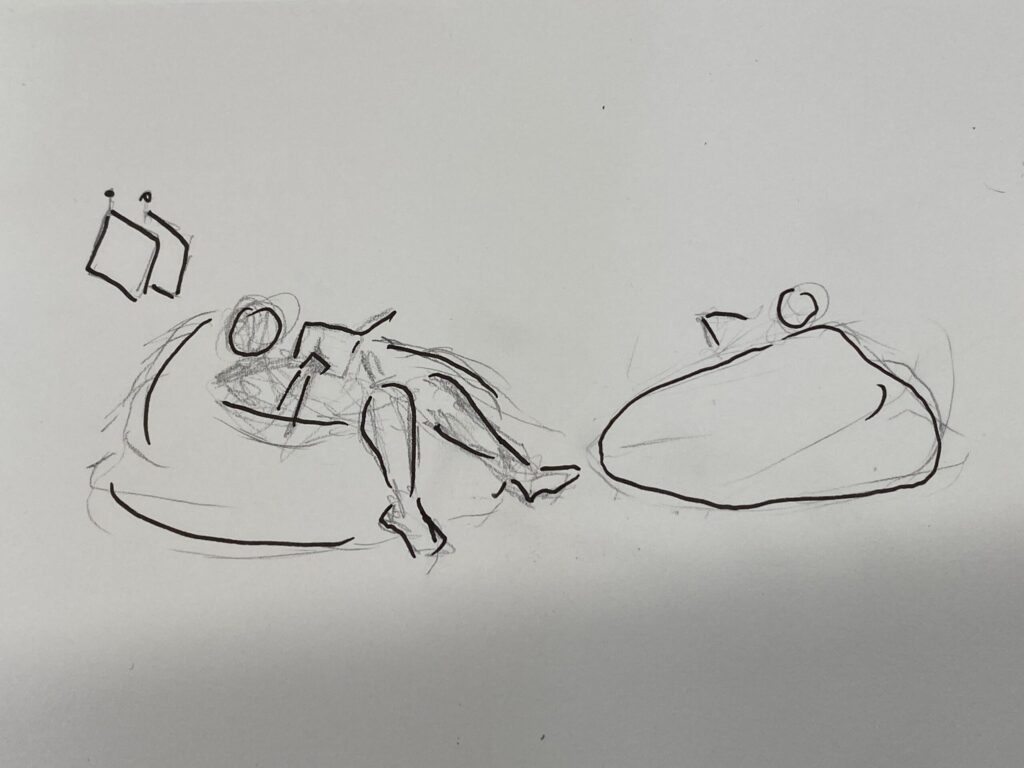
What could it look like?
[^visual reference]
"Moses-channel"-style desk.

Two participants, one a visitor, sit facing each other.
L-bend workspace.

Participants do not face each other.
Requires square table.
Wide bench.

Several participants sit side by side.
Already existing layout.
Working on the floor.

Association with playing with LEGOs on the floor.

Extra: Manuals and experiments reading corner.
After the Midterms, I had been floating, partly on post-stress stupor, but also around a fundamental question surrounding my project: What is it about? What holds it together?
Now when people ask me, I reply with the standard “Most people are intimidated by electronics and I want to bring it closer to people.” but this is a very broad answer, it doesn’t really answer the question “what are you working on?”.
Collab announcement: Ana Mikadze!
(Ana indtroduces their topic)
They approached me saying they know a place that would fit my interest and skillset.
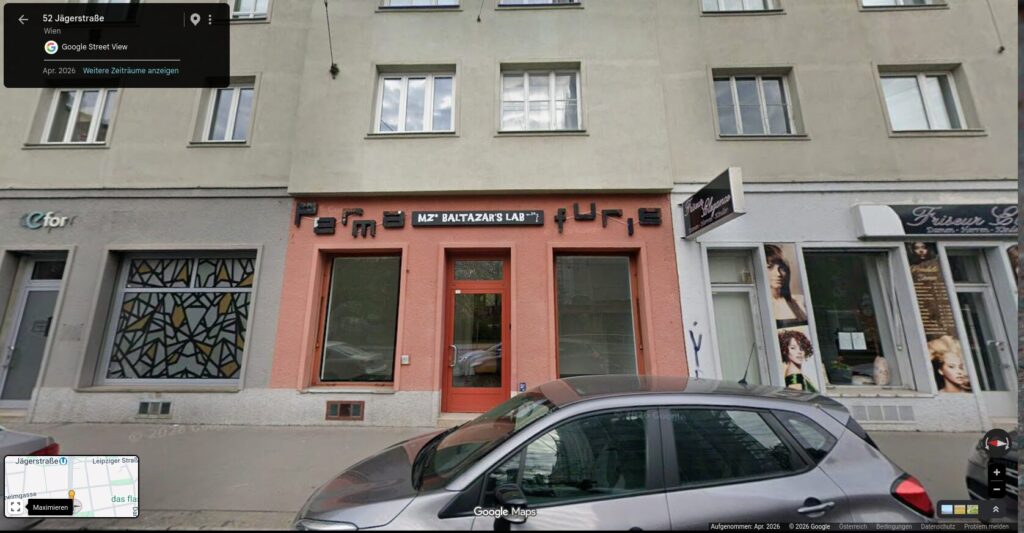
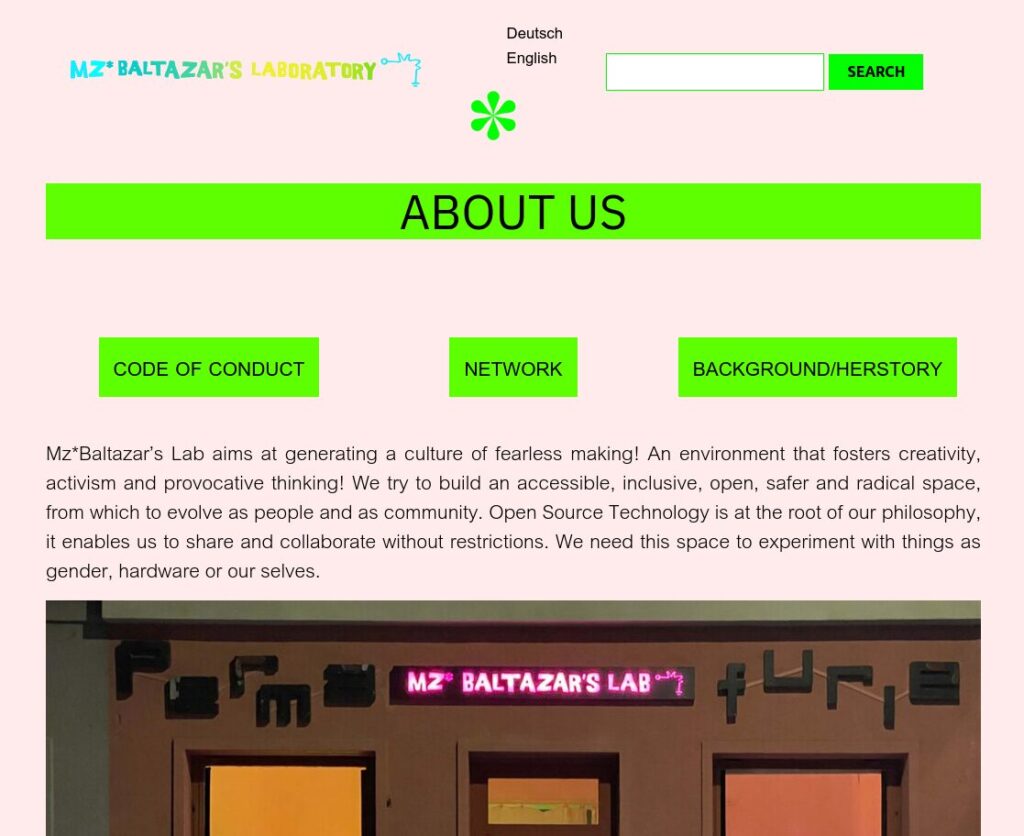
The place is called Mz*Baltazar’s Lab.
The Lab is currently looking for more participants in their exhibition starting June 25th.
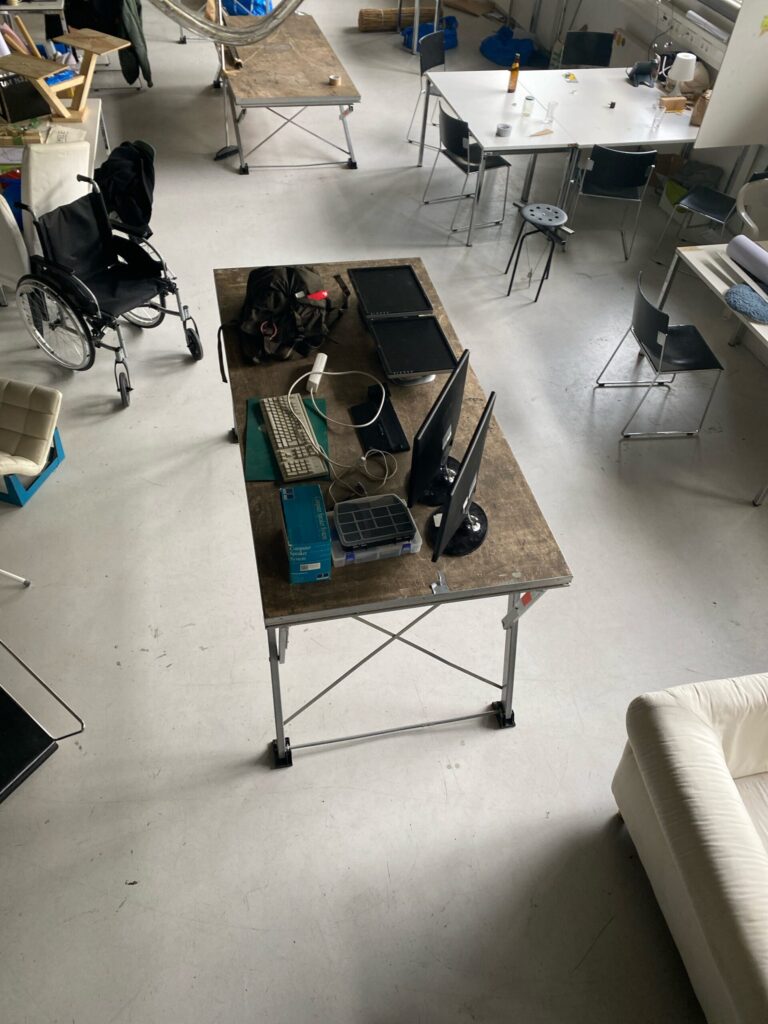
The project is now given a specific stage to work within, since the exhibition has restrictions on size etc.
Concept / Installation
The Tinkerer’s Desk
The Tinkerer’s Desk is an installation that takes the classic image of the lone genius at their workbench and quietly dismantles it.
The desk presented here is designed for multiple bodies, multiple intentions, no hierarchy of skill. During a [three-hour] live activation, visitors are invited to record a six-second sound – a breath, a word, a tone or accidental noise and program it into a broken speaker, assembled and disassembled by hand on the spot. The broken speaker is not repaired so much as redirected: imperfection is retained as character. The speakers produced across the activation accumulate into a site-specific polyphonic instrument — a spontaneous archive of a particular space, a particular group of people, a particular slice of time. Each speaker holds one voice. Together, they can be played: triggered individually or in combination, they produce a sound environment that belongs to no single author and no fixed composition.
What results is less a concert than a conversation between objects, a collective memory that remains activatable – catchable — long after the workshop has ended.
I was talking with Clark about how I was going in circles and he suggested doing live streams, or filming myself doing the projects. This way makes it easier for me to document my progress. I was hesitant to do it until now due to limited storage or bad memory workflow, but I have to overcome this obstacle.
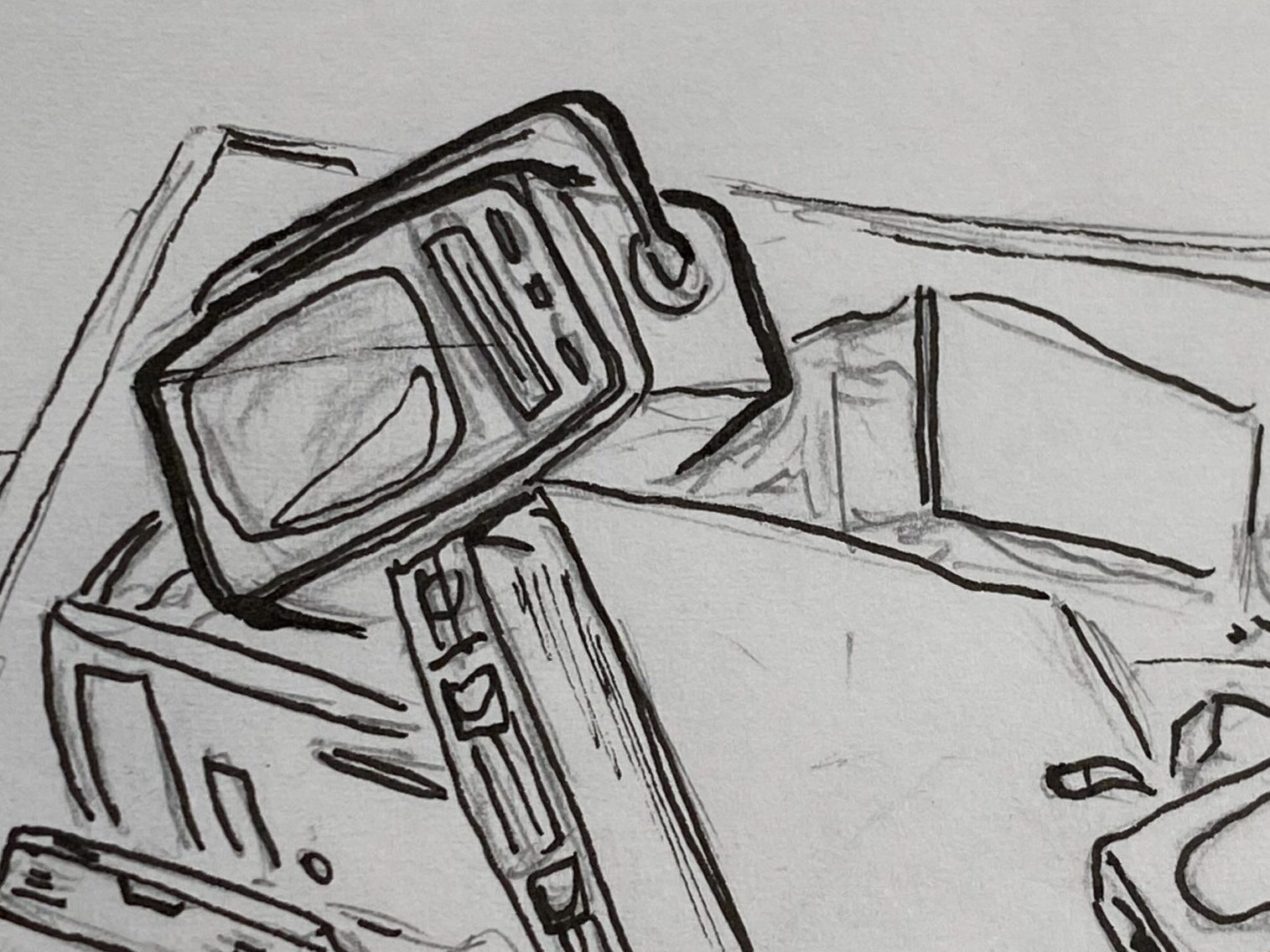
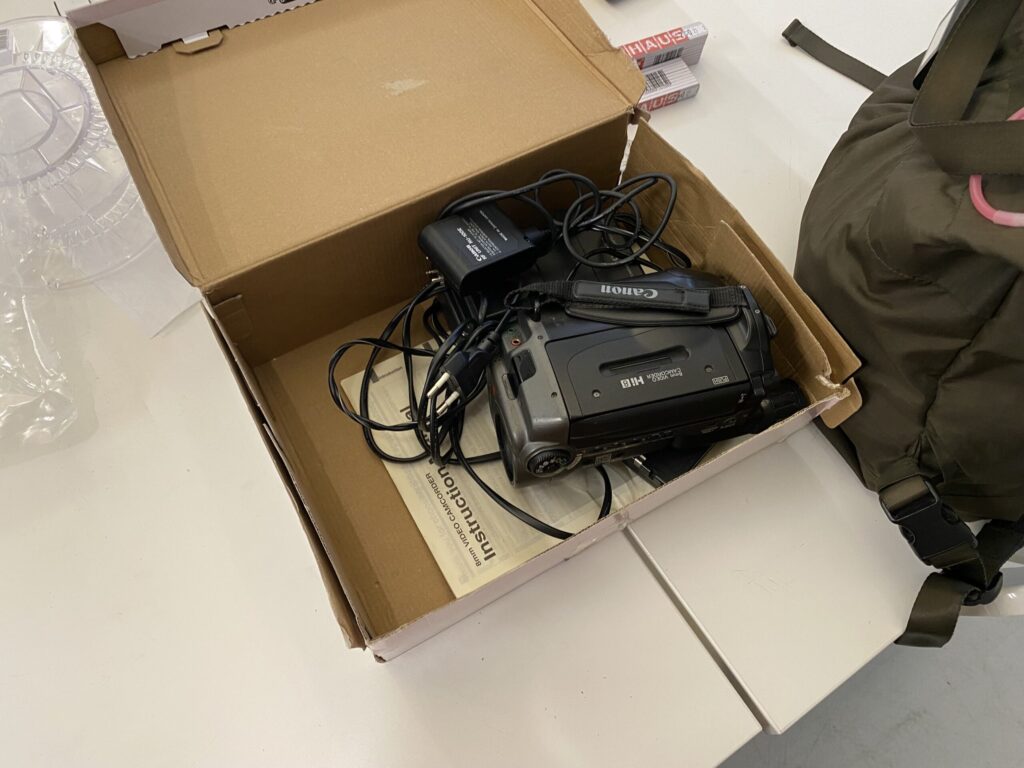
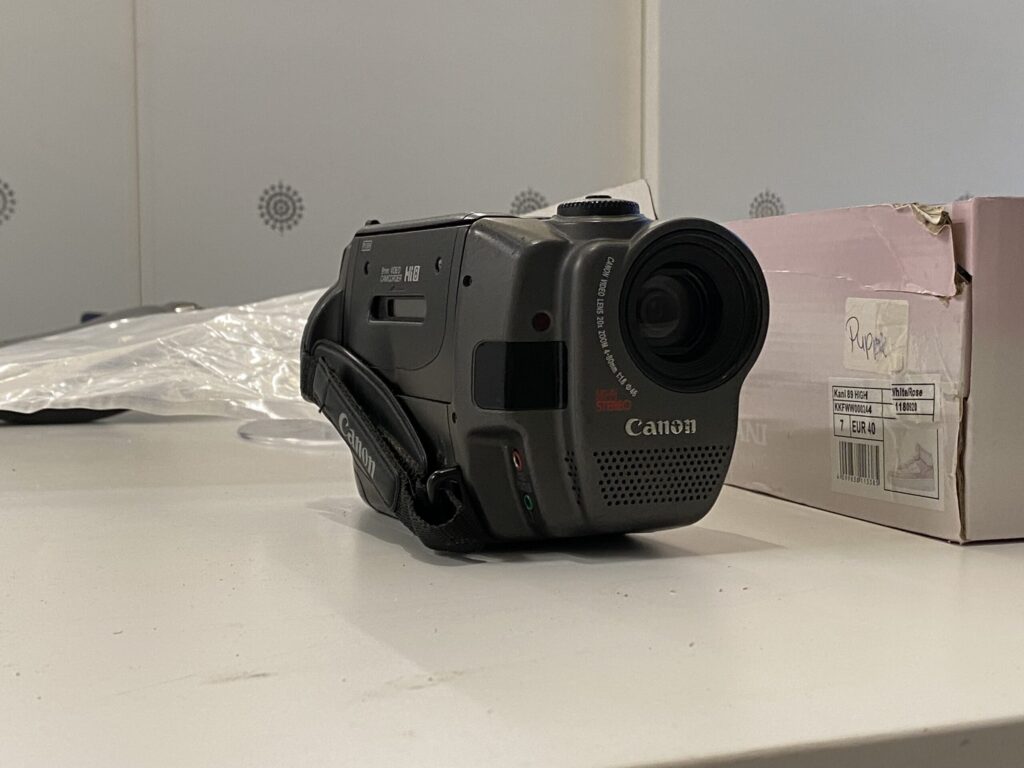
Camera I bought in the hopes of filming myself
Philip reminded me of the products of Mark Rober, among them the HackPack, a subscription of packages with different projects aimed at deepening understanding of key electronic principles. I should have looked at it much earlier, since it is a relevant topic to my project…
Since the HackPack goes into a different direction he suggested I could design a starter pack or similar more going in the direction of modifying and fixing electronics.
Nadine is interested in being able to ask questions about the things that can be hacked. While doing so she finds being able to interact physically is important. She suggests an environment of group events. About hacking, fixing, whatever comes to mind.
When people ask me what my project is about, I mostly answer that it has to do with electronics and how I want to bring people closer to understanding them so they can fix/modify it themselves. There is potential for a community aspect but I have been struggling to fit it all into one framework.
The general idea is to have some installation that I can exhibit that shows off what is possible with tinkering, but also doesn’t intimidate with complexity.
Next steps:
Should I pivot?
Should I kill some darlings so I can get something done?
Are there things I should consider more?
Are there things I should worry less about?
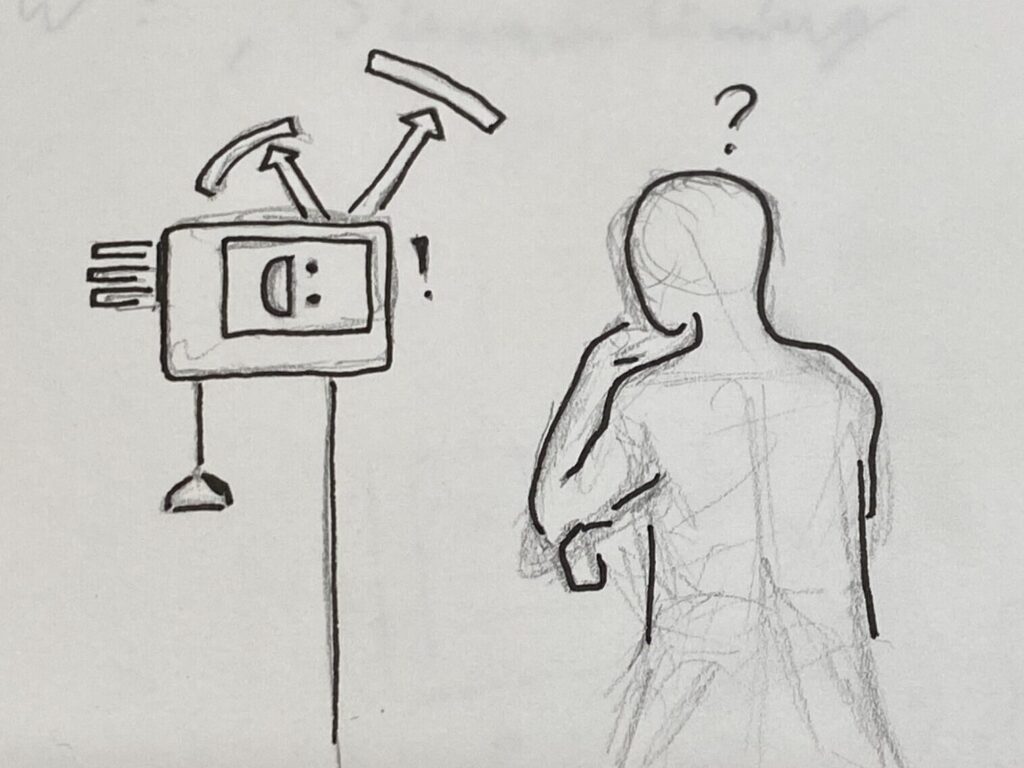
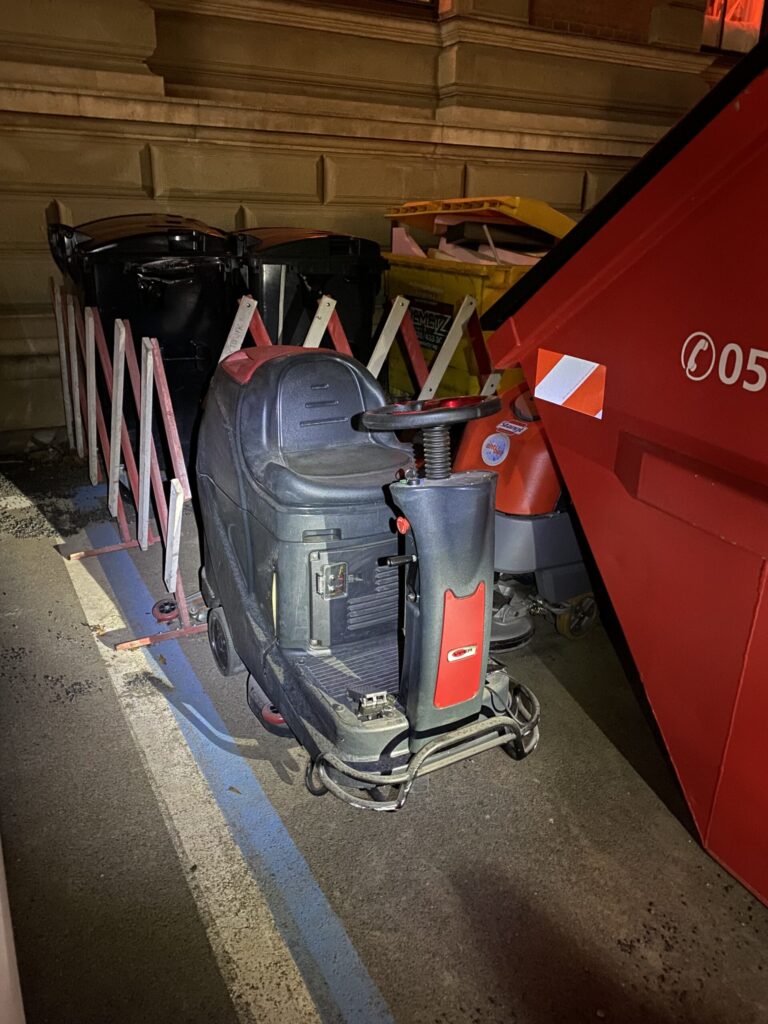
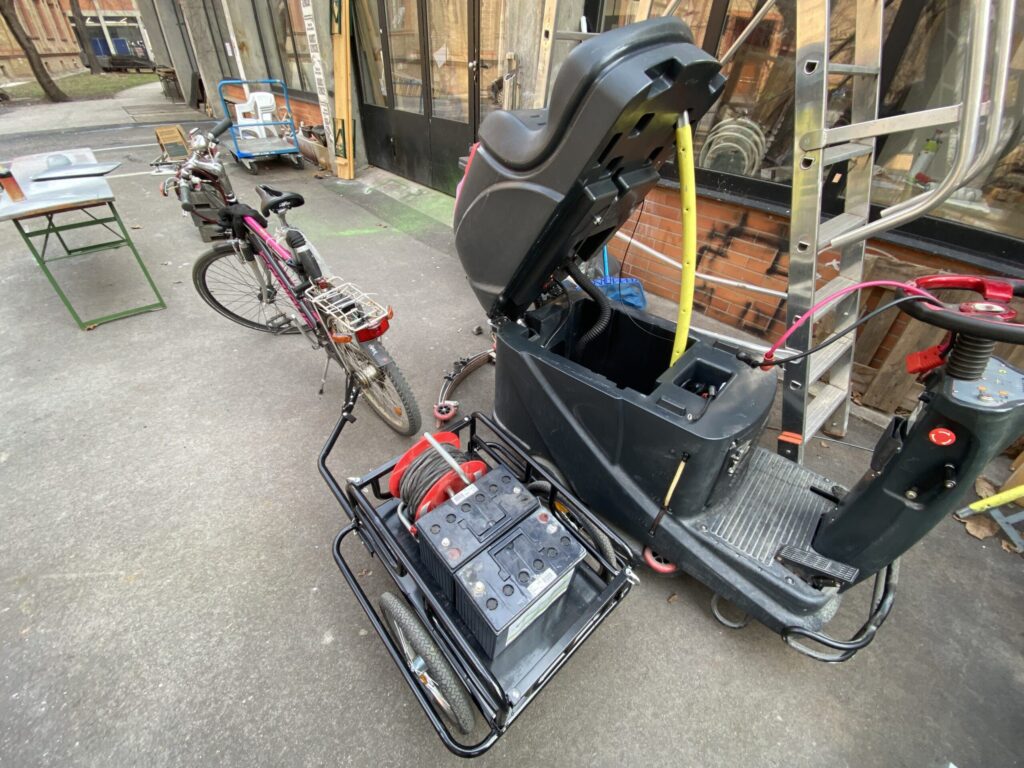
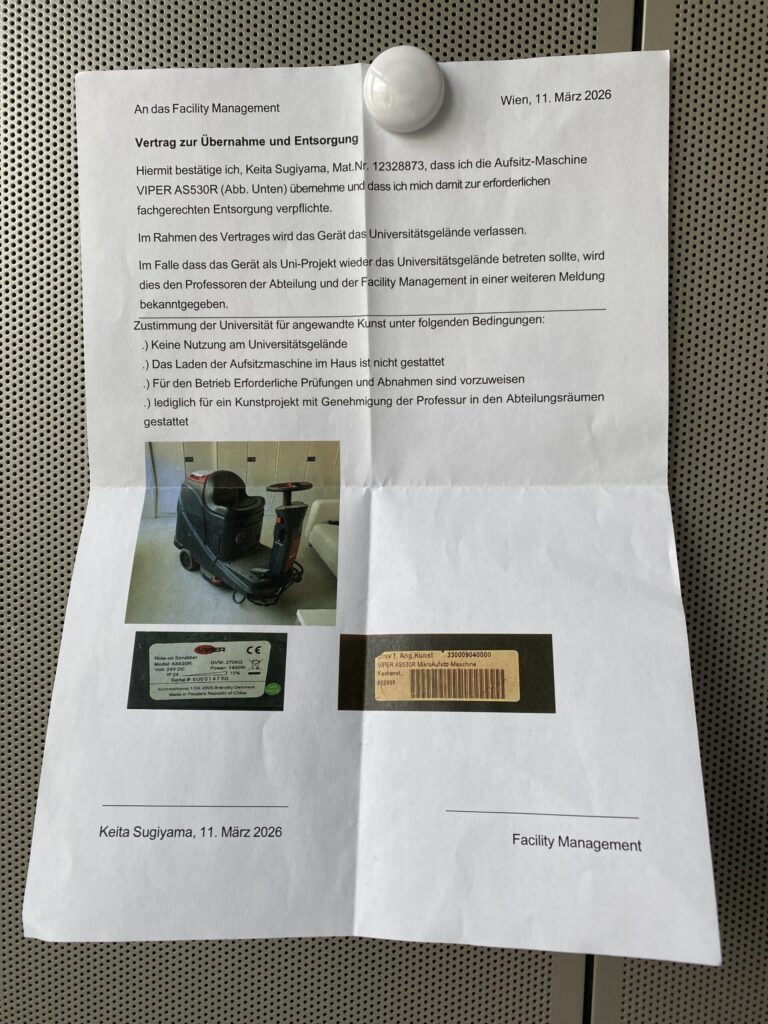
About the floor cleaner: I don’t want to miss recording important events, how should I go forward?
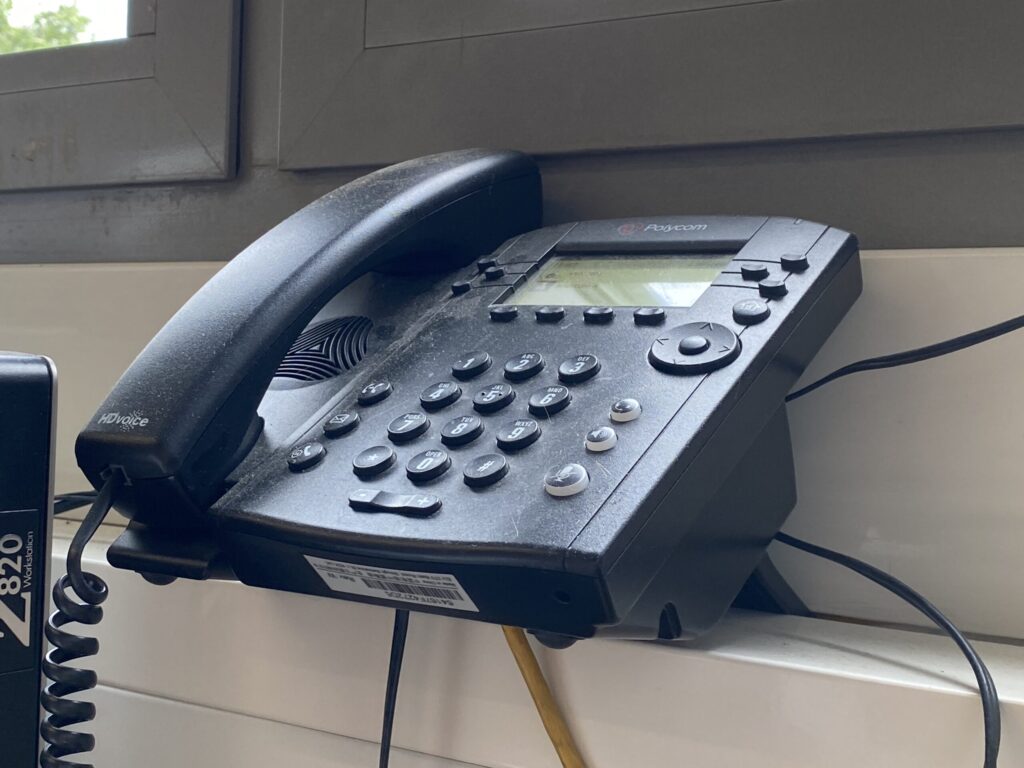
Personalized advertisements/infotainment displays in the studio…
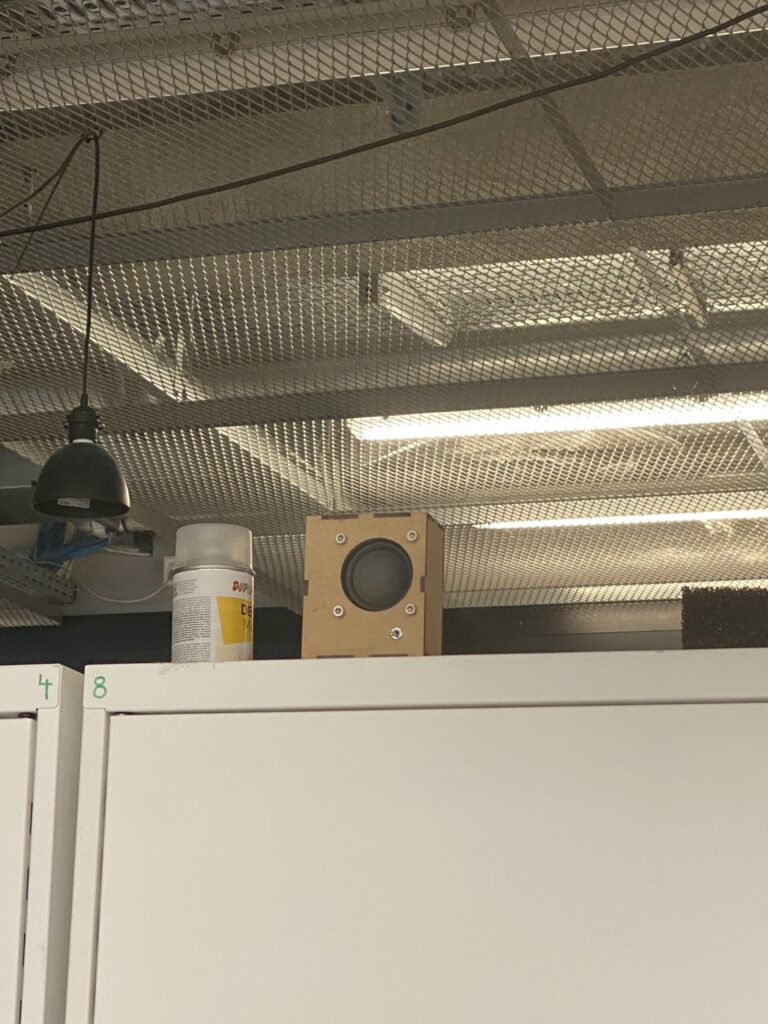
PA system in the studio…
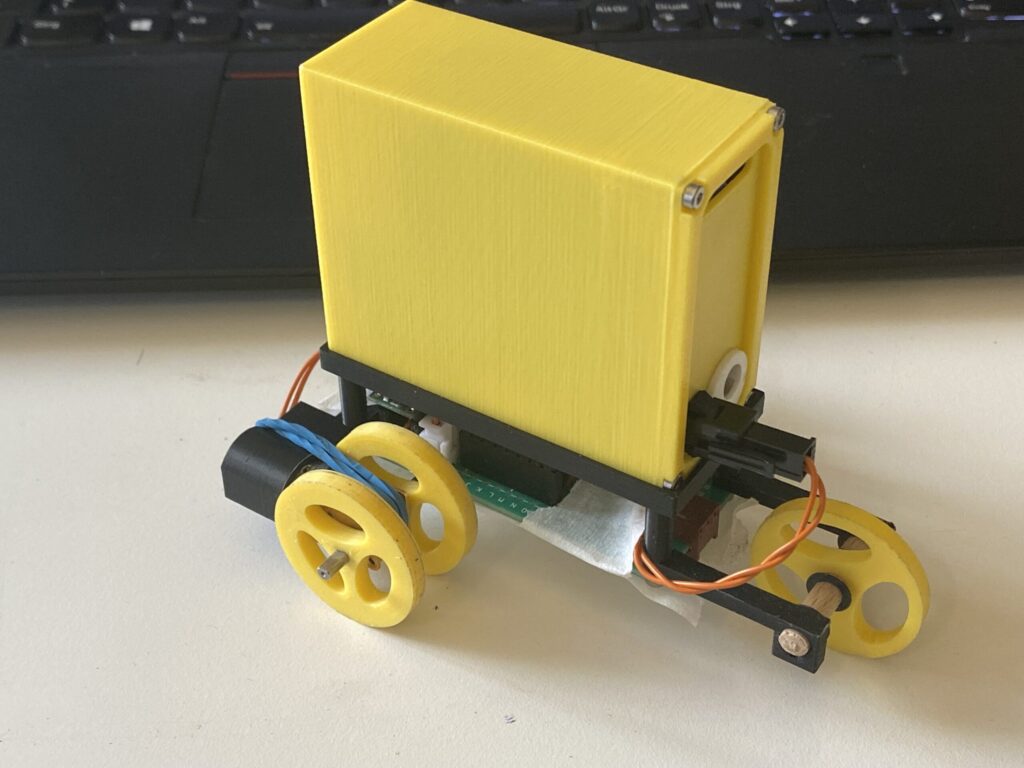
A little car going around reminding people of things…
Interactive e-ink display
Extremely small agentic AI in a box
Newcomb’s Problem experiment
The overarching theme is always the same: Create an intervention aimed at the students in the Studio (I am also including ID1 students for simplicity, because we are close by).
The question behind it should encompass the aspects of DIY-mentality/the determination of being able to do things yourself, the rejection of corporate controlled life, and cultivating a community which builds upon these values.
A potential question at this stage may be: “How can I cultivate a community of tinkerers?”
This question however implies that I am the central figure in leading such a community, which is not what I want.
Based on that the question could be modified into: “What supports the cultivation of a tinkerer community?” maybe “What does the tinkering community need to thrive?” or “What can we do to make tinkering more mainstream?”
I have done a lot of different things over the holidays, but felt like I was going in circles.
What happens is that I pour time into projects, but these projects are so complex and involved from the outside perspective that it is really hard to engage for strangers. I end up doing things in my corner.
Clark has suggested that I do livestreams, that is, record myself working on the project, so I dont have trouble trying to formulate my progress into text and having to remember what it is what I did on what day.
This can also mean an live audience who can engage with whatever it is that I’m doing.
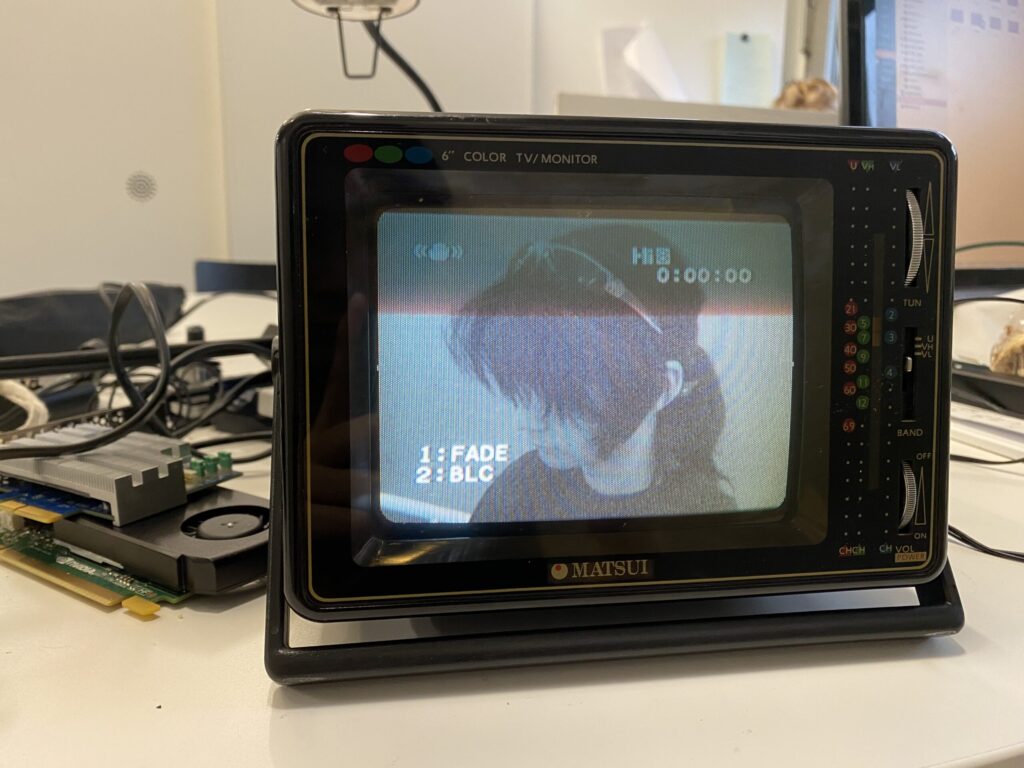
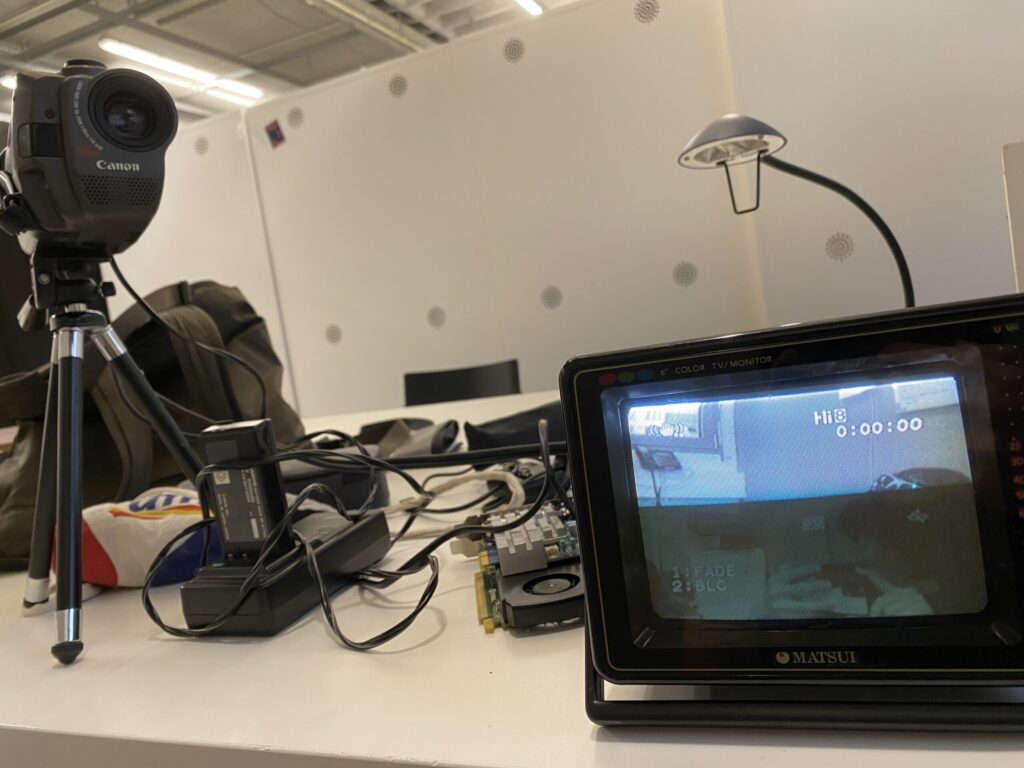
Self filming experiment:
The finished thing.
Filming myself indeed helped to document it a lot better than trying to take lots of pictures and explaining in text later.
Feedback from presentation techniques presentation run on 2026 06 03:
The passion from personal interest is visible and adds strength to the statements. But:
There is a crucial link missing from inspiration as a person to task as a designer to bring people closer to electronics.
The Tinklets are a nice intervention, but it lacks context and instructions for casual passerbys to really engage with the subject of the Tinklet. – Ylvie
About the workshop format: It is a really cool idea, and already really inspiring, but it needs a little more connection to more attachment points the participants can hook onto, otherwise this knowlege and experience floats in a vaccum.
My task as a designer (yes i’m a designer oh god)
Design a thing that once the workshop is over, is still in tangible reach of the participants. That includes further info or a beginner toolkit they can take home, aside from the speaker itself, optimally.
Design a process through which the participants can engage, understand, and gain context to be able to independently continue tinkering.
Understand what keeps people away (or doesn’t) from engaging more critically with electronics.
How do I sell the coolness of repairing electronics?
As a product of the tertiary economy sector, offices encompass and lay claim to a tangible amount of resources: demand raw materials, use logistics, use infrastructure, occupy buildings.
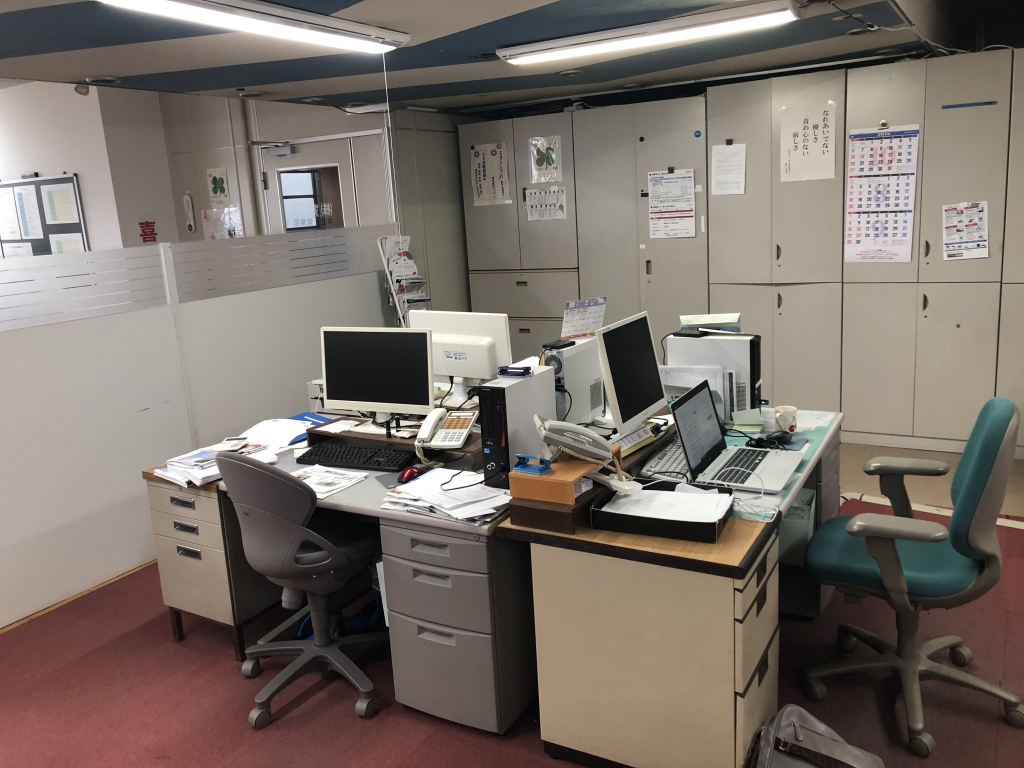
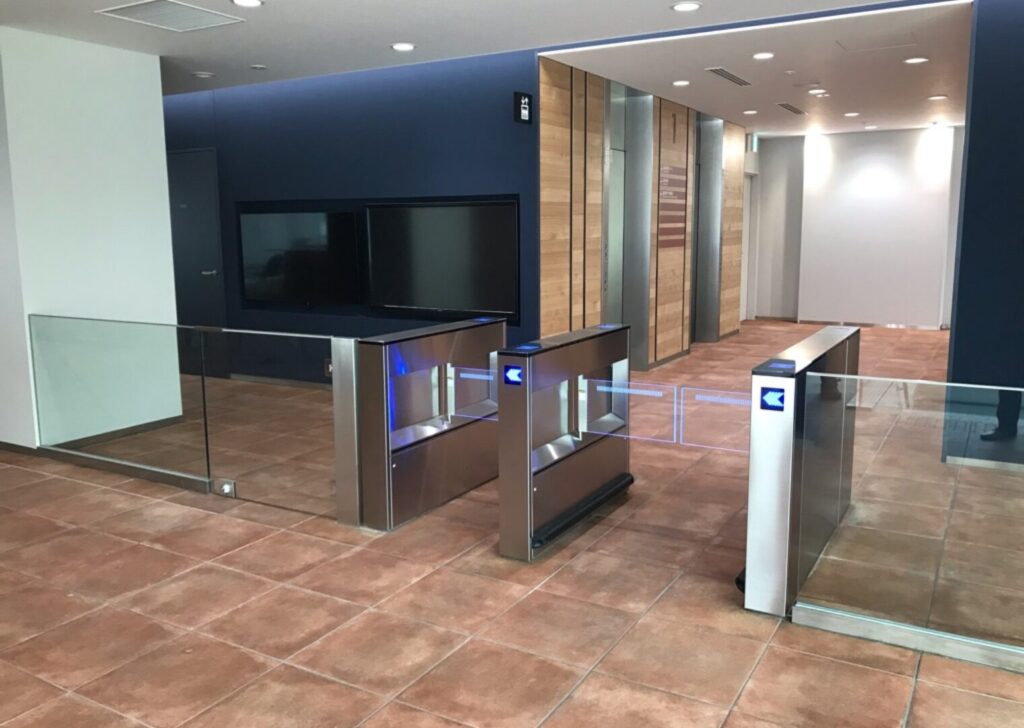
Typical office entrance gateway [9]
And yet their concrete task is elusive to me. They seem distant, lifeless, corporate, replaceable.
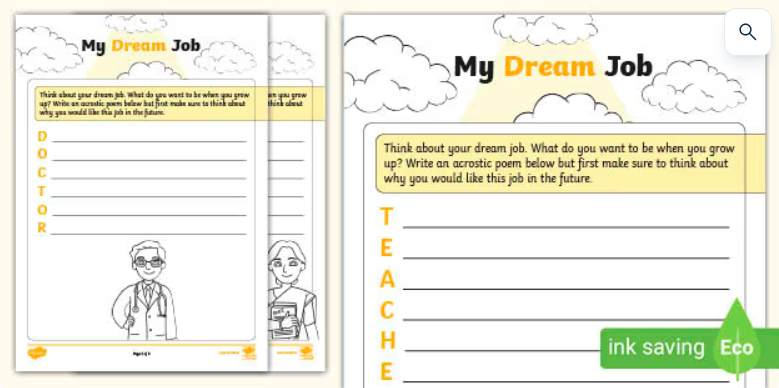
Write an acrostic poem below but first think about why you would like this job in the future, screenshot [8] Keita Translate: Conform to this boilerplate but first think of ways to justify your illusion of a choice.
No kid in grade school will write down “I will sit down at a computer all day” when asked what their dream job is. And yet office workers are a catch-all workforce [7, AMS Job description of Bürokaufmann/-frau].
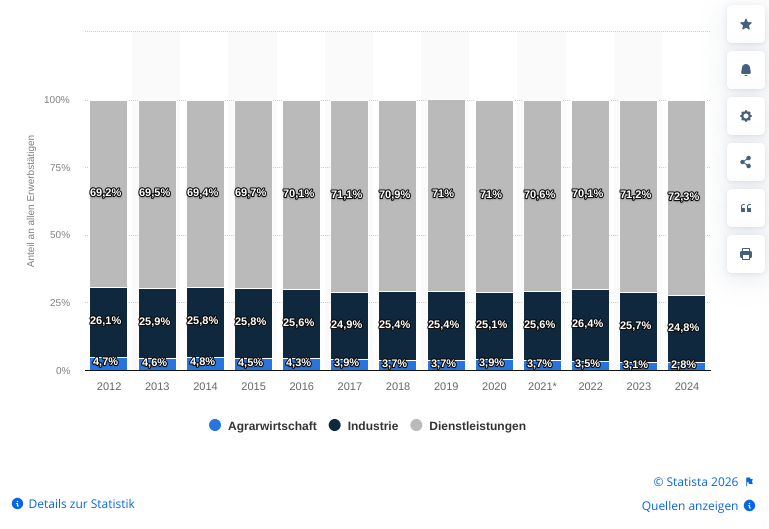
Distribution of employed persons sorted by economy sector, tertiary sector here called “Dienstleistungen” in light grey, screenshot [6]
In Austria 2025, the tertiary sector as a whole employed 2.9 million individuals. [1] As such the tertiary sector makes up almost 75% of all employed persons of all three sectors.
While “Office workers” cannot be separately defined, my assumption is that the tertiary sector is almost entirely comprised of them. Precise numbers have yet to be found and can affect my research greatly.
Imagine a world where offices have been made obsolete.
How could a world that fully decommissioned office workers adapt, and what futures do the laid off workers have?
Why?
The introduction of AI is put to blame for mass layoffs in industries already [2].
Although at the same time they are under scrutiny for their ethics, performance, and ineffective use, as around 95% of all AI pilots at companies fail [3].
A manual worker disinfects handrails on the Yamanote Line[4]
During the COVID-Lockdowns office buildings already experienced a sharp decline in use, prompting alternate use cases for the then unused buildings.
I want to investigate the knock-on effect a decommissioning of offices would have on the employees, society, architecture etc.
How?
For this I want to conduct research through questionnaires aimed at people working in offices, and literature on relevant subject matters.
What?
A final product I imagine is a short film which communicates my findings.