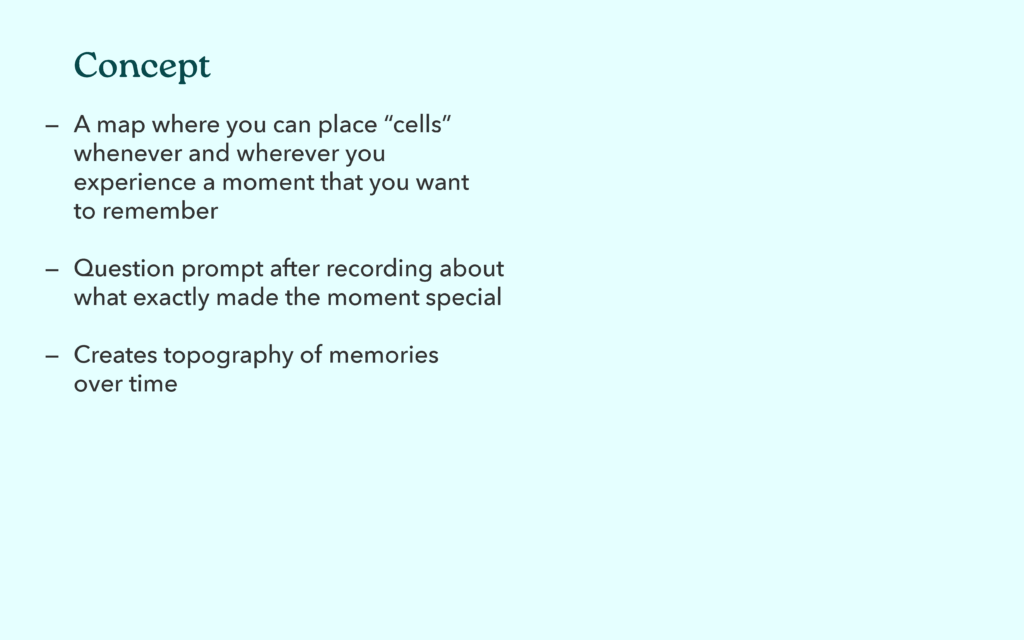
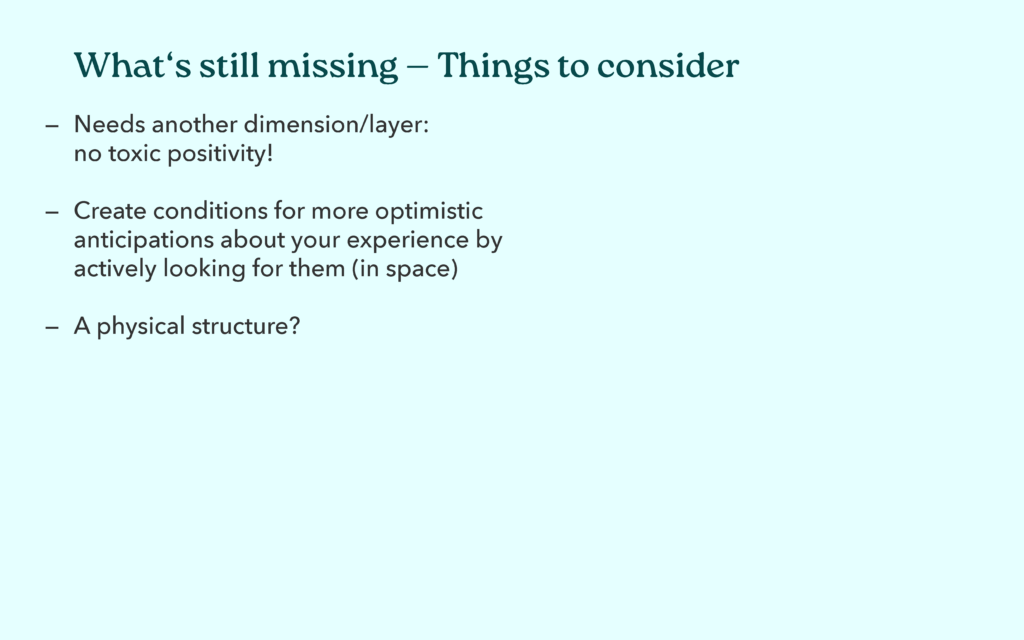
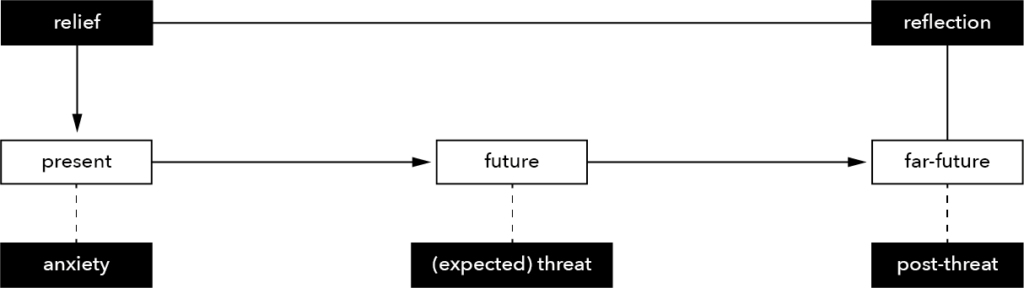
I want to shift the focus a bit back to the anticipatory nature of anxiety and how we can reframe our (sometimes mislead) predictions about future threats.
(Quick) Reseach
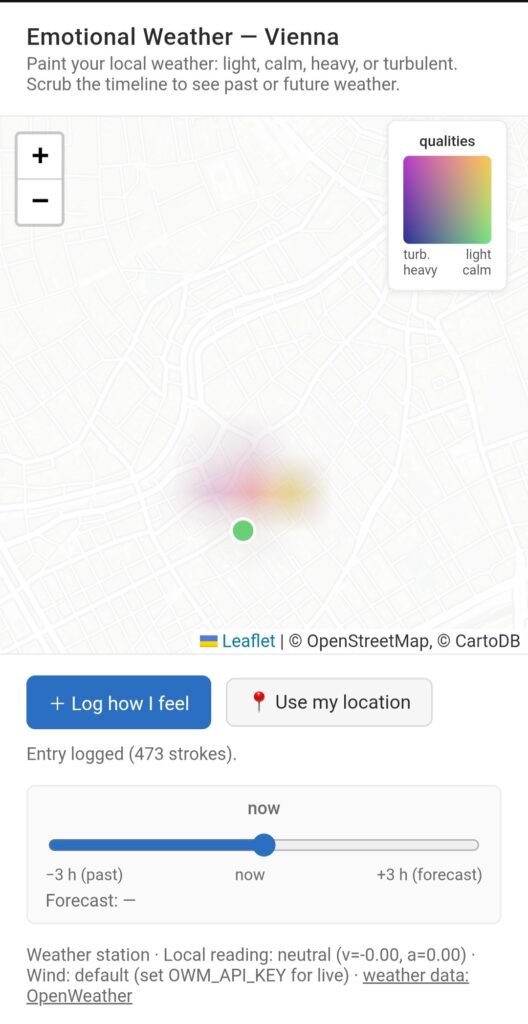
Christian Nold’s Emotional Geography & time-geography
Episodic Memory and Mental Time Travel:
Mental time travel as a reflection exercise to create relief from anxiety: Create confidence in the prediciton that there will be an “after” to the situation
Help you overcome fear about things you actually want to be doing
Updated Version: Flow
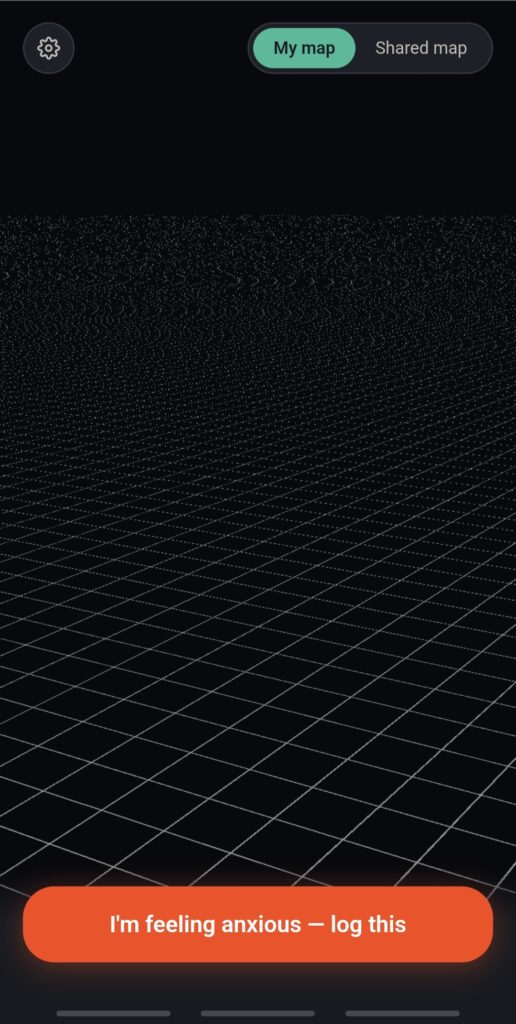
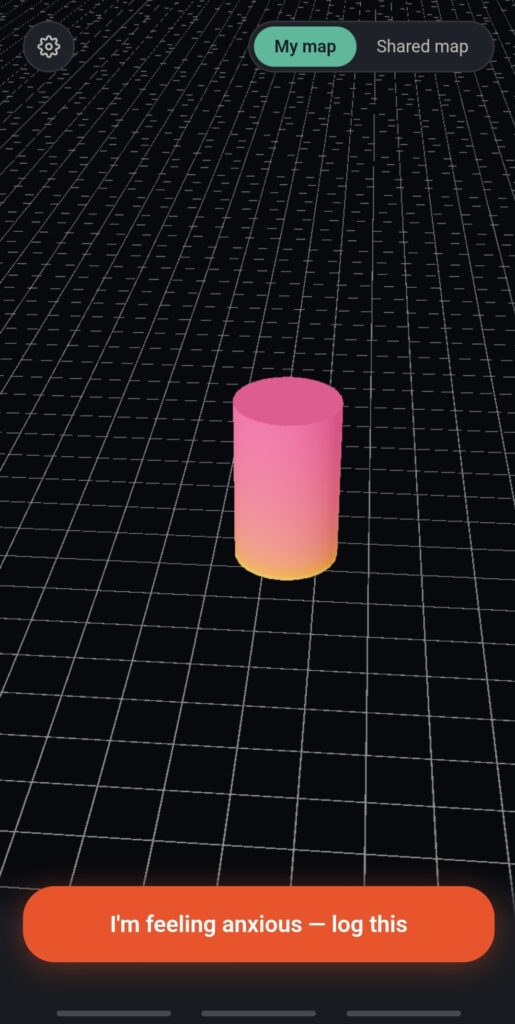
Notice when and where you are anxious
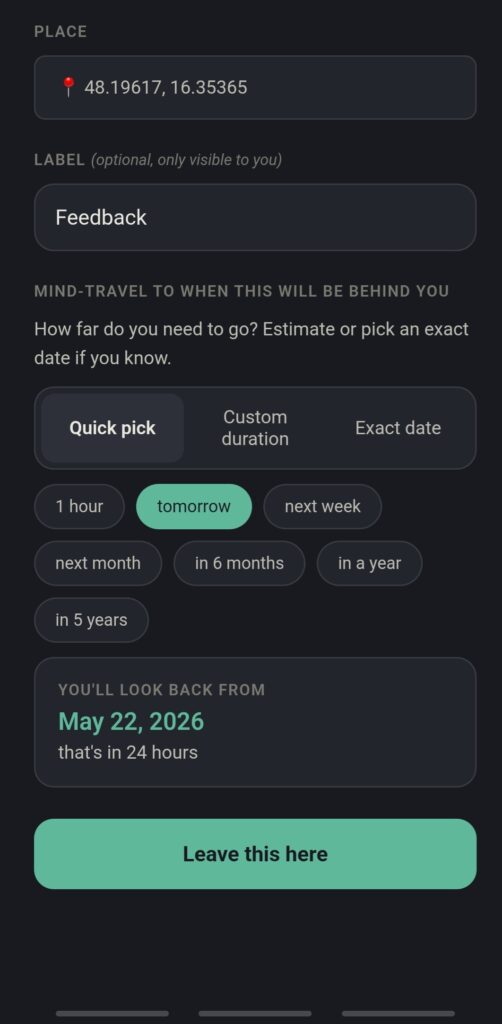
Log in how long you estimate the “event” that is causing distress will take (i.e. when it will have passed)
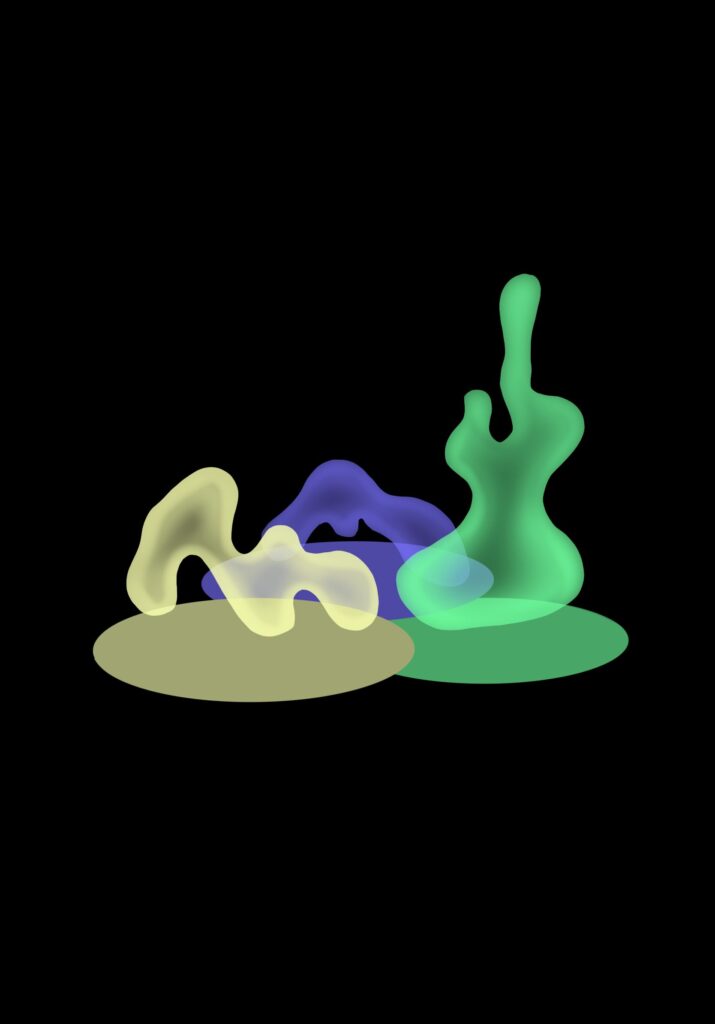
A column is created along the vertical time-axis that represents that duration. It is shrinking as time moves on.
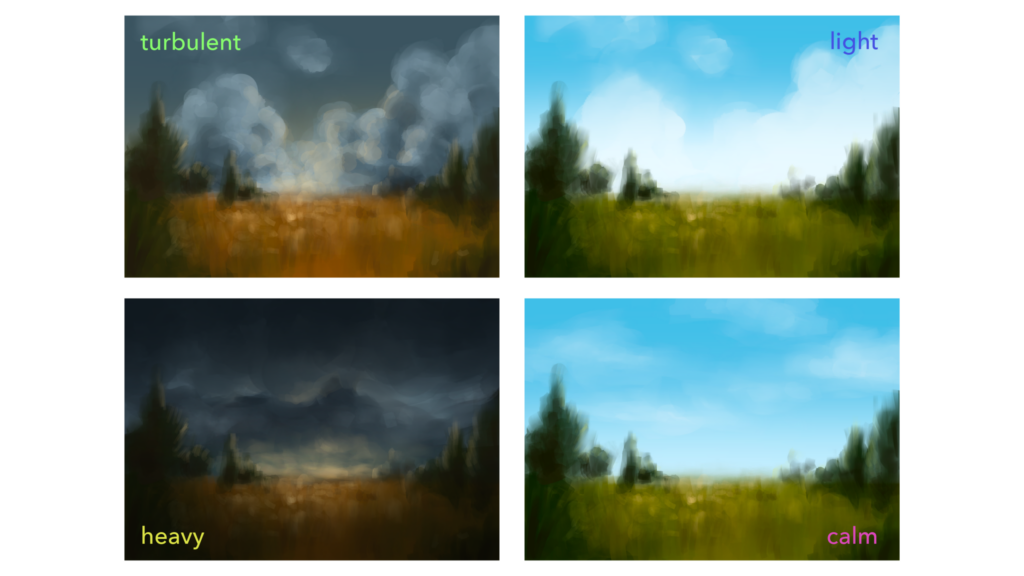
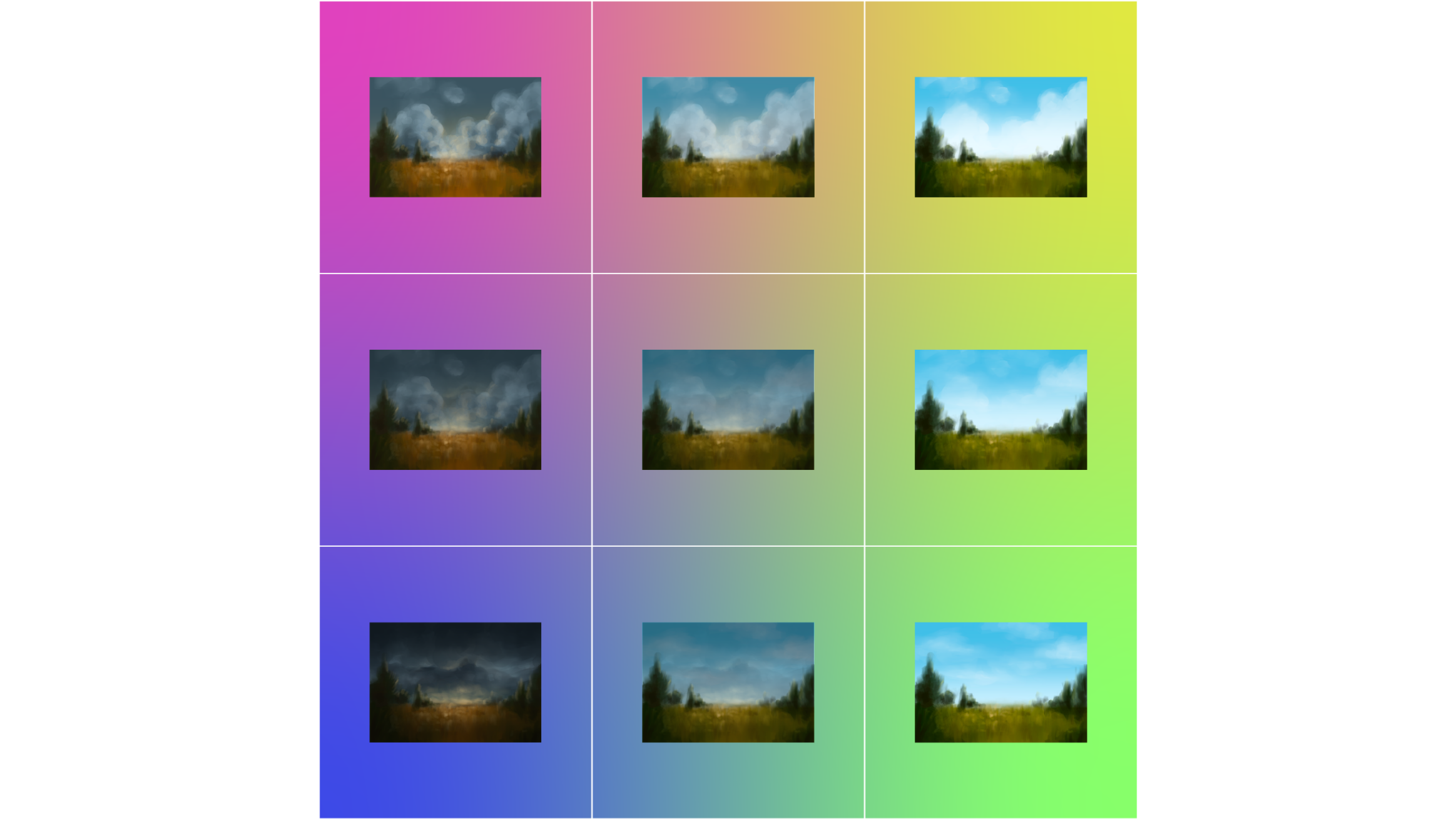
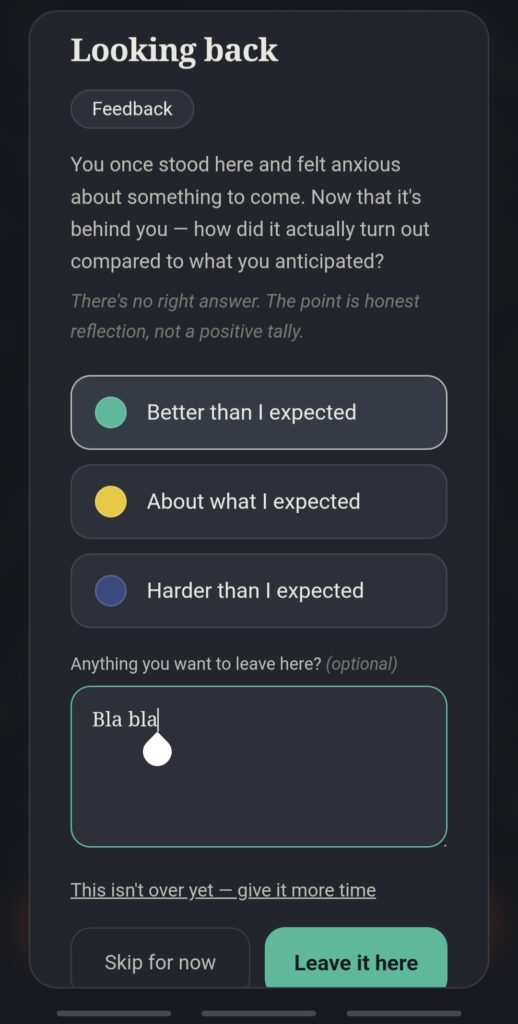
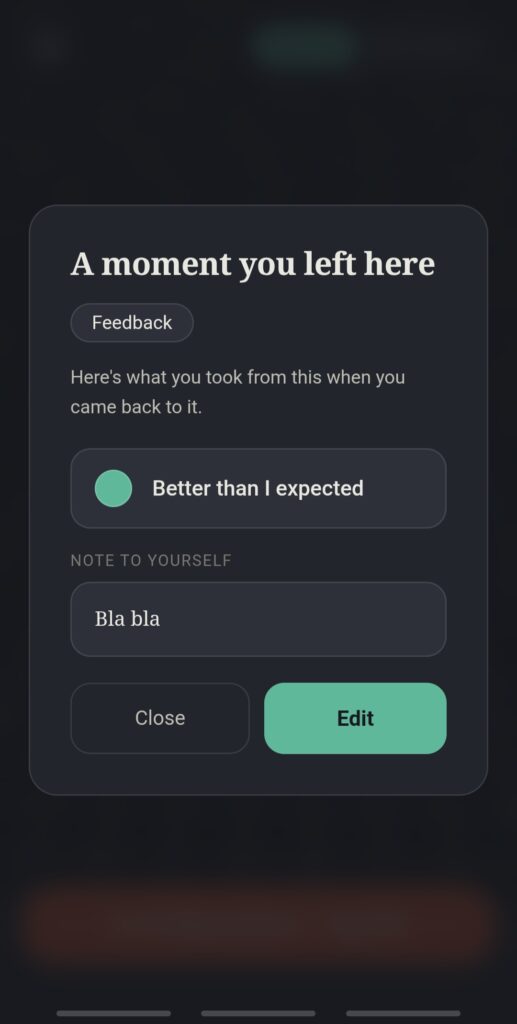
When the column is completely gone (i.e. the “threat” has passed), you can log in whether you perceived it as:
“Better than expected”
“About what you expected”
“Harder than expected”
Additionally, you can leave a little note to yourself to remind you of that moment and how you felt (optional)
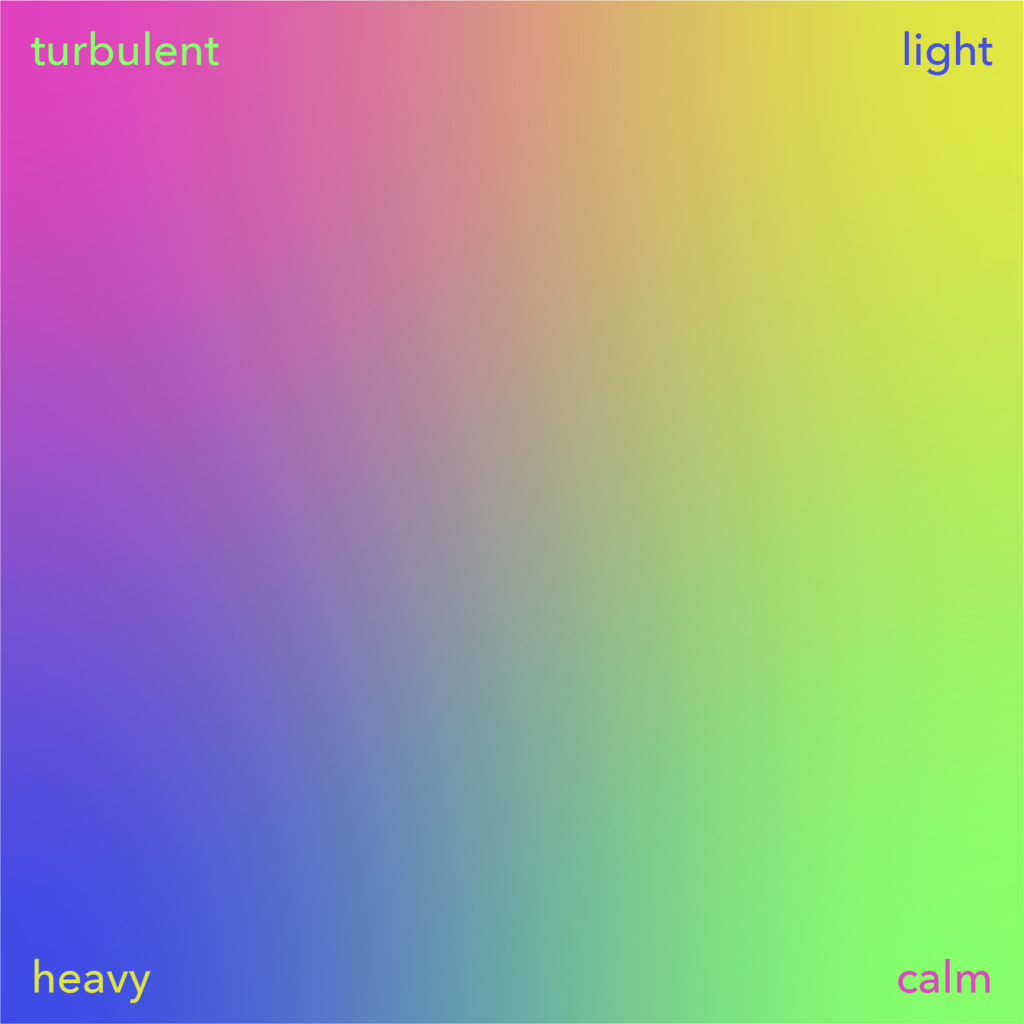
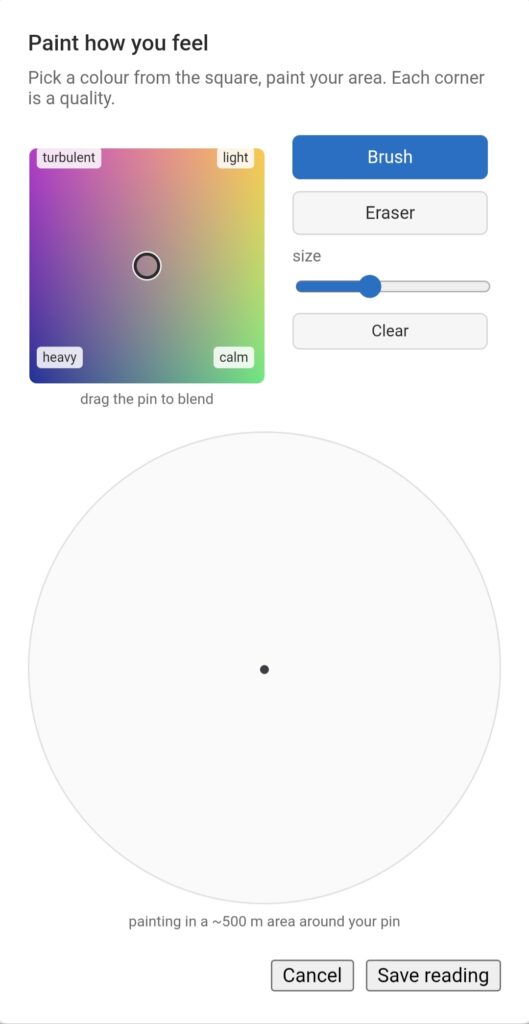
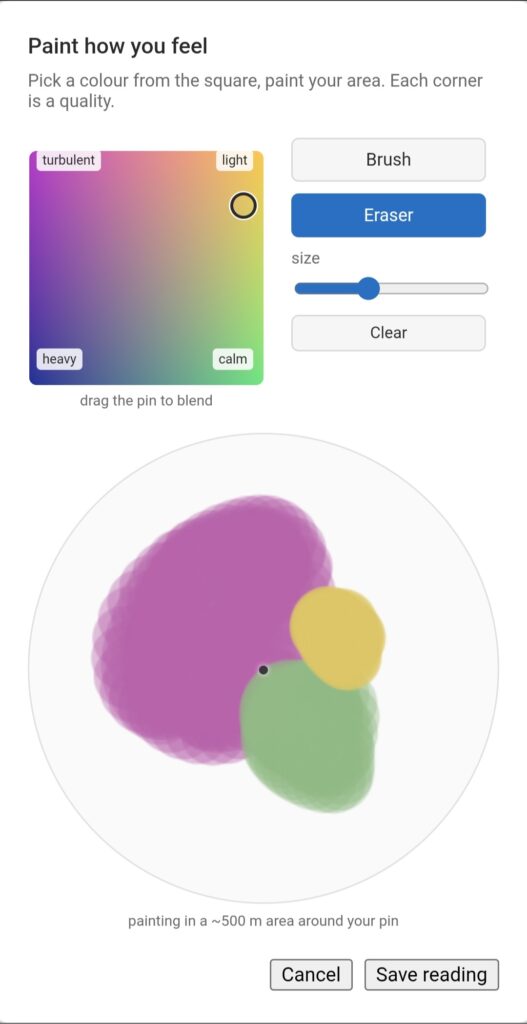
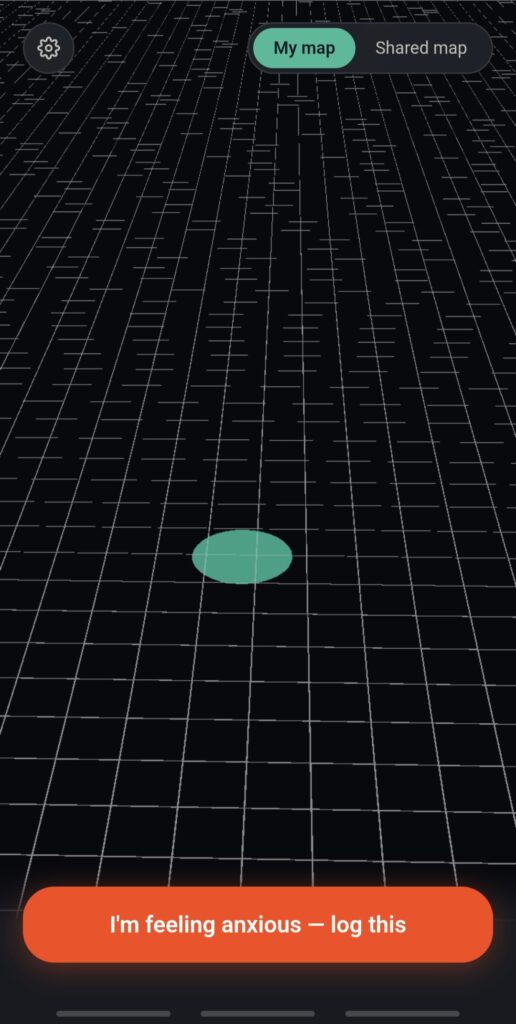
A mark is left where the column has stood with the respective colours of how you reflected that the experience actually went. It serves as a reminder to “retrain” your brain about how and when you were able to subvert your anxiety and actually create good experiences out of it.
The topography that is created is split into your “personal map”, showing only what you logged in, and an opt-in “shared map”, showing what others logged in as well.
Include a compass to lead to nearby marks + a camera reset button
Possibility to reflect from anywhere on a past situation, if you forget to do it at the point you logged an anxiety in
Reminder when an event is over
Setting a time didn’t really impact the event itself, but coming back later to check it off felt like a conclusion
Helps to recognize success: “… I expected to do much worse than I did. I can imagine that building a map with these sorts of scenarios would help manage anxieties/ seeing past successes visualised would lessen the blows of failure.”
What to add/change/general Questions
A possibility to log in “positive” expectations as well?
Would that take away from the idea of “reframing”/”subverting” negative expectations?
Would the reflections be disproportional to the ones about negative expectations? (If an event that I expect to be positive went as I expect, it would leave the same mark as an event that I expect to be negative that went as I expected)
Create little “tokens” that grow or multiply as reflection marks are created
Only for positively subverted expectations or for all reflections?
What exactly would “grow” there? (abstract geometry, trees, creatures, lanterns, …)
Next Steps
More testing: ideas for things to do that are scary?
IT support for the “shared map”
Get a version ready to share with more people by design freeze
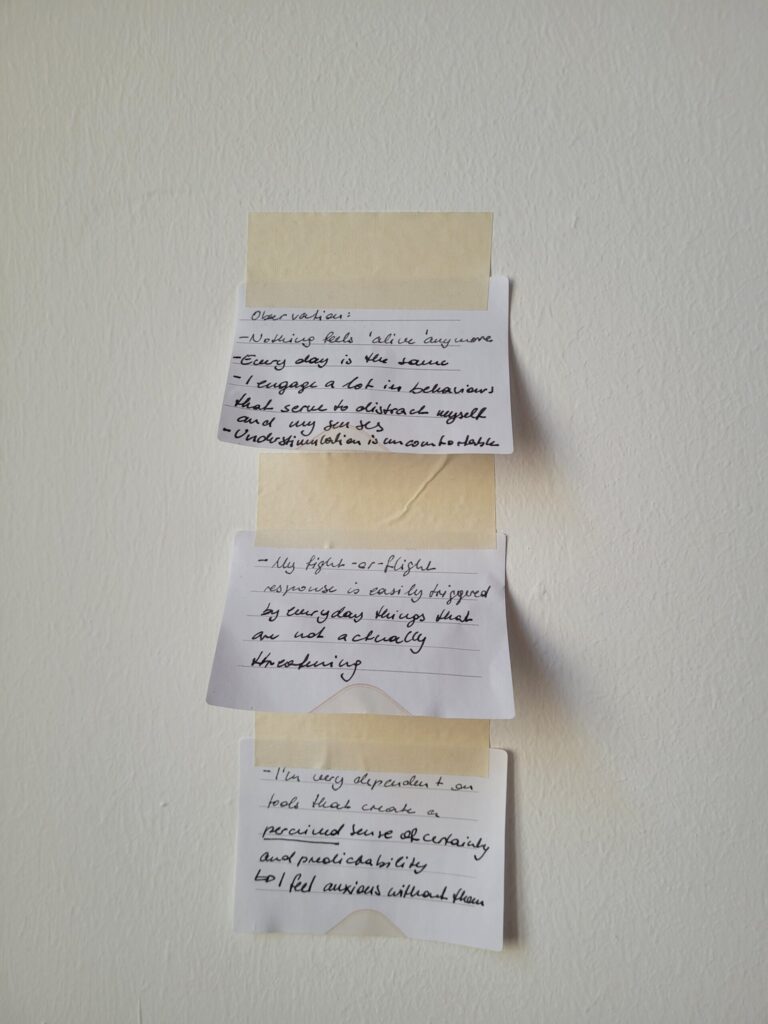
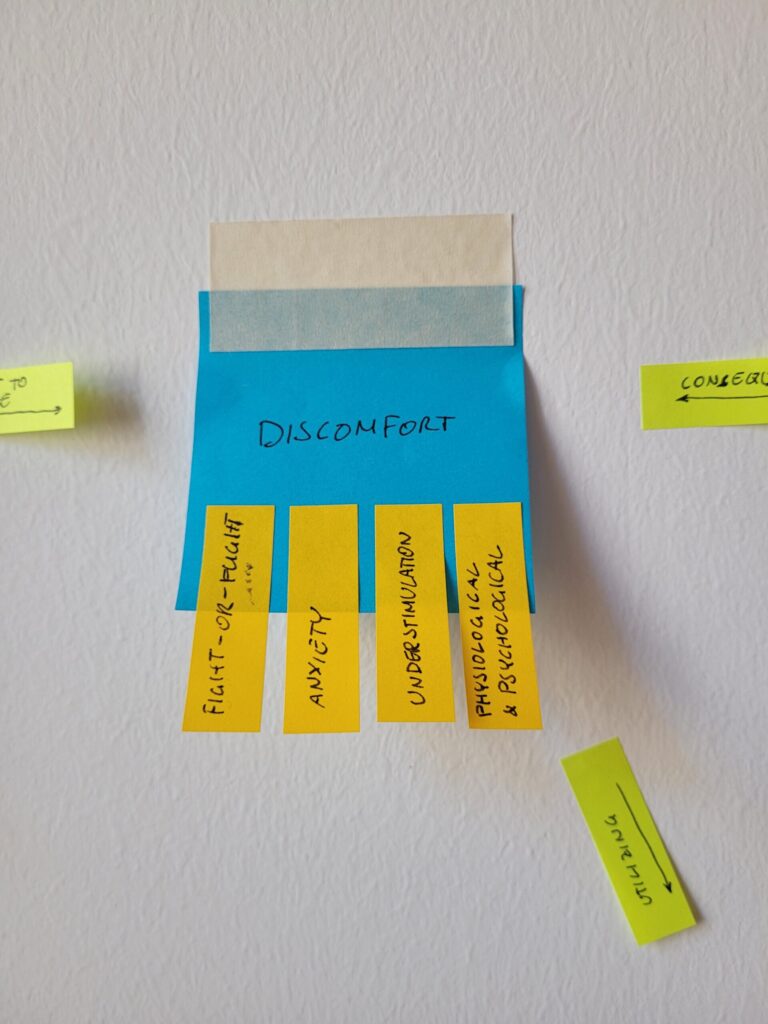
I have tried to pay more attention to how I myself experience and engage with the world and noticed that I tend to be uncomfortable in understimulation. I have never liked meditation, because it usually makes me feel even more anxious, and I never leave the house without my headphones that let me tune out my surroundings and blast my ears with music wherever I go. Even at home, I usually never experience a second of silence. There is always something filling the background. I know that I am not alone in these habits and experiences. We seek and find comfort in very conveniently designed algorithmic experiences that dependably and predictably serve us content we know we will like. If we wanted to, we could cut ourselves off from the real world and just exist in our own microcosms where everything is always exactly as we like it and we can be comfortable forever, not being held accountable for anything.
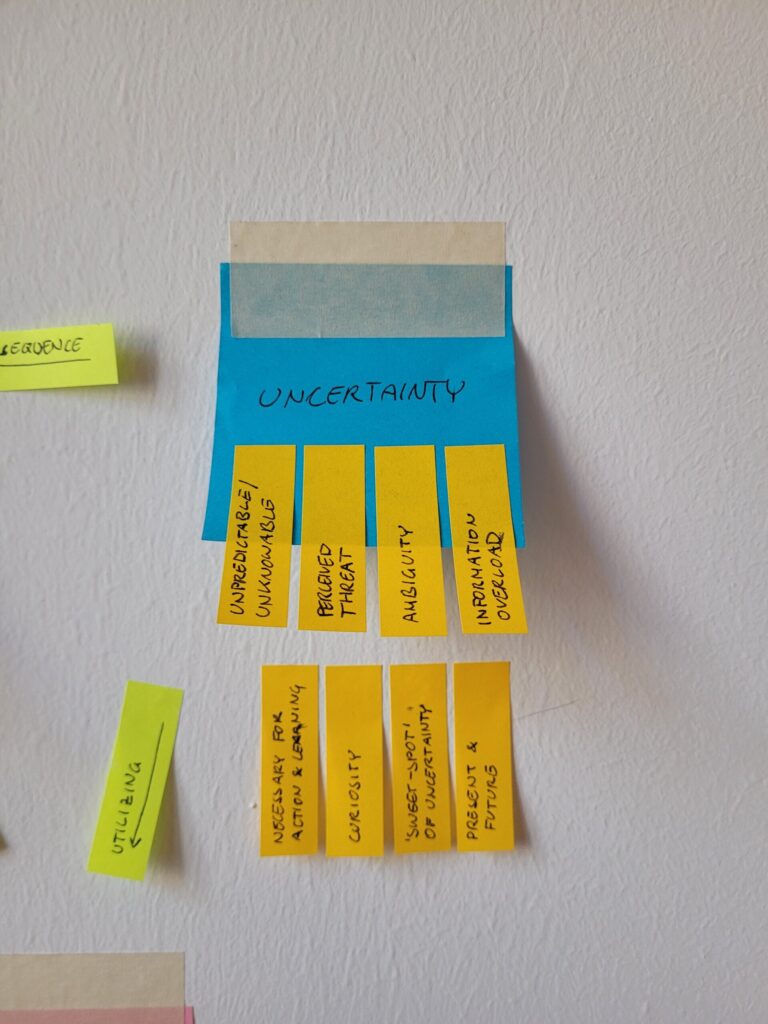
The world feels very uncertain right now. Between the (still noticable) repercussions of the pandemic, economic instability, war, and the potential of climate collapse looming around the corner, it often feels like there is not much left to look forward to. I think part of why I feel the need to constantly distract myself with meaningless overstimulation is because I don’t know how to deal with all of that constructively. It feels like my options are either to disengage and live life in my own little world, consciously ignorant of the crises we are experiencing, or to be paralysed by the awareness of everything that’s going on and not feeling able to do anything about it.
Additionally, I feel my fear responses are often unproportional or not constructively directed towards the things that should actually scare me, and where my fear could be used and reframed into constructive action. Instead, I am existing in a state of constant underlying anxiety that can only be elevated but is also reinforced by the behaviours of overstimulation and distraction/avoidance I described above. This feels not only paralysing and unconstructive, but is also just exhausting for my body and mind.
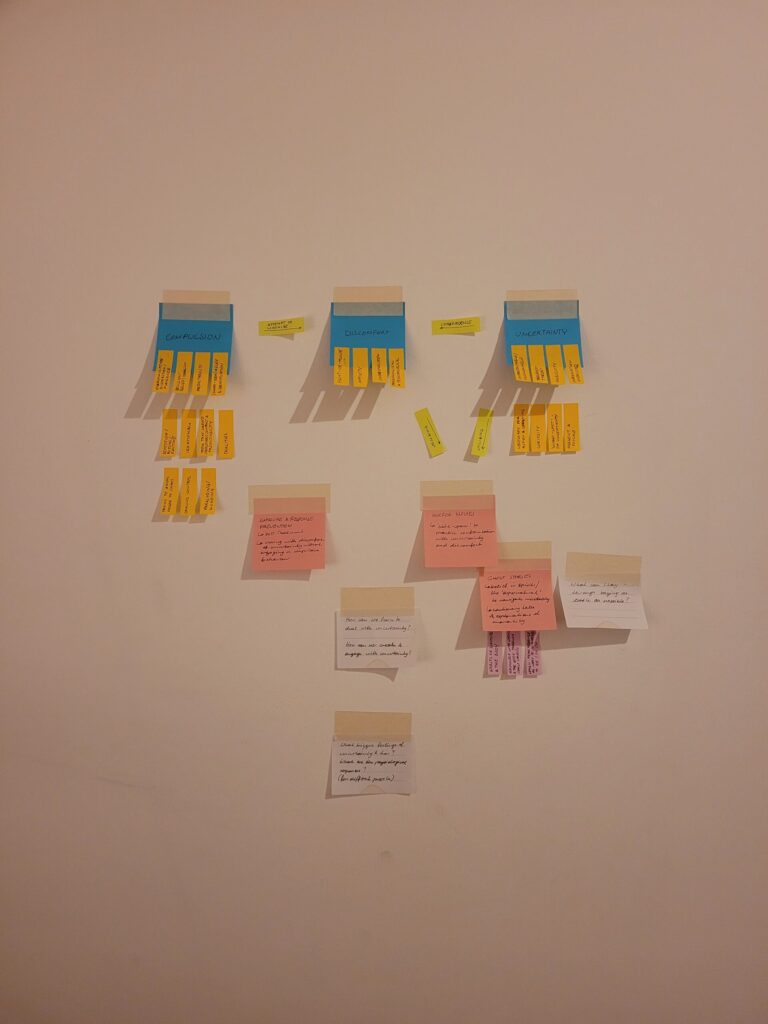
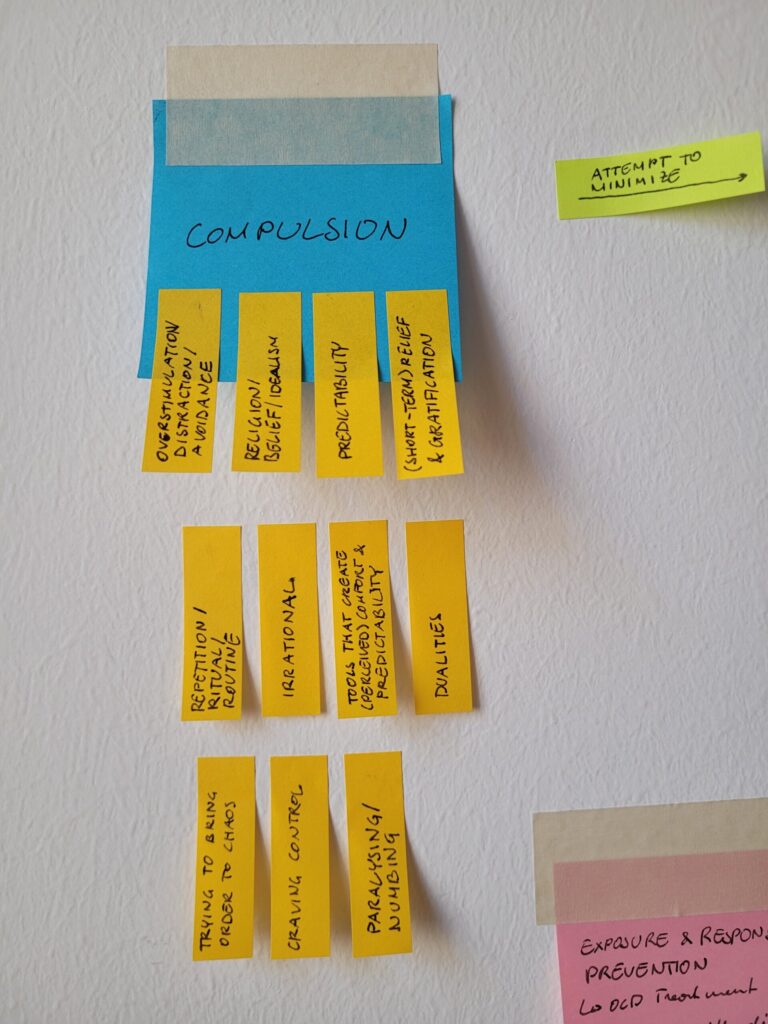
Thinking some more about this behaviour of disengaging and distracting ourselves with tools that create a high sense of certainty and dependability, it struck me as a similar principle to how OCD works (and how I have experienced OCD). Obsessive Compulsive Disorder is all about mitigating the discomfort and fear that the uncertainty concerning an “obsession” creates (the uncertainty of “What if the bad thing happens?”). Compulsions are repeated actions that one feels the need to perform over and over again in order to prevent “the bad thing” from happening. Compulsions are not logical or rational reactions to the distress the obsession causes. Nonetheless, they create a quick and short-term relief, and a perceived sense of certainty, until another trigger is encountered and the cycle starts again.
Being on social media and having algorithmically filtered content available to us at all times creates the illusion of control, because we can predict how it will make us feel. Our brains know they can depend on the dopamine and instant gratification they get out of it. Similarly, using LLMs as a substitute for social relationships is just an attempt at controlling those interactions. The LLM is predictably going to agree with everything you say and reassure you like a real friend maybe wouldn’t always. At the end of the day, the tools we use and rely on to create a seemingly predictable and comfortable reality for ourselves are isolating us from each other and reinforcing the behaviour of disengagement and avoidance, making us ever more anxious and incapable to stop and actually learn to deal with (our fear of) uncertainty.
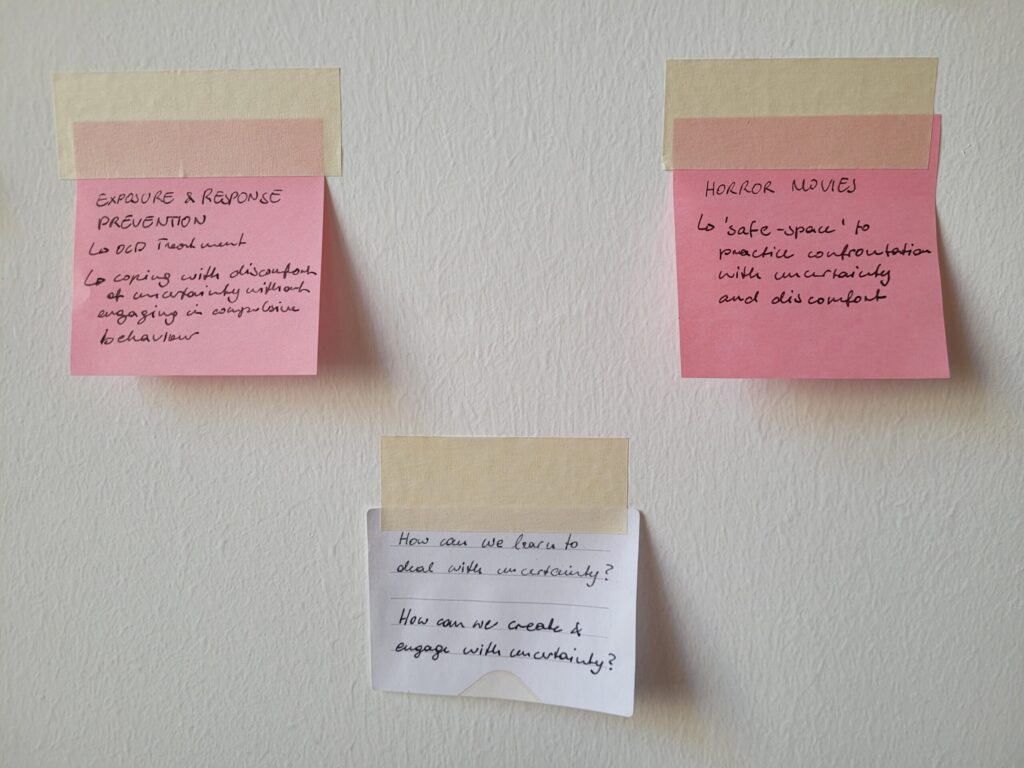
“Exposure and Response Prevention” (ERP) therapy is how OCD is most effectively treated. The way it works is that if exposed to a trigger, you consciously don’t engage in the compulsion that would create short-term comfort in the situation. Instead, you need to learn to “sit with” the discomfort and the uncertainty of the obsession. This teaches your brain and body that, even if you don’t perform the compulsion you feel the need to perform in order to “stay safe”, the consequences you are scared of are highly unlikely to happen.
How I can actively engage with or learn to tolerate the uncertainty I feel about the world and the future right now?
Would familiarizing myself with my fear of uncertainty enable me to overcome the inertia I feel and engage with the world again in a way that feels meaningful?
The matter of fact is that our brains and bodies thrive on a “manageable” amount of uncertainty. It is how we learn and how we get motivated to take action. Being stuck between the perceived comfort and predictability of digital media (of what our brains and bodies know they will get out of it if we consume it) and the total unpredictable and unstable state of the world, it is therefore somewhat unsurprising I find myself feeling this way.
Horror movies utilize the so-called “Goldilocks Zone” of manageable fear. By repeatedly building suspense over the course of the story and then releasing the tension just when it becomes too much (with a jump-scare, for example), watching horror movies is basically a way to engage with and practice fear and uncertainty in a “safe space”, where you know nothing can actually harm you.
Furthermore, being able to tolerate or even be comfortable with uncertainty could help with better interoception and self-awareness. If you are not constantly trying to tune out the world and actually try to understand your anxiety, you will probably be more likely to recognize when it is misdirected and redirect it to where and when it actually matters and can actually be a useful tool.
How can I make this into an experience?
How can I make people engage with their own responses to fear and uncertainty?
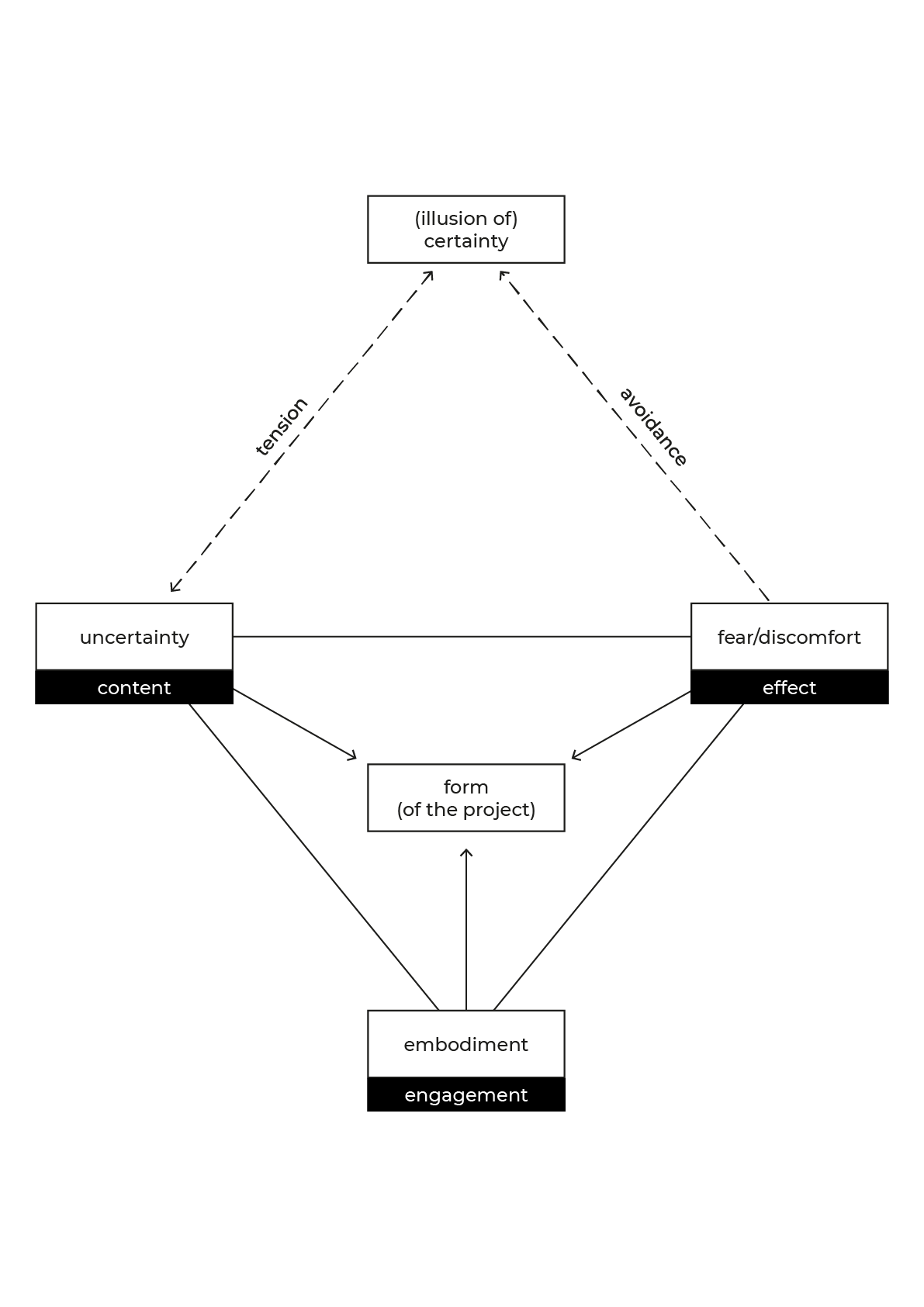
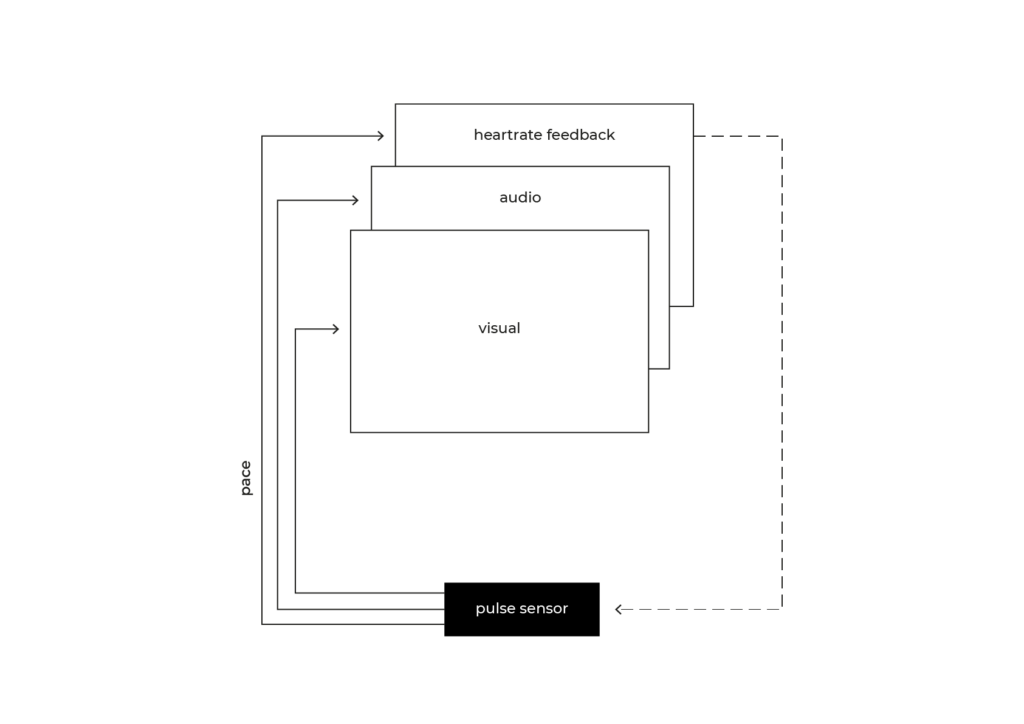
It would be an audio(visual) installation that reacts and gives feedback to the pulse of the viewer. I want to implement the connection to the heart rate in order to adapt the structure and pace of building suspense and uncertainty to the physiological experience of the viewer, as well as reflect their own (physiological) reaction back to them. The goal of the experience should be to make people question and reflect on their own ability and mechanisms they use to cope with uncertainty and fear (of the future) and possibly enable them to reframe how they experience fear and uncertainty in a way that is productive.
Engagement
How can I create an experience that includes the viewer’s body and its responses?
A pulse sensor influences the pace
Real time feedback of the heartrate makes you aware of how you affect the installation as well as how it affects yourself
Content
How can I communicate “nothing”?
In contrast to “something”?
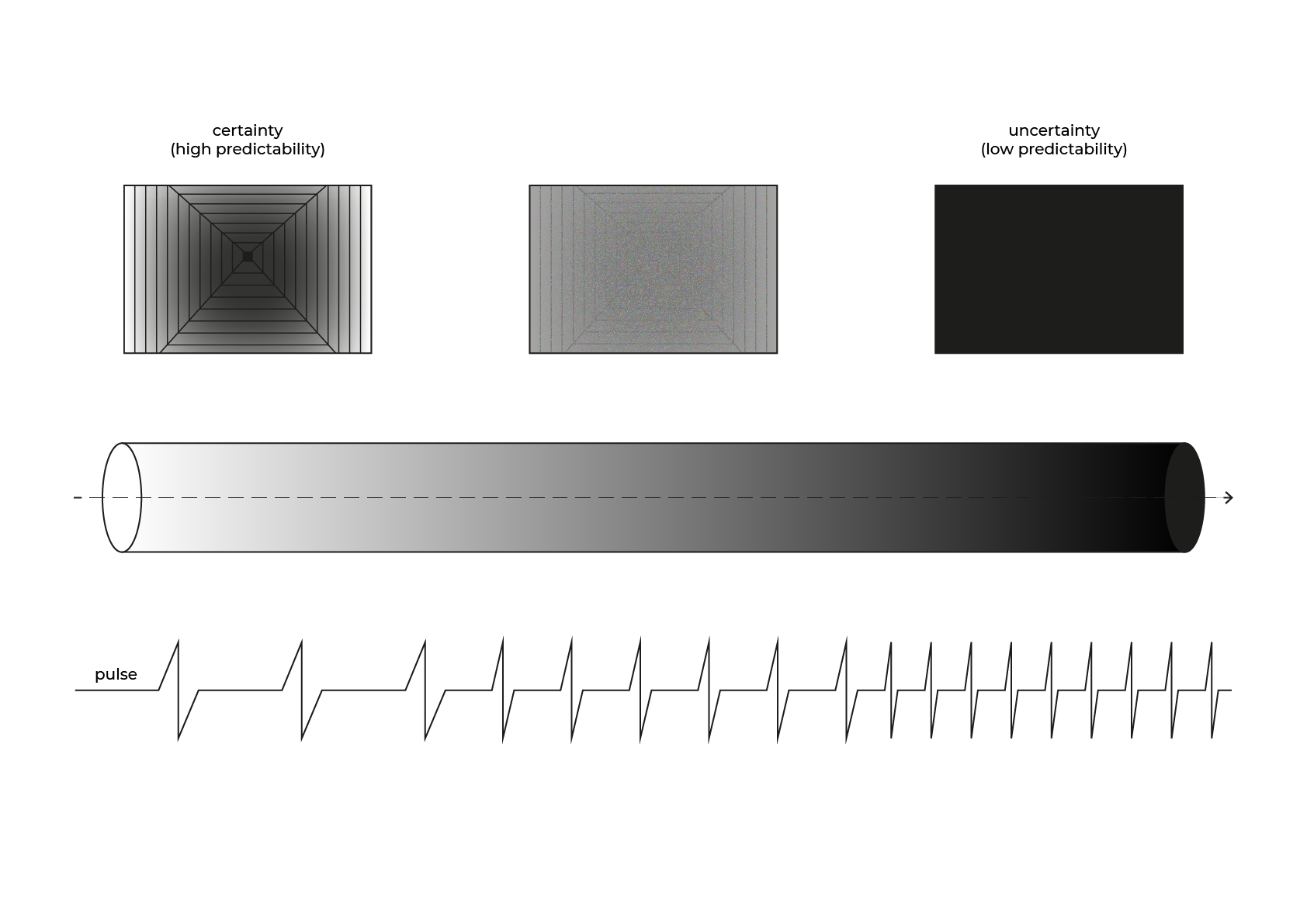
Constrast of experience of high predictability (overstimulation) and low predictability (understimulation)
Start with visuals and audio that feel “predictable”
Build suspense without resolution or “closure”
Withhold or obscure Information
Notice that there are things hidden which can’t be seen or heard (or not directly)
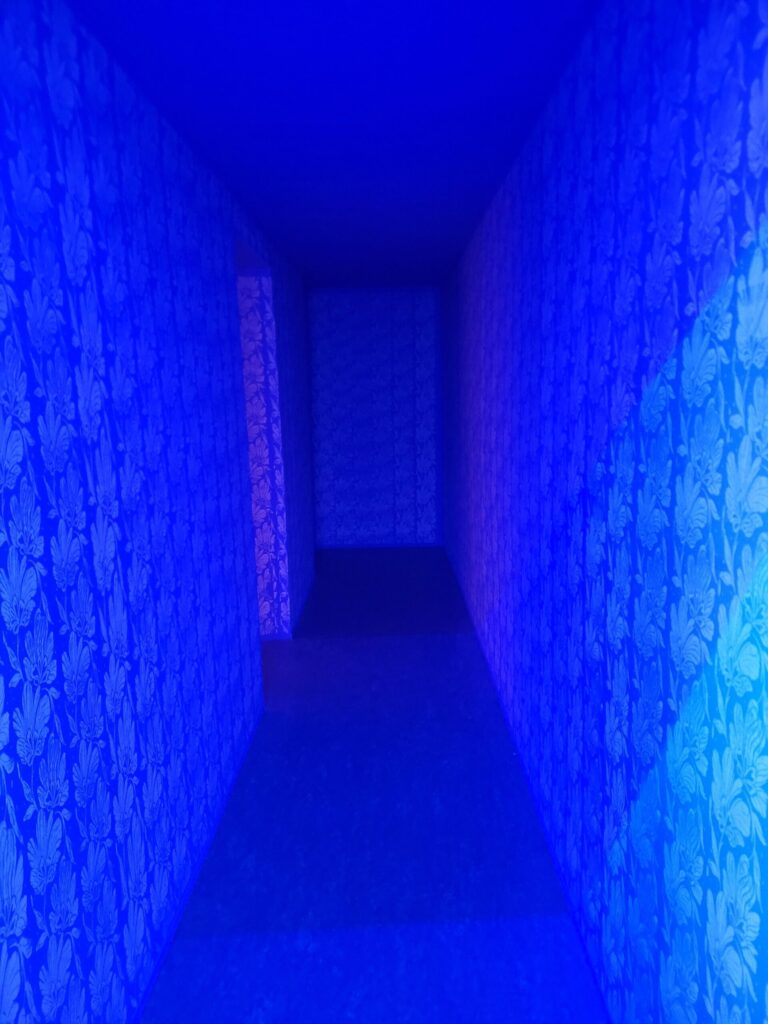
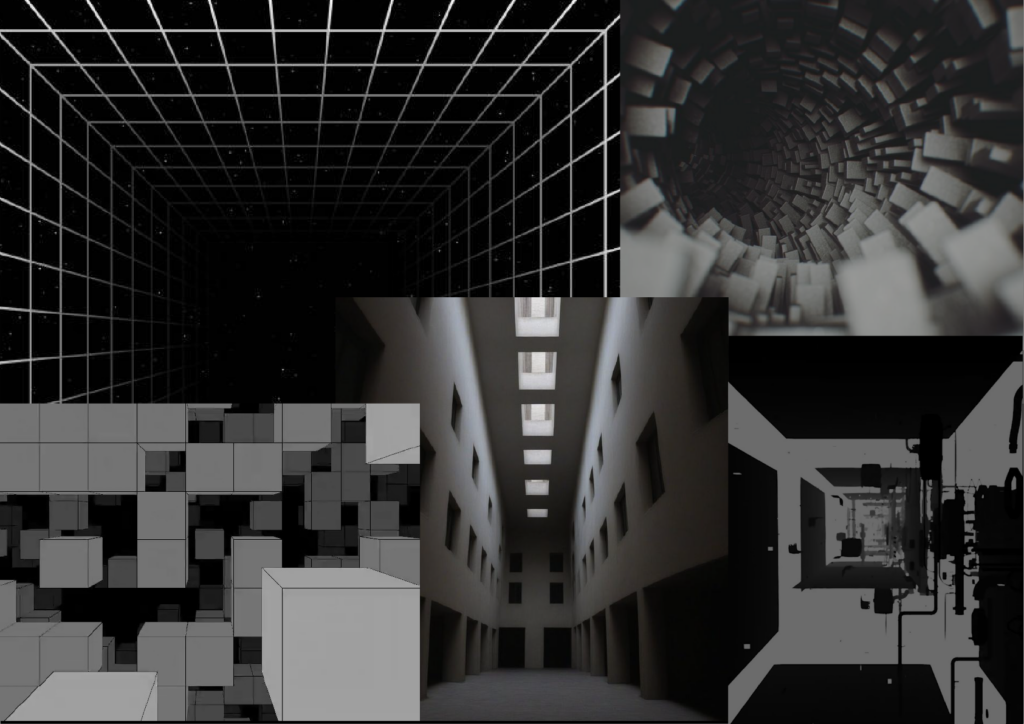
Darkness
Our brains can not experience total darkness
Effect
How can I create fear or discomfort?
Leave room for projection
Manipulate feedback of the heartrate
Loud and sudden noises/Jumpscares
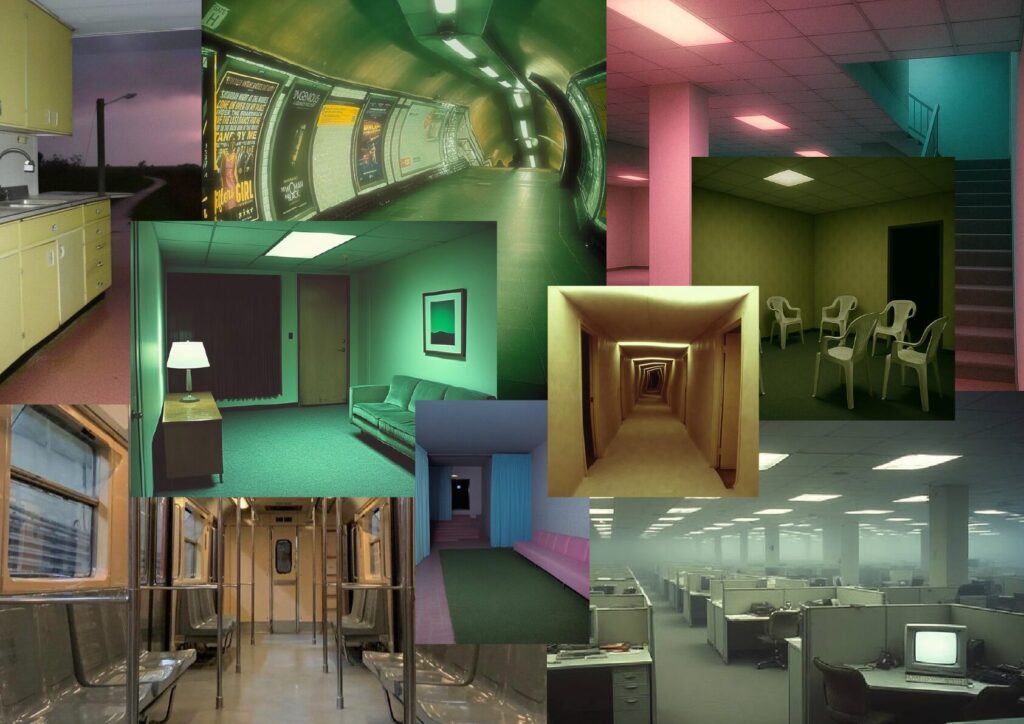
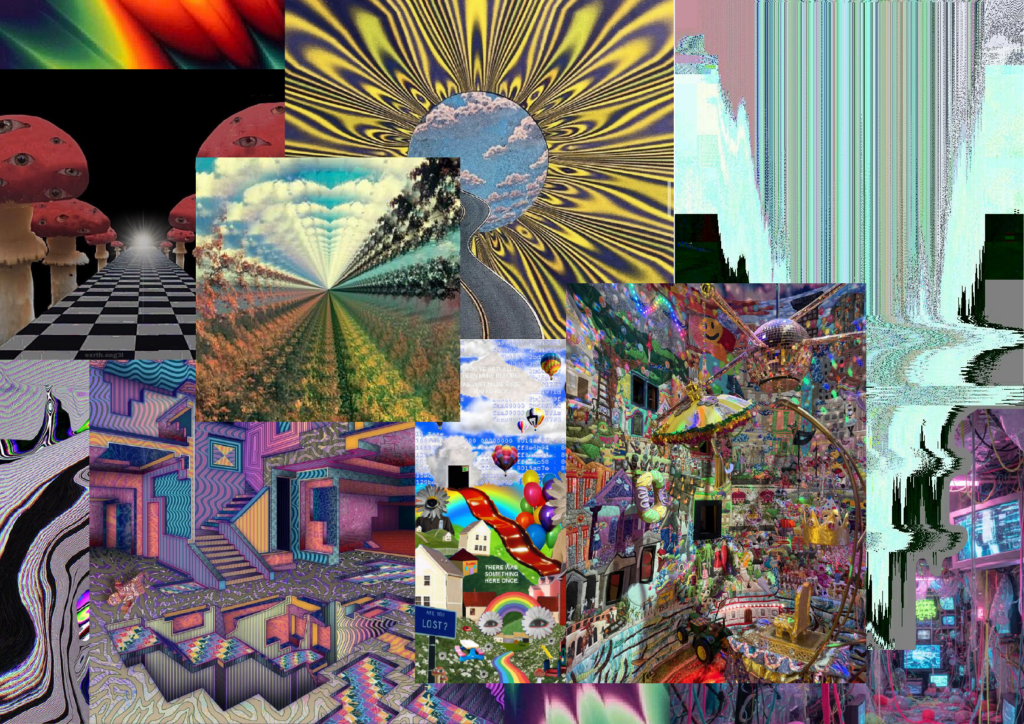
Absurdity/the “weird”
unsettling simply by being not understandable within known norms
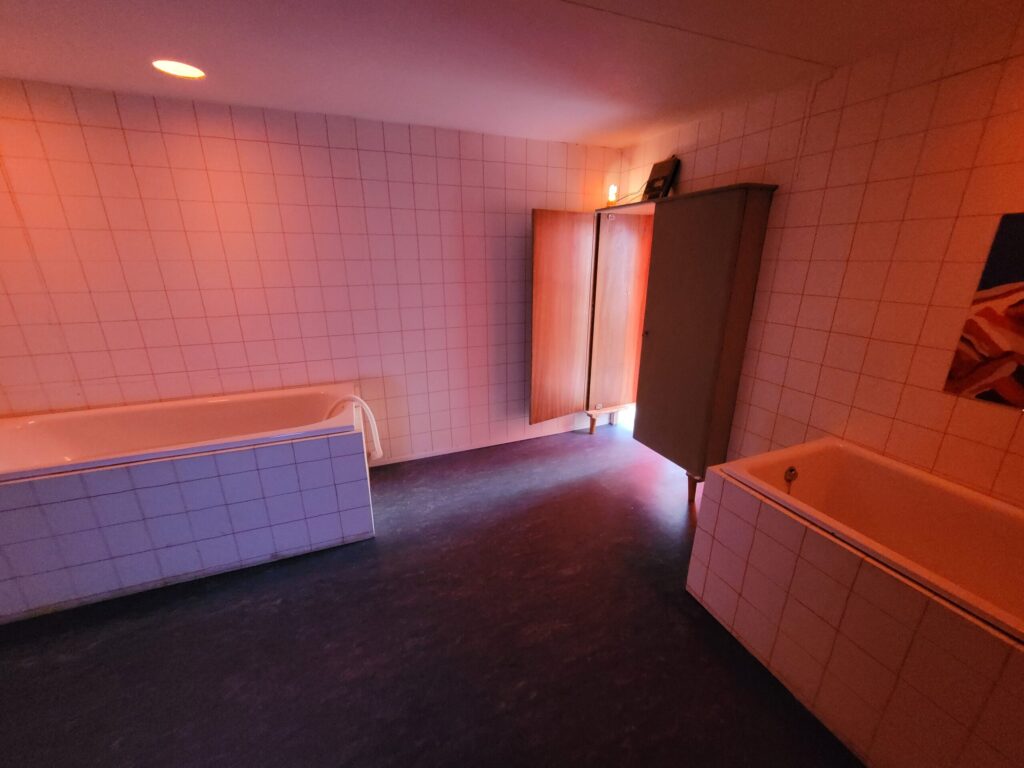
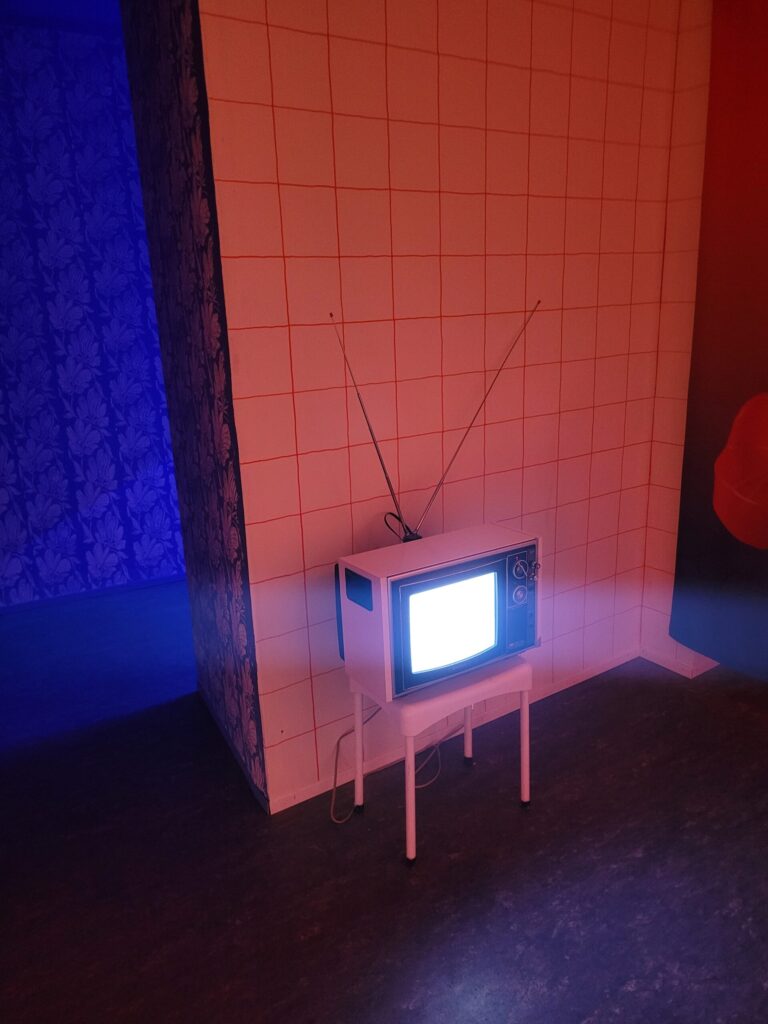
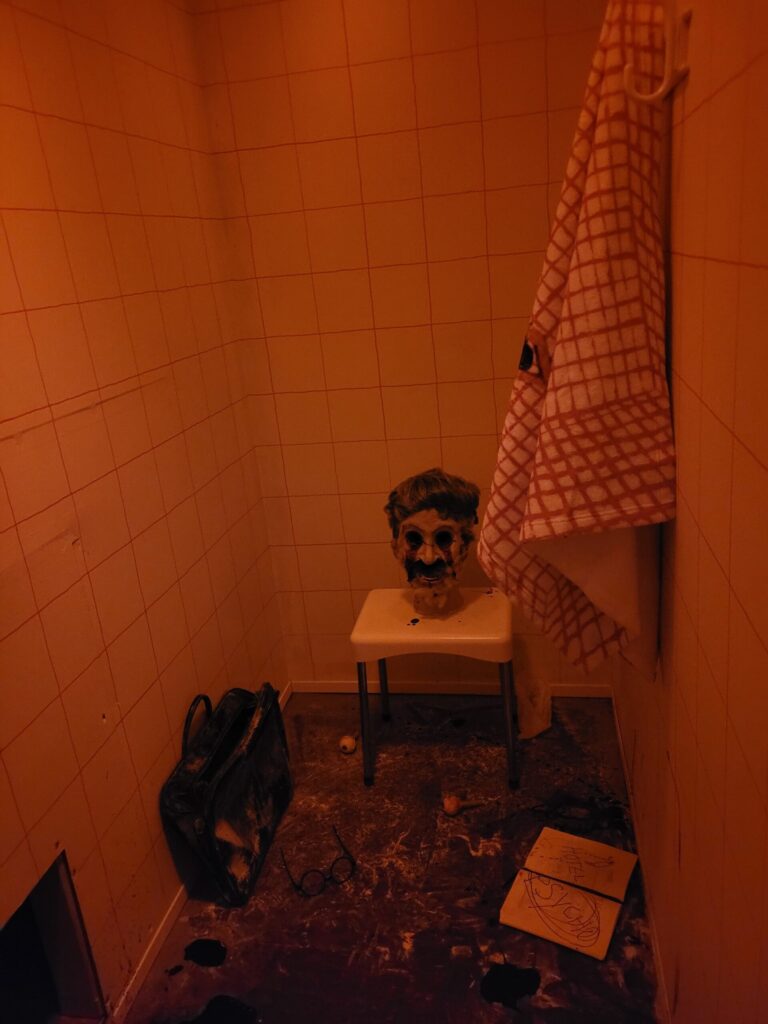
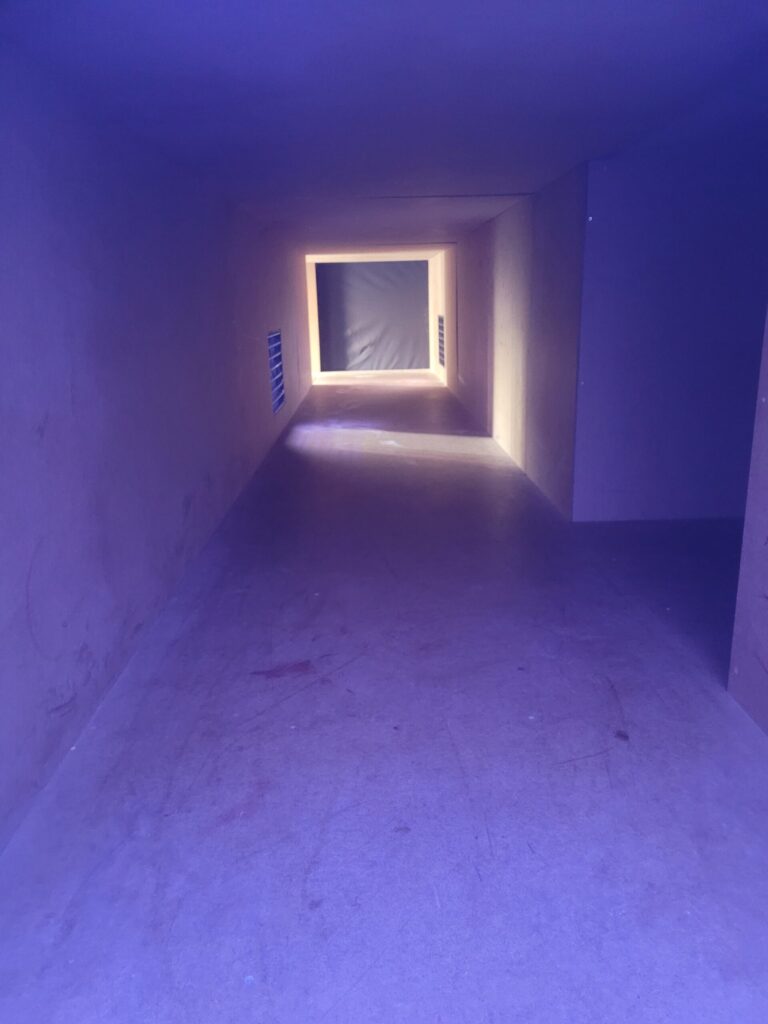
Splatterhaus Exhibition
Shepard Tone
Gives the illusion of an endlessly descending or ascending tone